REVIEW · ALHAMBRA & NASRID PALACES TOURS
Alhambra and Nasrid Palaces Private Sensory Tour
Book on Viator →Operated by GRANAVISION - Movviendo Tourism Group · Bookable on Viator
A hill with secrets. Alhambra rewards slow looking, but this private tour helps you save time and still notice the details. You get a local guide, skip-the-line access, and guidance that turns the Nasrid Palaces and their famous tilework into something you can actually follow, not just photograph.
What I like most is the way the tour is built for understanding, not only sightseeing: your guide points out architectural logic and everyday Nasrid touches, and you also get a small tasting of Arabic pastry. One thing to plan for: the Alhambra requires full passenger details (full name, date of birth, passport info), and access can occasionally be reordered or restricted by the Alhambra Trust, so your day may shift slightly.
In This Review
- Key highlights worth marking on your Granada map
- How private “sensory” touring actually helps at Alhambra
- Price and value: what $253.43 per person buys you
- Meeting point and what to bring for a smooth Alhambra entry
- Stop 1: Entering the Alhambra fortress and understanding the fortress logic
- Stop 2: Nasrid Palaces route (Mexuar, Comares, and the Lions) without getting lost
- Mexuar: meetings and court life
- Palace of Comares: Patio de los Arrayanes to the Hall of Ambassadors
- Palace of the Lions: courtyards, halls, and the mirador viewpoint
- Stop 3: Generalife gardens for the calmer, softer side of the complex
- Stop 4: Alcazaba for the military side of Alhambra’s story
- What you’re really paying for: details, audio, and a guide who keeps it human
- Timing tips: how to get the most from 3.5 hours
- Who should book this private tour (and who might not need it)
- Final verdict: should you book the Alhambra and Nasrid Palaces sensory private tour?
- FAQ
- How long is the Alhambra and Nasrid Palaces private sensory tour?
- Is this tour offered in English?
- Do I get skip-the-line access?
- What’s included with the tour?
- What do I need to provide when booking?
- Is pickup and drop-off included?
- What if the Alhambra time slot changes or access is restricted?
Key highlights worth marking on your Granada map

- Private local guide who explains what you’re looking at, in English
- Skip-the-line entry so you spend more time inside the palaces and less time waiting
- Single-use headsets to hear your guide clearly as you move through busy spaces
- Nasrid Palaces route that takes you through Mexuar, Comares, and the Lions complex
- Generalife gardens for a calmer, greener pause between rooms and courtyards
- Alcazaba for the military side of the Alhambra story, not just the royal showpieces
How private “sensory” touring actually helps at Alhambra
Alhambra is one of those places where you can easily do too much walking and still miss the point. The big advantage of a private format is that your guide can manage your pace and line-of-sight—so you’re not just moving from one highlight to the next, hoping the story makes sense.
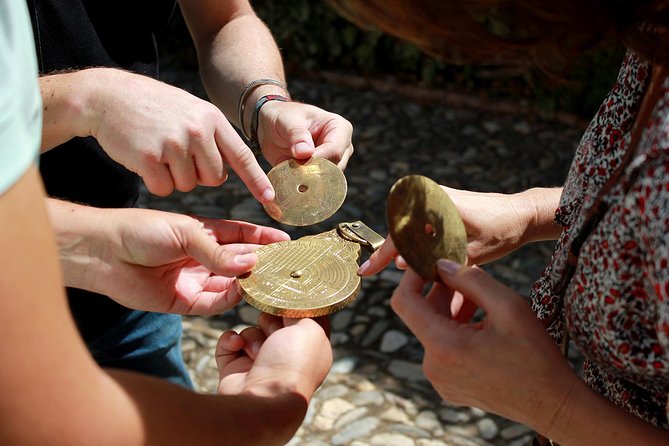
This tour is also built around “sensory” clues in a practical way. You’re given single-use headsets, which matters because the palace courtyards can be noisy and echoey. And you get hands-on style context with items tied to Nasrid daily life, plus a snack tasting of Arabic pastry to add a taste-based moment to the history.
The overall timing is designed to fit into about 3 hours 30 minutes, so it’s ideal if you want the big Alhambra hits without burning an entire day. The only caution: Alhambra is physically demanding in parts (hills, stairs, uneven surfaces), so wear good shoes and don’t treat this like a casual stroll.
You can also read our reviews of more private tours in Granada


Price and value: what $253.43 per person buys you
At $253.43 per person, this isn’t a budget bargain. But it’s priced like what it is: a private local guide with reserved entry, a planned sequence through multiple areas, and included audio support (the single-use headsets) plus a small food tasting.
Here’s how to judge the value for your trip:
- If you’re trying to see Alhambra and the main Nasrid spaces in one go, a private approach can help you avoid dead time at entrances and keep your questions answered while you’re standing in the right spot.
- If you hate waiting in lines, the skip-the-line access is where you feel the savings immediately.
- If you want the story behind the details—courtyards, halls, tilework, and what each space was used for—this tour spends your time on meaning, not just movement.
Also note the demand factor: it’s typically booked around 28 days in advance on average. If your Granada dates are set, earlier is safer.
Meeting point and what to bring for a smooth Alhambra entry
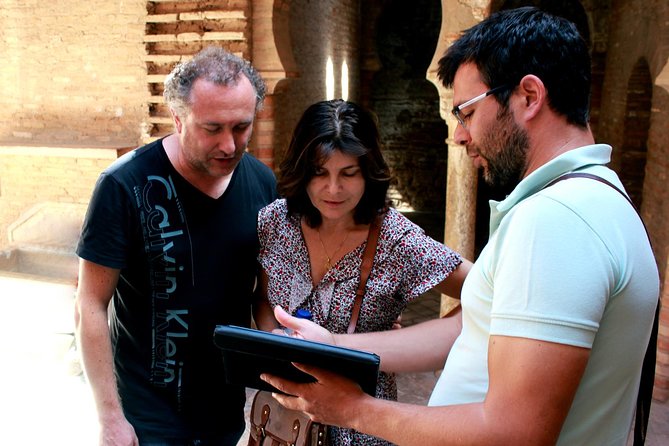
You meet at P.º de la Sabica, 15, Centro, 18009 Granada. The tour starts there and ends back at the same meeting point, so plan to make your own way to and from Granada’s hill area. It’s listed as near public transportation, which is handy if you’re not using a taxi.
Two practical planning items can make or break your day:
- Alhambra requires full name, date of birth, and passport details for each participant when booking. If any info is missing or mismatched, access can be denied. This is the kind of “small task” that’s not small at all.
- You should have moderate physical fitness. Even when the guide keeps things efficient, the Alhambra grounds include slopes and stair steps.
Bring your passport details in mind during booking, not the morning of the tour. And bring water if you know you get thirsty easily—this isn’t listed as a full meal situation, just a short tasting.
Stop 1: Entering the Alhambra fortress and understanding the fortress logic
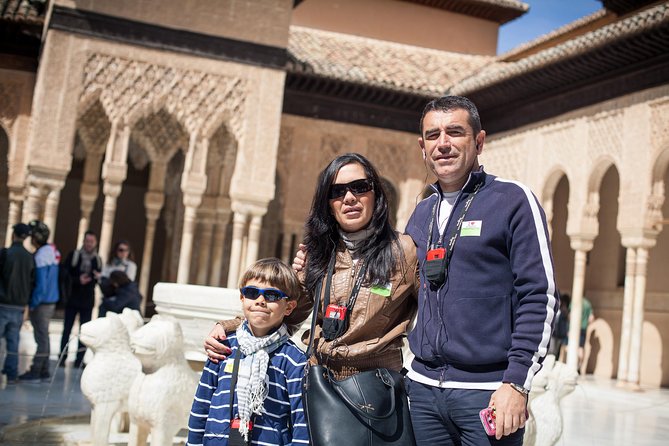
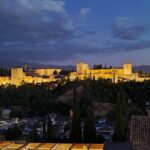
The Alhambra sits on a rocky hill overlooking the city. The location is part of the experience. From the start, you’ll see how the palace complex is protected by mountains and surrounded by woods, and how the fortress approach shapes what comes next.
This tour begins with the Alhambra itself—originally designed as a military area, then transformed into a royal residence after the Nasrid kingdom took hold in the mid-13th century. You’ll hear how the complex developed into a citadel with high ramparts and defensive towers.
Why this first stop matters: if you don’t understand the “fortress first” mindset, the palaces can feel random. But once you grasp that the complex was built to defend and control, you’ll notice the shift from strength to elegance when you reach the Nasrid palace spaces.
In terms of what you’ll actually do: you’ll move through the two main zones—military areas (the Alcazaba sector) and the medina or court city area, where the Nasrid Palaces sit. The guide’s job is to connect these areas so your route feels intentional.
A possible drawback here is attention span. Alhambra is huge. If you’re the type who tunes out when explanations get too heavy, this tour still helps because it’s private and your guide can keep it moving. Just be ready to listen and look at the same time.
Stop 2: Nasrid Palaces route (Mexuar, Comares, and the Lions) without getting lost
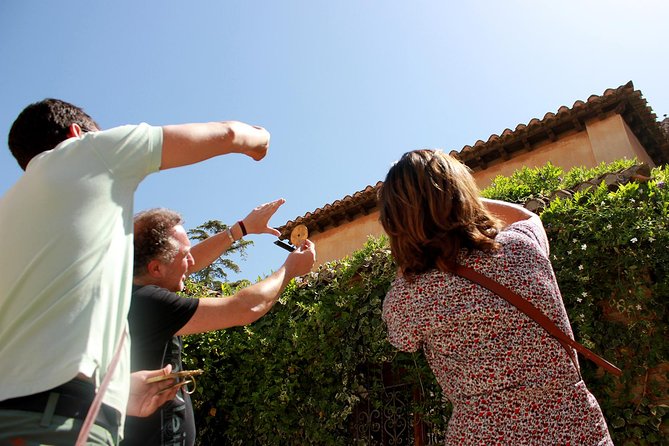
This is the heart of the day. Your Nasrid Palaces visit is focused and structured, using a palace sequence that helps you follow how power and daily life worked.



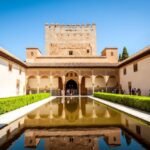
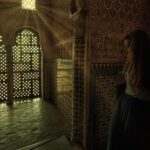
Mexuar: meetings and court life
You start with the Mexuar, described as the oldest hall and used for meetings between ministers and courtroom functions. This is a key moment because it shifts the story from royal spectacle to governance. If you like understanding institutions, you’ll appreciate this stop.
Palace of Comares: Patio de los Arrayanes to the Hall of Ambassadors
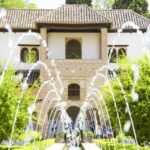
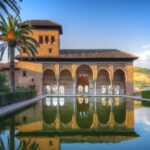
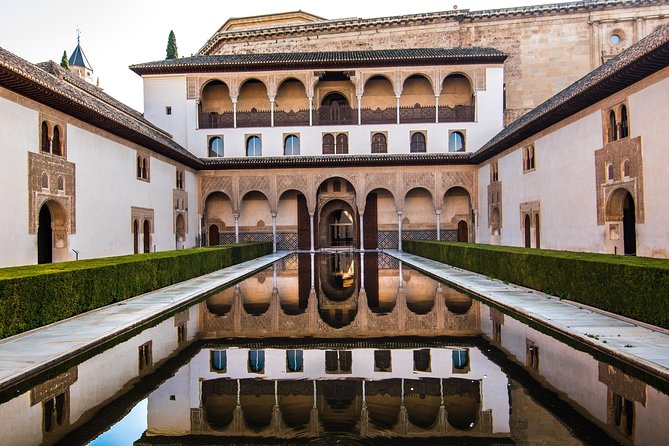
Next is the Palace of Comares, dating to the Yusuf I era. It’s built around the Patio de los Arrayanes (Courtyard of the Myrtles), and it connects to major halls, including:
- Sala de los Embajadores (Hall of Ambassadors) inside the Tower of Comares
- Sala de la Barca (Hall of the Boat)
Why I think this works: courtyards aren’t just decoration here. They’re part of how spaces feel cooler, calmer, and more controlled. You’ll be able to see how layout supports ceremony.
Palace of the Lions: courtyards, halls, and the mirador viewpoint
The last major palace section is the Palace of the Lions, dating to the Muhammed V era. It’s described as a complex with the central Courtyard of the Lions, plus halls along each side. The tour includes the main halls such as:
- Hall of the Mocarabes
- Hall of the Kings
- Hall of the Two Sisters
- Hall of the Ajimeces leading to the mirador Daraxa viewpoint
- Hall of the Abencerrajes
- Harem area (as part of the complex route)
If you’re hoping the Nasrid Palaces will feel coherent instead of like one pretty room after another, this route style helps. Your guide ties each space to how it functioned and what it meant, and your attention naturally shifts from “tiles everywhere” to “why these tiles and why here.”
One practical consideration: the Palace of the Lions area is the part where many people slow down, take photos, and accidentally lose time. A private guide keeps you moving just enough so you can see the main spaces without rushing through everything.
Stop 3: Generalife gardens for the calmer, softer side of the complex
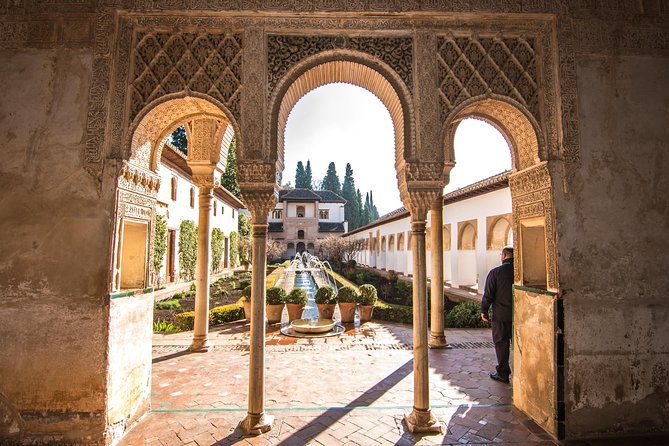
After the architecture intensity, you move to Generalife, known for its gardens. This stop is shorter (around 20 minutes), which is actually a good thing. It prevents you from turning the experience into endless wandering.
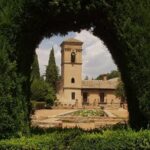
Generalife is described as a series of large gardens where each corner brings a pleasant surprise for the eyes, with minimal intrusive buildings. That matters because it keeps the focus on sight lines, plants, and light rather than on crowds or construction.
If you love a mental reset in the middle of a big monument day, this stop does that. It’s also a chance to look at Alhambra from a more human, slower angle—like stepping away from royal stone and remembering why gardens mattered.
Stop 4: Alcazaba for the military side of Alhambra’s story
Most people come for the palaces. The Alcazaba is how the tour balances that with the origin story: military function first.
You’ll learn that entrance to the Alcazaba was at the foot of the Tower of Homage, and that there’s a slope at the base of the tower. A simple L-shaped walkway helps keep the main gate from being seen from the outside—another little design detail that shows how careful planners were about security.
This stop lasts about 30 minutes, which is enough to get the “fortress thinking” without turning it into a history lecture. If you like architecture that explains behavior—how people moved, where control was built in—Alcazaba is the section that gives you that.
What you’re really paying for: details, audio, and a guide who keeps it human
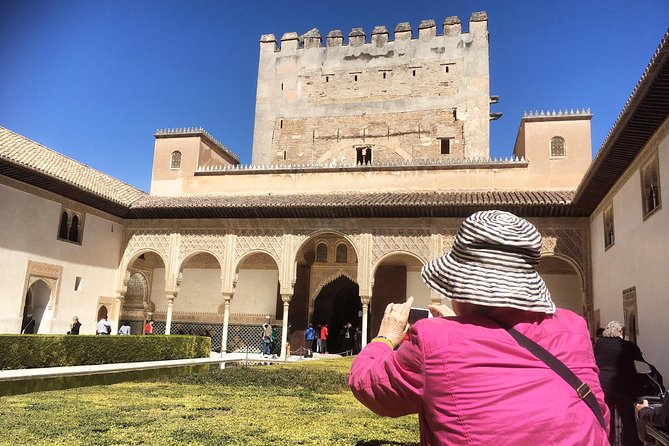
The tour includes a lot that sounds technical, but the real benefit is how it supports your attention.
- Single-use headsets: You can actually hear instructions and explanations. This is especially helpful when you’re grouped near other visitors or walking through echoing corridors.
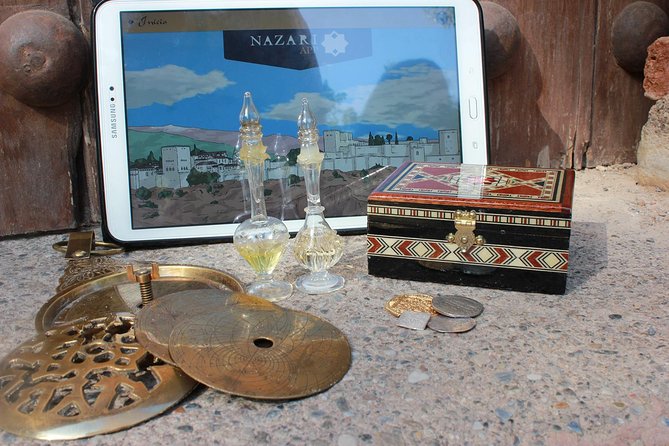
- Daily-life items from Nasrid times: This is where Alhambra starts feeling less like a museum and more like a lived world. Even small objects can make the architecture more believable.
- Snacks tasting of Arabic pastry: It doesn’t replace a meal, but it gives you a tangible break and a taste-based memory hook.
In the reviews, one guide name stands out: Antonio. People praised him for making the information fun and easy to follow, even when the tour lasted several hours. That’s the secret sauce in a private tour—if the guide can explain with humor and clarity, you stop feeling like you’re decoding a textbook.
Timing tips: how to get the most from 3.5 hours
Because the total experience is about 3 hours 30 minutes, your best strategy is to treat this as a guided “greatest hits” route, not a linger-and-learn-at-will marathon.
Here’s what helps:
- Keep your photo stops shorter. If you want the best photos, aim for angles the guide points out and then move on.
- Plan for a steady walking pace, especially early on at Alhambra’s complex grounds.
- Expect the order or access to adjust sometimes due to Alhambra Trust decisions. The tour is designed to adapt without reducing visiting time, but you should stay flexible.
If you arrive frazzled or underprepared, you’ll feel it quickly at Alhambra. If you arrive calm, listen through the headsets, and let the guide set the tempo, you’ll feel like the time flew.
Who should book this private tour (and who might not need it)
This tour fits best if you:
- Want private, English-language guidance across Alhambra, Nasrid Palaces, Generalife, and Alcazaba in one outing
- Prefer skip-the-line convenience
- Like the story behind architecture—how spaces functioned as courtrooms, ceremonial halls, gardens, and military zones
- Travel with family or a group where one shared guide makes the whole day smoother
You might consider a different format if you:
- Enjoy slow, independent exploring with no structure (this tour is guided and timed)
- Are extremely sensitive to walking on uneven stone or hilly terrain (the tour notes moderate physical fitness)
Final verdict: should you book the Alhambra and Nasrid Palaces sensory private tour?
If your goal is to hit the key spaces with a plan and come away understanding what you saw, I’d say yes, book it—especially if you don’t want to spend your Granada time stuck in lines or guessing which halls matter most.
The biggest reasons to choose this one are the skip-the-line entry, the private guide, and the included audio (single-use headsets). Add in the fact that you also get daily-life context and a small pastry tasting, and it turns a famous monument day into a more personal experience.
Just be disciplined about the one thing that can’t be fumbled: provide the required passport details at booking. If you do that and wear comfortable shoes, you’ll get a clear, guided route through the Alhambra’s most meaningful spaces without wasting time.
FAQ
How long is the Alhambra and Nasrid Palaces private sensory tour?
It’s approximately 3 hours 30 minutes, with the exact route adapted if the Alhambra Trust changes access or order.
Is this tour offered in English?
Yes, it’s offered in English.
Do I get skip-the-line access?
Yes. The experience includes skip-the-line access for quicker entry to the Alhambra.
What’s included with the tour?
You get a sensory and informative private tour with a local guide, single-use headsets to hear clearly, admission tickets for the included areas, and a snack tasting of Arabic pastry. A mobile ticket is also part of the experience.
What do I need to provide when booking?
You must provide each participant’s full name, date of birth, and passport details. If this isn’t provided, access may be denied.
Is pickup and drop-off included?
No. Pick-up and drop-off are not included, and the tour ends back at the meeting point.
What if the Alhambra time slot changes or access is restricted?
The supplier will book you onto a new time slot if the chosen slot isn’t available. If the Alhambra Trust restricts access or changes the order, the tour will be adapted without reducing the visiting time.