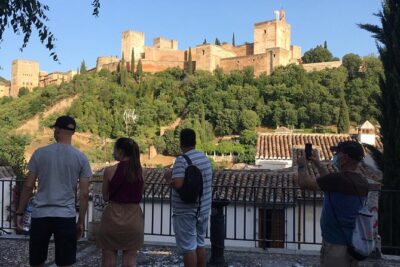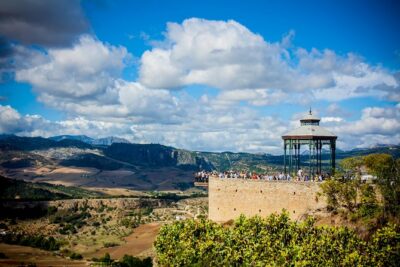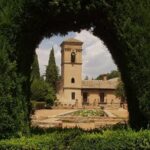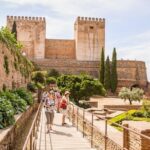
Alhambra lines can eat your whole morning. This tour helps you keep moving with group entry plus a guide who walks you through the big highlights without getting stuck in individual queues. I especially like that you cover Alhambra’s main zones—Nasrid Palaces, Alcazaba, Generalife, and the Palace of Charles V—in one smooth circuit.
The only real thing to watch is timing: visiting hours and tour time may change due to availability, and the operator may adjust access if the Alhambra schedule won’t cooperate.
In This Review
- Key highlights at a glance
- Skip the Lines, Keep the Magic Moving
- Your 3-Hour Route: Nasrid Palaces, Alcazaba, Generalife, Charles V
- Nasrid Palaces: El Mexuar and the Comares Palace Focus
- El Mexuar: the oldest palace layer
- Comares Palace: power in 46 meters of height
- Alcazaba: A Fortress You Can Actually Read from the Towers
- Torre del Cubo: Darro Valley and the Albaicín/Sacromonte angle
- Torre de las Armas: Cathedral, center of town, and La Vega
- Torre de la Vela: the 360º viewpoint
- Generalife: Gardens That Explain Why Water Mattered
- Generalife Palace: the Sultan’s retreat
- Generalife Gardens: plants, flowers, crops, and the Acequia Real
- Palace of Charles V: The Renaissance Piece Inside an Islamic World
- Pedro de Machuca’s design idea
- Circular inside, square outside
- Value and Logistics: Is the Price Worth It?
- Where to meet (so you don’t lose time)
- Who This Tour Suits Best
- The One Thing to Keep in Mind Before You Book
- Should You Book This Alhambra Tour?
- FAQ
- What areas of the Alhambra are included?
- How long is the experience?
- Does this tour help me avoid individual lines?
- Is there an audio system?
- Where do I meet the tour?
- Where does the tour end?
- Can the visiting time change?
- What’s the maximum group size?
- Are service animals allowed?
Key highlights at a glance
- Group entry that helps you avoid individual queues
- Nasrid Palaces first, with time to understand what you’re seeing
- Comares Palace’s towering scale and ceiling imagery
- Alcazaba viewpoints from the Torre del Cubo, Torre de las Armas, and Torre de la Vela
- Generalife gardens watered by the Acequia Real
- Small-group format (maximum 30) with an audio system for larger groups
Skip the Lines, Keep the Magic Moving
The Alhambra can be an all-day project if you fight queues. What I like about this experience is the practical idea behind it: you’re not just holding a ticket, you’re entering as a group and following a guide-led route designed to keep you moving. Instead of spending your energy staring at where the line ends, you get to spend it looking at walls, courtyards, inscriptions, water, and light.
You’ll also get more out of the visit because the guide explains what you’re walking through. The Alhambra isn’t one single building you can “check off.” It’s a whole system of palaces, fortresses, gardens, and viewpoints that make sense once someone connects the pieces.
One more practical plus: the tour runs about 3 hours (and can run 3 to 4), and it’s small (up to 30 people). That’s a sweet spot where you can hear the story without feeling totally herded.
You can also read our reviews of more guided tours in Granada



Your 3-Hour Route: Nasrid Palaces, Alcazaba, Generalife, Charles V
This is a “complete” style route in the sense that you’ll visit the core areas most people come to see: Nasrid Palaces, Alcazaba, Generalife, and the Palace of Charles V. The sequencing matters, too. Starting with the palaces gives you the artistic language of the Alhambra first—then the fortress and gardens start making more sense as part of the same living kingdom.
The tour includes general entrance and guided access, with an audio system for groups of 7 or more, which helps if you’re traveling with a language barrier or you just want to focus.
Here’s what to expect at each stop and why it’s worth your attention.
Nasrid Palaces: El Mexuar and the Comares Palace Focus
The Nasrid Palaces are the heart of the Alhambra experience. These spaces were built in different periods by Granada’s Nasrid rulers, so you’ll notice the architecture and priorities shift as the complex evolves. The guide’s job here is to help you see those layers instead of treating everything as one big blur of tiles and arches.
El Mexuar: the oldest palace layer
You’ll start with El Mexuar, described as the oldest part of the palace complex. It was built by Ismail I, and it’s also been modified more than any other palace area. That’s useful for you: if some parts feel “less uniform,” that’s not you missing something—it’s the building showing its age and changing needs.
Inside, you’ll find an oratory, and the story includes a view toward the Albaicín neighborhood. Even if you don’t catch every angle perfectly, the key idea is that this was a working royal space with a spiritual component.
Comares Palace: power in 46 meters of height
Next comes the Comares Palace, built by Yusuf I. This is where the Alhambra’s theatrical scale really shows. You’ll see a powerful tower—about 46 meters—reflected in a large pond with a marble floor around it.
The guide highlights the Hall of the Ambassadors, where Nasrid power and the Sultan’s throne were centralized. Pay attention to the ceiling: it includes a dramatic representation of the seven heavens and the paradise of Islam. If you’re the type who normally “skims” ceilings in photos, slow down here. This is one of those places where the ceiling isn’t decoration—it’s the message.
Time reality: you’ll spend about 1 hour 20 minutes at this stop. That’s not long enough to read everything, but it’s long enough to leave with a clear mental map of what each space is doing.



Alcazaba: A Fortress You Can Actually Read from the Towers
After the palaces, you shift into Alcazaba, the fortress side of the Alhambra. It was built by Mohamed I “Al-hamar” in the first half of the 13th century. The word fortress matters because you’ll start noticing how the complex controls visibility, movement, and defense—not just beauty.
The big advantage here is that the Alcazaba isn’t presented as a walk with random views. You’ll visit three key towers, and each one frames a different part of Granada.
Torre del Cubo: Darro Valley and the Albaicín/Sacromonte angle
From the Torre del Cubo, you’ll look out toward the Darro Valley with views over the Albaicín and Sacromonte. This is a great moment to connect the Alhambra to the city around it. You’re not just viewing a monument; you’re seeing how it sits in its landscape and neighborhoods.
Torre de las Armas: Cathedral, center of town, and La Vega
Next is the Torre de las Armas, with a view that includes the Cathedral, Granada’s center, and La Vega. The mix here is what I like. You see the layers of Granada in one glance: medieval Islamic power, later Christian Granada, and the broader plain beyond.
Torre de la Vela: the 360º viewpoint
Finally, the Torre de la Vela gives you the famous 360º panorama, including a view across Sierra Nevada (on clear days). When you’re done looking, you’ll understand why fortresses are worth visiting even when you think you came for art.
In the middle of the fortress, there’s also a note about the military or military neighborhood where around 13 families lived, with foundations of houses and some ruins of what were once royal baths. It’s brief, but it adds a human layer: this wasn’t only for troops. It was a lived-in corner of power.
Time reality: about 30 minutes. Treat this as your “viewing and understanding” block, not a slow wander.
Generalife: Gardens That Explain Why Water Mattered
Then the tour shifts to Generalife, where the theme becomes gardens and water. The Arabic name means Garden of the Architect, and the focus is on the best surviving Nasrid garden example in Europe.
What makes Generalife special is that it’s not just scenic. It’s designed, planned, and watered in a system. The guide connects the spaces to that water flow.
Generalife Palace: the Sultan’s retreat
You’ll see parts of the Generalife Palace, used as a vacation residence for the Sultan. It’s described as a place he retired to spend Ramadan. Inside, the guide points you toward areas like the Patio de la Alberca, Patio de la Sultana, Salón Regio, and a Mirador de Ismail.
Even if you’re not a “royal history” person, this stop gives you an emotional context: palaces weren’t only for ruling. They were also for retreat and seasonal change.
Generalife Gardens: plants, flowers, crops, and the Acequia Real
In the gardens, you’ll see a variety of flowers, crops, and plants watered by the waters of the Acequia Real. That’s the detail that tends to separate Generalife from “pretty gardens.” You’re walking through an engineered water landscape.
The tour time at Generalife is about 30 minutes, so don’t expect a long botanical stroll. Instead, focus on patterns: where the water seems to guide the composition, and how the garden frames views back toward the palace areas.
Palace of Charles V: The Renaissance Piece Inside an Islamic World
Finally, you’ll reach the Palace of Charles V, built on an order from Emperor Charles V. The concept here is interesting: it was created to act as a prelude to the Nasrid palaces, but it also adds a major style contrast. You’ll notice its imposing Renaissance look inside the Nasrid palatine city.
Pedro de Machuca’s design idea
The palace was built by Pedro de Machuca, who trained in Italy with names like Michelangelo and Raphael. After his death, his son Luis de Machuca continued the works. Even without getting into biographies, that apprenticeship detail helps you understand why the architecture feels so “Italian” in a place that otherwise speaks Arabic design.
Circular inside, square outside
The standout design quirk is practical and visual: it’s circular on the inside and square on the outside. The complex includes 64 columns. To bring those columns and materials in, the story says they had to open a door in the Arab wall—the Puerta de los Carros—so the construction could happen.
That’s a reminder that the Alhambra’s history isn’t one continuous era. It’s a place where different rulers left their mark, sometimes harmonizing, sometimes contrasting. With a guide, you’ll be able to see that tension instead of just noticing a mismatch in styles.
Time reality: about 15 minutes. Use that time to orient yourself: what changes when you swap Nasrid logic for Renaissance planning?
Value and Logistics: Is the Price Worth It?
At $100.94 per person, this isn’t a budget ticket. But it’s priced like a “work” tour: guided access to multiple major zones, group entry that helps you avoid individual queues, and an organized route that typically takes about 3 hours.
For value, consider what you’re buying:
- Time saved: not waiting at individual lines can be huge in high season.
- Interpretation: Nasrid Palaces and Generalife are hard to fully understand on a self-guided sprint.
- Coverage: you’re seeing several distinct Alhambra sections in one go, instead of piecing together visits.
It’s also worth noting the flexibility warning: visiting hours can change due to schedule availability, and the time of your tour may shift. That doesn’t mean it’s unreliable. It means you should plan a little breathing room elsewhere that day.
Where to meet (so you don’t lose time)
The tour starts at Patronato de la Alhambra y el Generalife, P.º del Generalife, Centro, 18009 Granada, Spain. The activity ends in a different location. The ticket redemption point is listed as Cam. Viejo del Cementerio, 5B, Centro, 18009 Granada, Spain.
So yes, bring the address with you, and don’t count on the end point being right back where you started.
Who This Tour Suits Best
This tour is a smart match if you:
- want the main Alhambra areas in one session
- prefer a guide to help you understand why certain spaces exist and what to look for
- want to reduce queue stress with group entry
- like small-group pacing, with max 30 people
It’s also a good option if you’re traveling with a group language mix, because the audio system kicks in for groups of 7 or more.
It may be less ideal if you want total freedom to linger for long stretches in only one place. Here, the route is designed to cover a lot, so the experience is structured.
The One Thing to Keep in Mind Before You Book
The Alhambra’s availability can force changes. The tour timing can shift based on schedule availability, and in rare situations access might not be possible if there are no entries available for the day. If that happens, you should expect the operator to handle it by adjusting or refunding.
My practical advice: if you have tight plans around your Alhambra slot, add a bit of flexibility elsewhere that day.
Should You Book This Alhambra Tour?
I’d book this tour if your goal is a high-impact Alhambra visit without the time sink of individual lines. You get a clear route across the palaces, fortress viewpoints, garden water system, and the Charles V contrast—plus a guide structure that makes the architecture easier to understand.
Skip it only if you’re comfortable doing a self-paced Alhambra plan and you can handle possible delays from queues. Otherwise, the combination of group entry, guided explanation, and the “complete highlights” coverage is exactly what you want when you’re trying to see Granada’s crown jewel efficiently and meaningfully.
FAQ
What areas of the Alhambra are included?
The tour includes general entrance and guided access to Alcazaba, Generalife, Charles V Palace, and the Nasrid Palaces.
How long is the experience?
It lasts about 3 hours approximately, and it can take between 3 and 4 hours.
Does this tour help me avoid individual lines?
Yes. The description specifically notes no waiting for individual lines, with access by group entry.
Is there an audio system?
There is an audio system for groups of 7 Pax or more.
Where do I meet the tour?
You start at Patronato de la Alhambra y el Generalife, P.º del Generalife, Centro, 18009 Granada, Spain.
Where does the tour end?
It ends in a different location. The redemption point listed is Cam. Viejo del Cementerio, 5B, Centro, 18009 Granada, Spain.
Can the visiting time change?
Yes. Visiting hours and the tour time may change due to schedule availability, and you’ll be informed if it changes.
What’s the maximum group size?
The tour has a maximum of 30 travelers.
Are service animals allowed?
Yes, service animals are allowed.