REVIEW · ALHAMBRA & NASRID PALACES TOURS
Guided tour of Alhambra and Generalife with Nasrid Palaces
Book on Viator →Operated by Viaternum · Bookable on Viator
Three hours at Alhambra can feel like magic. This guided circuit ties together the Generalife gardens and the Nasrid Palaces so you understand what you’re looking at, not just what you’re seeing.
I especially like the way the visit is paced for a place this huge. In the best runs, guides such as Emilio or Eva kept the group moving with clear explanations, and the earpieces let you step a bit aside for photos without losing the commentary.
One thing to plan around: your main Nasrid Palace entry slot can be revealed later (often by message), and the whole tour is time-boxed. Also, once the tour ends you should expect limited/no re-entry to the palaces, so you’ll want to use your free photo moments well.
In This Review
- Key highlights you’ll actually feel
- The value of a guided circuit at Alhambra (and why it’s not just walking)
- Meeting point at P.º de la Sabica: keep it simple, arrive early
- Generalife Gardens: start with water, shade, and the Nasrid idea of living well
- Nasrid Palaces (Mexuar, Comares, Leones): where you learn to see the meaning
- Alcazaba: the oldest enclosure and the fortress-city idea
- Palace of Carlos V: the Renaissance interrupting the Moorish world
- Palacio El Partal and Torre de las Damas: pond views and what remains
- The pacing reality: what 3 hours feels like (and how to enjoy it more)
- Guides make the difference: what the strong ones do well
- Price and value: why $66.38 can be a good deal here
- Should you book this Alhambra and Generalife guided tour?
- FAQ
- FAQ
- How long is the Alhambra and Generalife guided tour?
- What’s included in the price?
- Where does the tour start?
- Does the tour end back at the meeting point?
- Is the tour offered in English?
- Do I get a mobile ticket?
- How many people are in the group?
- Which Alhambra areas are visited?
- Is admission included for each stop?
- Are service animals allowed?
- What happens if the tour is canceled due to weather?
Key highlights you’ll actually feel
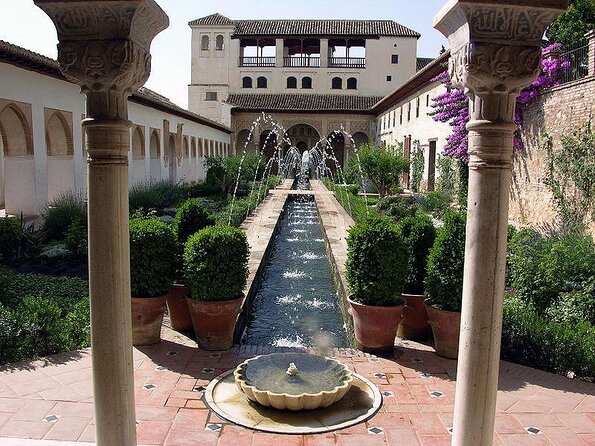
- Generalife first: start in the gardens, then the palaces make more sense.
- Nasrid Palaces in three blocks: Mexuar, Palacio de Comares, and Palacio de los Leones, each with its own focus.
- Fortress-city Alcazaba: history shifts from rooms to defense and everyday power.
- Carlos V contrast: a Renaissance palace planted in the middle of Alhambra.
- Small group energy: capped at 30 people, with enough room for questions and photos.
The value of a guided circuit at Alhambra (and why it’s not just walking)
The Alhambra is one of those sites where doing it alone can feel like standing in front of a puzzle box. You can still enjoy the beauty, of course, but the guided format helps you read the place: where power lived, how water and gardens supported life, and why certain spaces feel calm while others feel built for control.
At $66.38 per person for roughly 3 hours, you’re paying for two things that matter here: timed access to the right areas and a guide to connect the dots. Admission is included for all the stops on the itinerary, so you’re not layering extra ticket buys while you’re already dealing with uneven paths and crowds.
This tour also tends to be booked about a month ahead on average. If your dates are fixed, don’t wait until the last minute and hope for the best.
You can also read our reviews of more guided tours in Granada



Meeting point at P.º de la Sabica: keep it simple, arrive early
The tour meets at P.º de la Sabica, 34, Centro, 18009 Granada and ends back there. That’s helpful because it means you can plan your day around a known starting point near the complex.
It’s also near public transportation, so you don’t need a car or complicated logistics. If you’re traveling with someone who doesn’t love stairs, keep in mind that Alhambra paths are still hilly and uneven even on guided routes.
Practical move: aim to arrive a bit early, then relax. It’s better than rushing to find your group right as you’re about to enter a place where timing matters.
Generalife Gardens: start with water, shade, and the Nasrid idea of living well
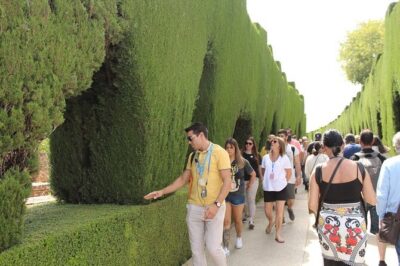
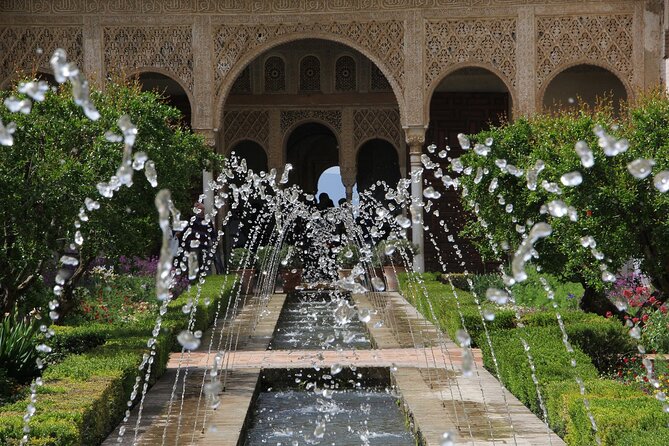
Generalife is where the Alhambra story turns from defense to daily pleasure. It’s a mix of historical gardens from different periods, plus palatial buildings that include parts from the Nasrid period.
Going first is a smart choice. You see how the garden layout, water features, and views connect to the way the palaces were used. Even if you only remember one idea from Generalife, make it this: at Alhambra, nature isn’t background. It’s part of the design.
You’ll get about 1 hour here, and that’s enough time to wander slowly, look at the small details, and still move on before the day turns into a rushed blur. The drawback is that gardens can be crowded when tour groups overlap, and your time is fixed—so you won’t have a full afternoon to slow down completely.
Nasrid Palaces (Mexuar, Comares, Leones): where you learn to see the meaning
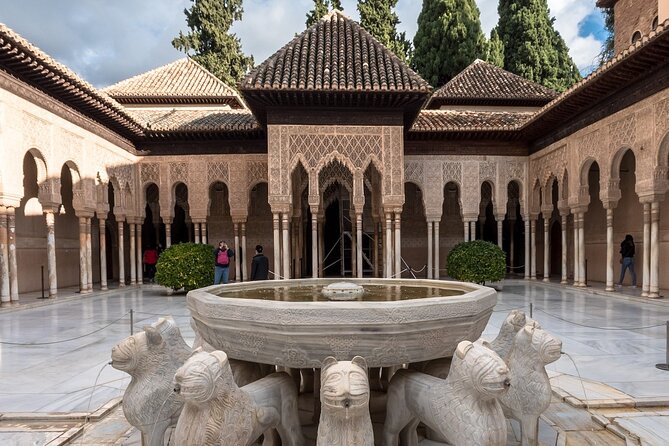
This is the headline stop, and it’s the heart of the Nasrid world. The residences were used by the sultans and their court, and the tour breaks the visit into three major areas that feel separate even though they’re connected:
- Mexuar: a public-to-semi-public space tied to governance.
- Palacio de Comares: the more ceremonial side of rule.
- Palacio de los Leones: the signature palace space most people picture when they imagine Alhambra.
You’ll spend about 1 hour at this section, and admission is included.
Here’s why guided time matters: these rooms aren’t just pretty. The guide helps you understand the logic behind what you see—why certain courtyards feel open while others feel staged, and how the palace design supports authority and ritual.
A common practical note: the exact time slot for the Nasrid Palaces can be communicated rather late (often by message). Build flexibility into your schedule. If you’re trying to catch a train that day, you might find yourself stressed. I’d rather you plan for breathing room than gamble on tight connections.
Also, note that some tours may run with bilingual commentary (English plus Spanish) depending on the group. The tour is offered in English, but if you’re sensitive to language switching, assume you might hear more than one language in the same headset.
Alcazaba: the oldest enclosure and the fortress-city idea
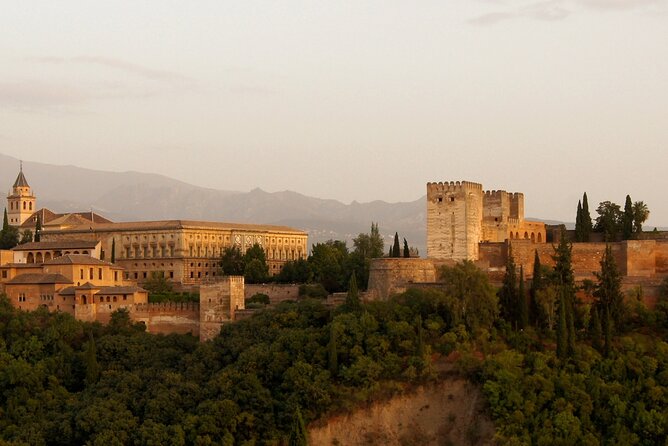
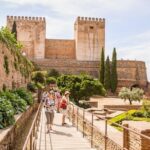
After the palaces, Alcazaba changes the mood fast. You’re stepping into the oldest part of the Alhambra—an enclosure built to protect the sultan. But it’s not only about walls. In this space, you can picture a miniature city: areas that housed royal service and the sultan’s guard.
You’ll have about 30 minutes here, with admission included.
This stop works well if you want context. The palaces are about art and power; Alcazaba explains how that power survived. It also gives you a chance to reset your brain after detailed room viewing.
The trade-off is obvious: 30 minutes disappears quickly on a site with stairs, turns, and lots of people. If you personally love military architecture and want to linger longer, this may feel a little compressed.



Palace of Carlos V: the Renaissance interrupting the Moorish world
Then comes a striking contrast: the Palace of Carlos V. This Renaissance building was constructed in the middle of the Alhambra complex and was meant as a symbol of victory after the empire defeated the last Muslim kingdom on the Iberian Peninsula.
You’ll get around 15 minutes here—enough for the main idea and a few photos, but not enough to treat it like a standalone museum.
What I like about including it is the perspective shift. Alhambra isn’t only Nasrid. You’re seeing how later rulers repurposed and reshaped the space. The short time works as a “meaning check” inside your guided flow.
If you’re the type who could spend hours inside a single Renaissance interior, consider doing extra independent time later (as allowed by re-entry rules).
Palacio El Partal and Torre de las Damas: pond views and what remains
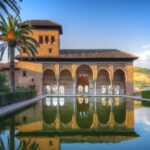
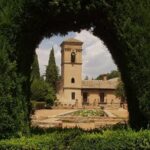
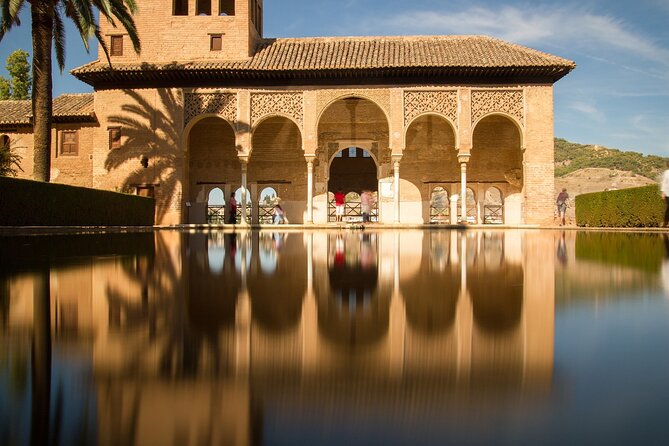
Next is the Palacio El Partal, a stop that’s easy to overlook if you’re rushing, but it’s worth the detour. It’s named after the Partal palace, and you’ll pause to consider the pond nearby.
The Torre de las Damas is the only preserved remains from the palace area, so it’s a “hold onto the silhouette” kind of sight. Fifteen minutes is brief, but it’s also the right length for this kind of stop—slowly absorbing the pond and the tower, then moving on.
If you love water architecture, this is the moment when the trip can feel especially peaceful, even if the broader complex is busy.
The pacing reality: what 3 hours feels like (and how to enjoy it more)
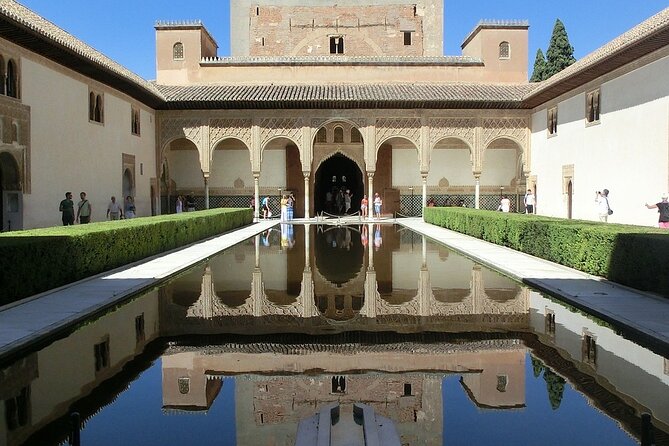
A guided Alhambra tour can feel long or short depending on how you handle movement. This one is about 3 hours, and it runs close to the limits of what many people can focus on without breaks.
Here’s what helps:
- Wear comfy walking shoes. Paths can be uneven, and there are up-and-down sections.
- Use the guide’s photo stops wisely. In the best experiences, guides timed stops for photo opportunities, and having earpieces makes it easier to step a few steps away and still hear.
- Keep your questions short and sharp. With a group size capped at 30, your guide can answer you, but the tour still has a schedule.
Crowds are a real factor at Alhambra. Even with a guided route, you’ll share space with other visitors. If you’re visiting in a shoulder season like early October or early November, it can be easier to move—though you still won’t have a private palace.
Also watch this: some versions of these tours end inside the Alhambra area, and there may be no re-entry to the palaces after the guided segment. That’s not a reason to skip the tour; it’s a reason to plan a post-tour loop outside the palaces instead of assuming you can re-check rooms.
Guides make the difference: what the strong ones do well
The tour experience depends heavily on the guide’s rhythm and clarity. In the feedback, people consistently praised guides who:
- explained the history without drowning you in dates
- kept the group moving at a pace that allowed photos
- stayed friendly and approachable for questions
Emilio is a name that comes up often, with praise for fun facts and structured explanations. Eva also shows up in many positive accounts, including notes about clear communication and timely pacing. Marta and Diana are mentioned too, with similar themes: approachable energy and solid context for architecture and meaning.
If you care about how a story is told, this is where you’ll feel the value.
Price and value: why $66.38 can be a good deal here
Let’s talk math and meaning, not just the sticker.
You’re paying $66.38 for:
- a guided route across multiple major areas (Generalife, Nasrid Palaces, Alcazaba, Carlos V, El Partal)
- included admission for each stop
- an experience designed around time windows (especially for the Nasrid Palaces)
For a site like Alhambra, the “cost” of going alone isn’t only money. It’s your time spent figuring out what matters, where to stand, and what to prioritize while you’re surrounded by crowds. A good guide compresses that learning curve.
Is it worth it every time? If you already know Alhambra deeply and you hate group movement, you might prefer a self-guided approach. But most people will benefit from having someone point out what to notice and when.
Just remember: because the Nasrid Palace time slot can be communicated later, your day needs flexibility. If you’re locked into a hard departure (like a train you can’t miss), this tour may create stress.
Should you book this Alhambra and Generalife guided tour?
I’d book it if you want the best use of limited time in Granada. This tour is especially strong for people who:
- want the big sights in one organized flow
- value context while they’re walking (not after, reading at home)
- like clear pacing and photo breaks
I’d think twice if you:
- cannot adjust your schedule due to the Nasrid Palace entry timing window
- need extra free time at Alcazaba or the gardens beyond the set stops
- expect to re-enter palaces after the tour ends
If your priority is to see Alhambra’s core story without wandering lost in a maze of walls and courtyards, this guided circuit is one of the easier ways to get there.
FAQ
FAQ
How long is the Alhambra and Generalife guided tour?
It runs about 3 hours.
What’s included in the price?
Admission tickets are included for all the listed stops.
Where does the tour start?
The meeting point is P.º de la Sabica, 34, Centro, 18009 Granada, Spain.
Does the tour end back at the meeting point?
Yes, the activity ends back at the meeting point.
Is the tour offered in English?
The tour is offered in English.
Do I get a mobile ticket?
Yes, it includes a mobile ticket.
How many people are in the group?
There’s a maximum of 30 travelers.
Which Alhambra areas are visited?
You’ll visit Generalife, the Nasrid Palaces (Mexuar, Palacio de Comares, Palacio de los Leones), Alcazaba, Palace of Carlos V, and Palacio El Partal.
Is admission included for each stop?
Yes, admission ticket entry is included for each of the stops listed.
Are service animals allowed?
Yes, service animals are allowed.
What happens if the tour is canceled due to weather?
The experience requires good weather. If canceled due to poor weather, you’ll be offered a different date or a full refund.