REVIEW · ALHAMBRA & NASRID PALACES TOURS
Guided tour to Alhambra with Generalife, Alcazaba and Carlos V
Book on Viator →Operated by Granada Turismo y Ocio · Bookable on Viator
Granada’s fortress story starts fast. This guided loop through Alcazaba defenses and standout viewpoints makes the Alhambra feel logical instead of overwhelming, even if you’re seeing it for the first time. I especially like how the guide connects what you’re standing on (walls, towers, city layout) to why it mattered to the Nasrid kingdom—and how the Christian conquest changed parts of the complex.
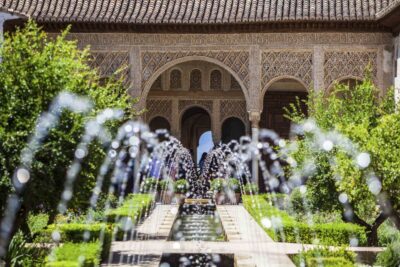
I also love the Generalife half of the tour: orchards on Cerro del Sol, irrigation details, and the patios with names you’ll remember (Patio de la Acequia, Patio de la Sultana). One possible drawback: this is not recommended if you have reduced mobility, because the route includes uneven ground and indoor/outdoor walking across multiple areas.
In This Review
- Key highlights you’ll feel right away
- The 2-hour Alhambra route that actually makes sense
- Alcazaba: defensive walls, Torre de la Vela, and the “why” behind the views
- Carlos V Palace: a Renaissance stop with symbols you can read
- Calle Real de la Alhambra: Christian modifications you can actually see
- Generalife on Cerro del Sol: orchards, patios, and water in motion
- Palacio El Partal: a short visit with water-and-garden logic
- Price and value: what $47.94 buys you (and what it doesn’t)
- Timing tips that make the day easier
- Who should book this Alhambra tour
- Before you go: small things that matter at the Alhambra
- Should you book this guided Alhambra tour?
Key highlights you’ll feel right away
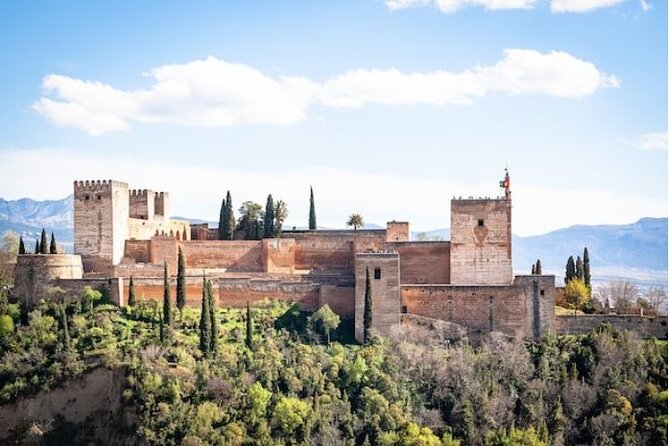
- Torre de la Vela views: see Granada, Albaicín, and the Vega de Granada from the defensive tower area
- Carlos V Palace in context: a quick, clear stop focused on facades, courtyard, and symbols
- Calle Real’s layered history: Nasrid spaces plus Christian changes like Santa María de la Alhambra and San Francisco
- Generalife’s irrigation and patios: Patio de la Acequia and the summer-house area are part of the story
- Partal Palace for scale: portico, pool, and gardens, even if you only get a short look
- Small-group pace (max 30) plus an audio system to keep you oriented
The 2-hour Alhambra route that actually makes sense
This tour is built for speed-with-meaning. In about 2 hours, you get a guided hit across the main areas people care about: the Alcazaba (military city), the royal-palace realm (including the Carlos V stop), the public route of Calle Real, and then the garden-and-water world of Generalife—plus a brief visit to Palacio El Partal.
That time pressure can sound stressful, but it usually works in your favor. The guide doesn’t try to teach the entire Alhambra; they pick the key pieces so you can understand what you’re seeing and move efficiently between zones.
You’ll be in a group of up to 30, and that matters at the Alhambra, where paths can get tight. The provided audio system is another plus. It helps you keep up with explanations without turning every stop into a shouting match.
You can also read our reviews of more guided tours in Granada



Alcazaba: defensive walls, Torre de la Vela, and the “why” behind the views
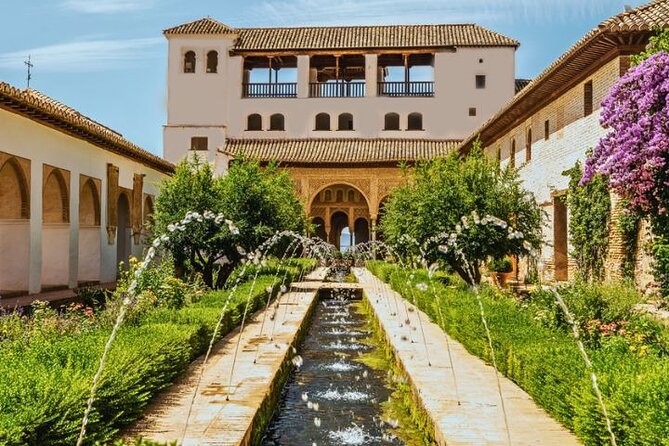
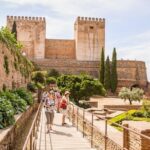
Your first stop is Alcazaba, the military part of the Alhambra. This isn’t just a pretty intro; you’ll get explanations of the defensive structure of the palatine city—how it’s laid out, and what those structures were meant to do.
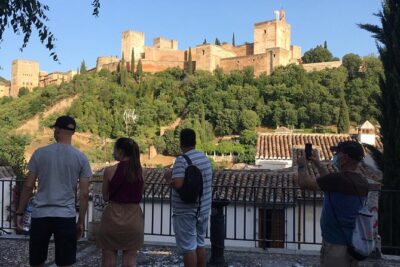
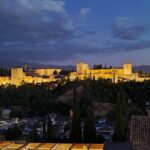
Then you head up toward Torre de la Vela. This is one of the best moments on the tour because the views aren’t random. You’ll see Granada, the Albaicín, and the Vega de Granada from a tower that was designed to watch, control, and communicate.
The guide also connects the tower to the period shift during the Christian conquest. You’ll hear what changed and what stayed—so the architecture feels like evidence, not decoration. It’s the kind of context that makes later palace and garden visits click.
From there, you’ll visit Jardín de los Adarves and Puerta de las Armas. Even if you only spend about 20 minutes here, you’ll leave with a clearer mental map: where the power lived, where people defended themselves, and why the Alhambra could function as a fortified city—not just a palace.
Carlos V Palace: a Renaissance stop with symbols you can read
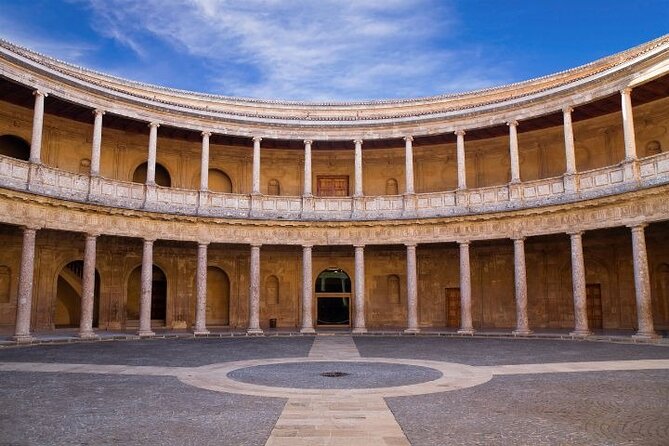
Next up is the Palace of Carlos V, a 16th-century building placed inside the Alhambra complex. The interesting part of this stop is the framing: the guide focuses on the facades and the main courtyard, and explains the construction and symbols you’re likely to notice.
In other words, you’re not just being shown rooms. You’re learning how to interpret the building as a statement—different from the Nasrid style that surrounds it—so it doesn’t feel like an interruption.
Your time here is short—about 10 minutes—but that’s realistic for this tour format. If you’re doing only one guided experience in Granada, this is a smart compromise: you get the “what you’re looking at” explanation without losing your whole afternoon.
Calle Real de la Alhambra: Christian modifications you can actually see
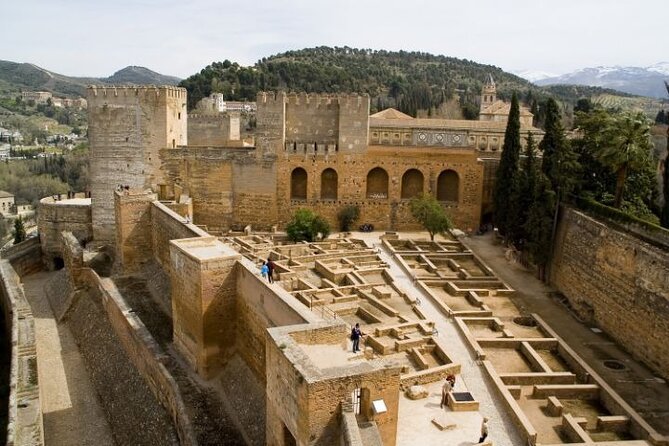
After Alcazaba and Carlos V, you move into the public area along Calle Real de la Alhambra. This segment is about 35 minutes, and it’s also a good place to understand how the complex evolved over time.
You’ll learn the structure of the city in this public zone. Then you’ll hear about Christian modifications that became part of the Alhambra’s physical story, including the Church of Santa María de la Alhambra and the Convent of San Francisco—which is now used as a national hostel. One detail worth remembering: the convent area was the burial place of Queen Elizabeth (as part of the tour’s explanation).
The tour also points out areas that aren’t about full buildings anymore, but about what remains. You’ll visit the dry land area where the ruins of the Palacio de los Abencerrajes are located. The Abencerrajes are presented as a prominent family of the Nasrid court, which helps you understand why those ruins matter even when the original spaces are gone.
Then you’ll move to the Medina area to see ruins of workshops and ovens used to build decorations. That’s one of the most practical parts of the tour for understanding the Alhambra as an engineered place. It’s not only palaces and gardens; it’s also production—designs made by people who worked there.
This stop has admission ticket free time on the tour, which helps you stretch your experience. You still get guided context, but you’re not locked into an indoor-ticket rhythm for every minute.
Generalife on Cerro del Sol: orchards, patios, and water in motion
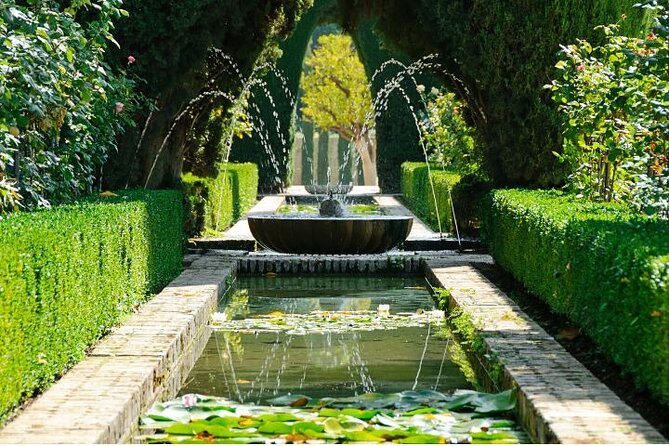
Now comes the tour’s most “breathe for a minute” chapter: Generalife. You’ll go up to the Cerro del Sol hill and see Nasrid orchards, then also the Christian labyrinth-style garden influence of Generalife.
What I like here is that the guide ties the plants to practical life. You’ll get explanations of flora in the gardens and what fruits were produced in the orchards. So when you see the greenery, you’re not only admiring beauty; you’re understanding what it produced and why it belonged next to a palace complex.
You’ll also visit the Generalife Palace and hear about its physical communication with the city of the Alhambra. That connection matters because it explains Generalife as more than a retreat—it’s part of the royal system.
Key garden moments on this stop include:
- Patio de Polo
- Patio de la Guardia
- Patio de la Acequia, where you’ll see the summer house of the Sultan area described in the tour
- Patio de la Sultana, with a focus on the cypress and tall gardens
The tour exits through the Paseo de las Adelfas. Even that matters: it helps you leave the garden section in a direction that keeps your movement logical.
This stop runs about 30 minutes, with entrance included, and it tends to be the part where visitors feel the Alhambra’s atmosphere most clearly—quiet, curated, and designed around water and climate.


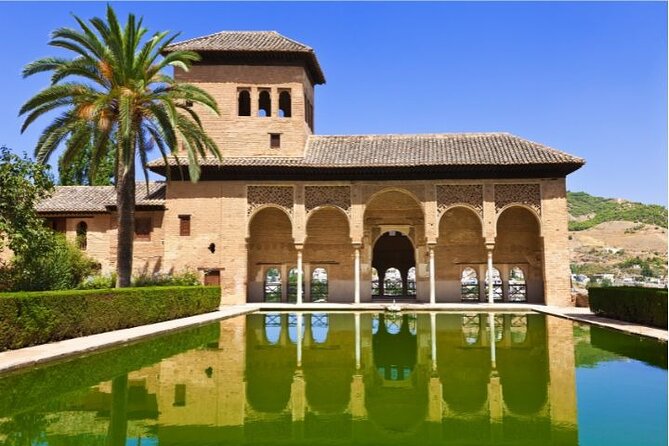
Palacio El Partal: a short visit with water-and-garden logic
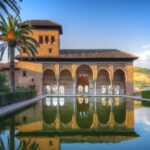
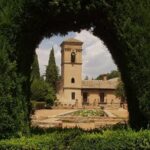
You finish with Palacio El Partal, around 10 minutes. This is a smaller stop, but it’s a smart one because it reinforces a theme: Alhambra greatness isn’t just about grand courtyards. It’s about how water and shade shape daily life and make architecture feel alive.
You’ll see the portico, a pool, and the gardens surrounding it. The guide keeps it brief, but it’s long enough to notice the relationships between structure, water, and plantings—which is exactly what you want before your brain shifts into “too much information” mode.
Price and value: what $47.94 buys you (and what it doesn’t)
At about $47.94 per person for a tour lasting roughly 2 hours, the value comes from three things: guided interpretation, an audio system, and included access to multiple key zones.
Inclusions cover the Gardens of Generalife and Alcazaba (and the relevant entrance pieces for the tour stops where they’re listed). That means you’re not juggling as many separate decisions when you arrive. Even if you’re comfortable buying tickets on your own, paying for a guide at the Alhambra is often worth it because the explanations help you read the site instead of just walk it.
Also, the guide helps you move from zone to zone efficiently. With a complex as large as the Alhambra, “what do I do next?” can steal your energy. Here, the route is pre-planned: Alcazaba → Carlos V → Calle Real → Generalife → Partal.
One thing to note: transfer is not included. You’ll handle your own getting there and back, so plan your transportation around your start time.
Timing tips that make the day easier
If you want a calmer experience, pick your slot carefully. One practical suggestion from experience-based feedback is choosing a 10:30 start when possible. The reasoning is simple: later in the day, the complex tends to feel more crowded. A morning slot can make the walking and viewing smoother.
The tour is also only about 2 hours, so your timing affects everything. If you’re planning additional stops in Granada after this, build in a buffer. On tours like this, small delays can ripple into your schedule—especially at a site that runs on timed entry patterns.
If you’re sensitive to heat or want softer light for photos, an earlier start generally helps. Even when weather isn’t the main issue, your comfort usually improves when you aren’t battling peak foot traffic.
Who should book this Alhambra tour
This tour is a strong fit if you:
- Want a guided overview that connects the Alhambra’s military side to its palaces and gardens
- Like short stops with clear explanations rather than long, slow wandering
- Prefer English commentary and appreciate an audio system
- Want a route that covers major zones in about 2 hours without feeling aimless
It may be less ideal if you:
- Have reduced mobility, since the tour is explicitly not recommended for that
- Need lots of time to linger in one single area, because the pace is designed for covering multiple parts
One extra “human” point: the quality of the guide matters a lot here. In feedback about this experience, guides such as Vicky and Miguel Ángel are highlighted for being helpful and supportive, which can make the whole route feel smoother—especially when you hit confusing signage or tight pathways.
Before you go: small things that matter at the Alhambra
Wear comfortable shoes. The Alhambra isn’t a museum in a single room—it’s a network of streets, courtyards, and hill sections.
Bring layers. You’ll move between outdoor viewpoints and indoor or semi-covered spaces, and your comfort affects how much you enjoy the explanations.
And if you’re traveling with a baby: strollers aren’t accessible for babies on this tour. The tour data says babies can’t access strollers, only carrying backpacks.
Finally, plan around the fact that this experience is non-refundable and can’t be changed. So double-check your dates before locking it in.
Should you book this guided Alhambra tour?
I think you should book it if you want a smart, time-efficient way to understand the Alhambra’s big ideas. You get the defensive story at Alcazaba, the contrast of Carlos V Palace, the layered public route along Calle Real, the garden-and-water logic of Generalife, and a quick reinforcing look at Partal—all with English guidance and an audio system.
Skip it (or rethink it) if you need a slow, fully flexible pacing plan, or if mobility limits make the route hard. Also, if your schedule is tight and you can’t handle any start-time shifting, pick your timing carefully and build a buffer.
If your goal is to leave with the Alhambra making sense in your head—not just photos on your phone—this is a good buy for the money.