REVIEW · ALHAMBRA & NASRID PALACES TOURS
Guided visit to the Alhambra, Nasrid Palaces and Generalife
Book on Viator →Operated by Granada Turismo y Ocio · Bookable on Viator
Alhambra feels like a puzzle with answers. This guided route makes the site readable fast, with clear context on Nasrid design and the way rulers shaped daily life inside the walls. I especially love the stucco-and-wood craft explanations in the Nasrid Palaces, and I also love how Generalife gardens shift the mood from power to water, shade, and fruit.
One possible drawback: it’s a lot of walking through historic areas, and it’s not recommended for people with reduced mobility. If you’re sensitive to stairs or uneven ground, plan carefully before you go.
In This Review
- Key Highlights You’ll Actually Feel
- Why This 3-Hour Alhambra Route Works
- Nasrid Palaces: Comares, Mexuar, and the Lions Fountain
- Comares Palace, Mexuar, and the Throne Room
- Palace of the Lions and the rooms that frame power
- Partal area and Torre de las Damas
- Alcazaba: Defensive Power Meets the Best Views in Granada
- Understanding the defensive layout
- Torre de la Vela and Granada panorama
- Gardens of the Adarves and Puerta de las Armas
- Palace of Carlos V: The 16th-Century Contrast You’ll Appreciate More After
- Calle Real de la Alhambra: The City’s Public Spine and the Christian Layer
- Christian modifications you can still spot
- Ruins of the Palacio de los Abencerrajes
- Medina ruins: workshops and ovens for decorations
- Generalife: Cerro del Sol, Orchards, Labyrinth Gardens, and Patios
- Nasrid orchards and Christian garden design
- Generalife Palace and how it connects to the Alhambra
- Patios you’ll remember because they’re named
- Price and Value: What $66.42 Gets You
- Logistics That Help You Have a Smoother Day
- What I’d Recommend This Tour For
- Should You Book This Guided Alhambra and Generalife Visit?
- FAQ
- How long is the guided visit?
- What does the itinerary include?
- Are admission tickets included?
- Is the tour offered in English?
- What is the group size limit?
- Is it suitable for people with reduced mobility?
- Where is the meeting point?
- Are service animals allowed?
- What is the cancellation policy?
Key Highlights You’ll Actually Feel
- Nasrid Palaces, from Comares Tower to the Lions Palace with time spent on the details people usually miss
- Alcazaba viewpoints from the Torre de la Vela, with the defensive city explained in plain language
- Carlos V’s 16th-century palace explained through facades, courtyard, symbols, and where the museums are inside
- Calle Real de la Alhambra linking the Muslim city layout with Christian additions you can still see
- Generalife on Cerro del Sol: Nasrid orchards plus the Christian-style garden paths and patios
Why This 3-Hour Alhambra Route Works
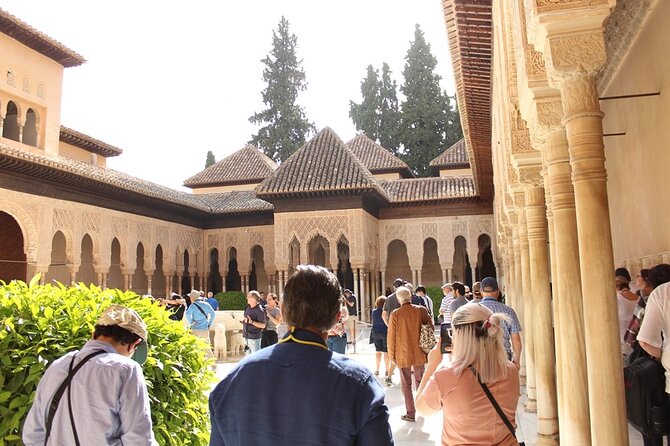
The Alhambra is not a single building. It’s a whole palace-city, then later a fortress, then later a patchwork of different eras. A self-guided visit can be gorgeous, but it’s easy to feel lost. This tour is built to keep you moving through the most important zones in a logical order, so the architecture starts to make sense instead of just looking beautiful.
You’ll get a guided visit to the Nasrid Palaces, then the Alcazaba (the military zone), then the Palace of Carlos V, and finally Generalife. The total time is about 3 hours, which is a sweet spot: long enough for real explanations, short enough to still enjoy Granada without burning your whole day.
Also, the tour is capped at a maximum group size of 30 people, offered in English. That matters because you’ll actually hear the guide, not just catch fragments over a crowd.
You can also read our reviews of more guided tours in Granada



Nasrid Palaces: Comares, Mexuar, and the Lions Fountain
This is the heart of the Alhambra, and the visit starts with the Nasrid Palaces. If you only see the big rooms and miss the smaller design logic, you’ll come away with photos but not much understanding. Here, the tour focuses on how the palaces worked and how the details were built.
Comares Palace, Mexuar, and the Throne Room
You begin with the Comares Palace, including the administrative area called the Mexuar. That’s a smart starting point because it reminds you: this wasn’t just a dreamy residence. It was a place where rulers managed governance.
Then you head to the Patio de los Arrayanes, known for its porticos and the long pool. You’ll also move up to the Comares Tower, where the majestic Throne Room sits. The guide explains construction techniques, including the stucco methods and the wood techniques used for the original ceiling—still preserved. That’s one of those “wait, I never would’ve noticed that” moments that genuinely improves your appreciation.
Palace of the Lions and the rooms that frame power
Next comes the Palace of the Lions, described as a majestic work of Sultan Mohammed V. The centerpiece is the patio and the famous fountain, but the tour doesn’t stop at that icon. You’ll continue to annexed rooms, including the Room of Two Sisters and the Room of the Kings.
Here’s the value: once you know what each space is for and what design choices signal authority, the palace stops being a maze. It becomes a planned message.
Partal area and Torre de las Damas
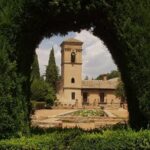
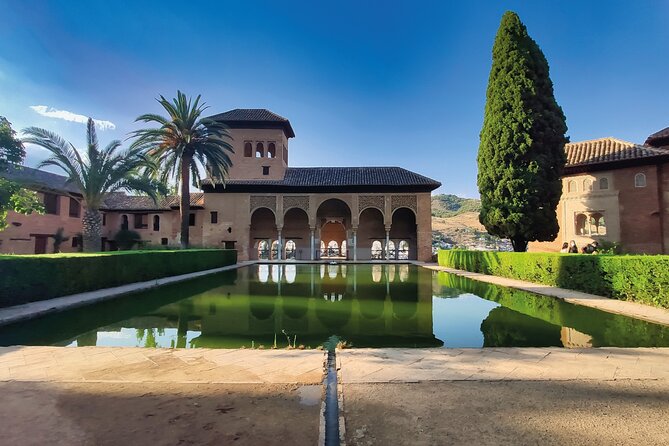
The visit concludes in the Partal area, including the Torre de las Damas. This section helps you connect the palaces to the surrounding complex. It’s a good closing note because it widens your mental map before you move to the military part.
Time on this stop: about 1 hour, with admission ticket included. That’s efficient. You’ll get explanations without it dragging into “museum mode.”



Alcazaba: Defensive Power Meets the Best Views in Granada
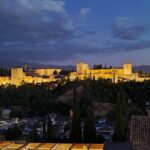
After the Nasrid Palaces, the tour shifts gears to the Alcazaba, the military portion of the Alhambra. This is where you start to feel how Granada’s skyline and the valley fit into the palace-city.
Understanding the defensive layout
You’ll visit the defensive structures and get explanations of how the palatine city was protected. The key idea is function: walls, towers, gates, and how the terrain supports defense. Even if you’re not a history buff, it helps you understand why the Alhambra is where it is and why it looks the way it does.
Torre de la Vela and Granada panorama
The tour climbs up to the Torre de la Vela. The payoff is the spectacular view over Granada, the Albaicín, and the Vega de Granada. The guide also explains the tower’s function and what happened during the Christian conquest, tying the architecture to changing control.
This stop is short—about 25 minutes—but it’s one of the most rewarding because the view instantly turns the complex site into a real place in the broader city.
Gardens of the Adarves and Puerta de las Armas
You’ll also visit the Jardín de los Adarves and the Puerta de las Armas. It’s a nice contrast after the defensive climb: the gardens bring relief, while the gate keeps the focus on access and power.
Admission ticket included for this stop.
Palace of Carlos V: The 16th-Century Contrast You’ll Appreciate More After
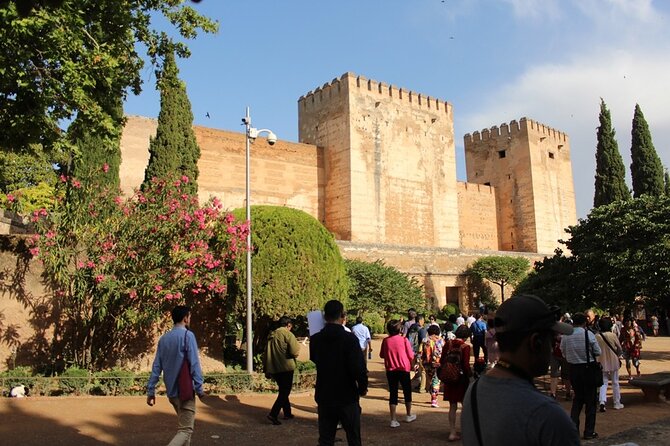
Next is the Palace of Carlos V, a 16th-century building that doesn’t look like the Nasrid palaces. That contrast is the point. It shows how the Alhambra changed when new rulers arrived and what they kept, rebuilt, or repurposed.
You’ll get an explanation of the facades and the main courtyard, plus discussion of its construction and symbols. The guide also points out the location of the museums inside. Even if you don’t have time to visit them today, you’ll know where you’d go if you returned.
Time on this stop: about 15 minutes. Short, but useful. This isn’t a deep museum tour; it’s orientation with context.
Admission ticket included.
Calle Real de la Alhambra: The City’s Public Spine and the Christian Layer
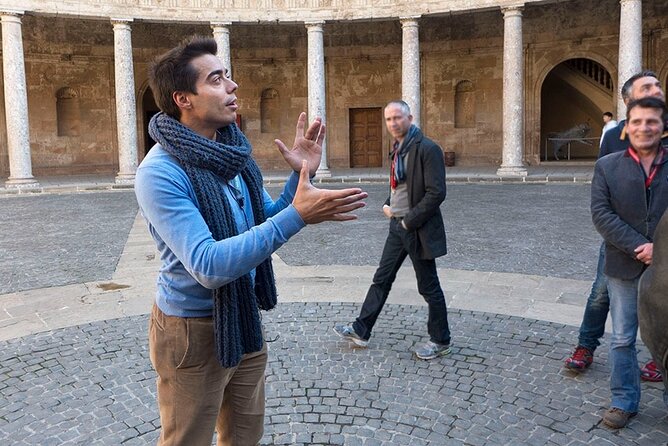
Then you move onto Calle Real de la Alhambra, the public area covered in places. This segment is valuable because it explains the structure of the city—how people moved through a space that was both palace and community.
Christian modifications you can still spot
The guide comments on Christian additions, including the church of Santa María de la Alhambra and the convent of San Francisco, which is now converted into a national hostel. The tour notes that it was the burial place of Queen Elizabeth. These details are exactly the kind that make a walk through ruins feel connected to real lives.
Ruins of the Palacio de los Abencerrajes
You’ll also visit the area of dry land where the ruins of the Palacio de los Abencerrajes are located. This is tied to a prominent Nasrid family. Even without the full palace intact, the spot gives you a better sense of scale and neighborhood layout inside the Alhambra.
Medina ruins: workshops and ovens for decorations
Finally, you’ll see parts of the Medina, including ruins of workshops and ovens used to build decorations. This is one of those practical details that makes you think about labor and craft. The Alhambra wasn’t just “made beautifully.” It was made with organized work.
Time on this stop: about 25 minutes, and admission is listed as free.
Generalife: Cerro del Sol, Orchards, Labyrinth Gardens, and Patios
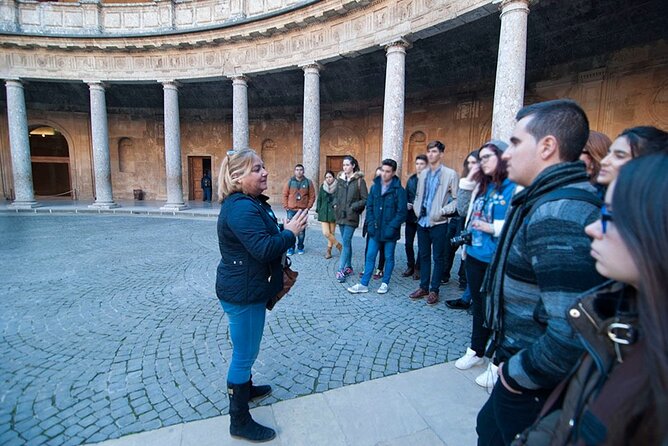
If the Nasrid Palaces feel like architecture you’d expect from a throne, Generalife feels like the place where rulers could breathe. This final stop takes you to Cerro del Sol—a hill location that’s perfect for gardens and views.
Nasrid orchards and Christian garden design
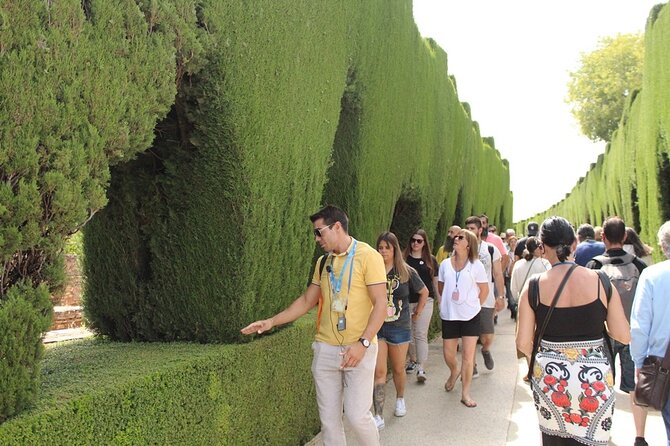
You’ll see the Nasrid orchards and the Christian labyrinth gardens of the Generalife. The guide explains the flora in the gardens and the fruits produced in the orchards. That makes it easier to look at plants as part of a system—food, shade, beauty, and status.
Generalife Palace and how it connects to the Alhambra
You’ll visit the Generalife Palace and hear how it physically connected with the Alhambra city. This is meaningful because it explains why “garden” wasn’t just leisure. It was connected to power and daily life.
Patios you’ll remember because they’re named
The tour includes several standout patios:
- Patio de Polo
- Patio de la Guardia
- Patio de la Acequia, where you’ll see the summer house of the Sultan
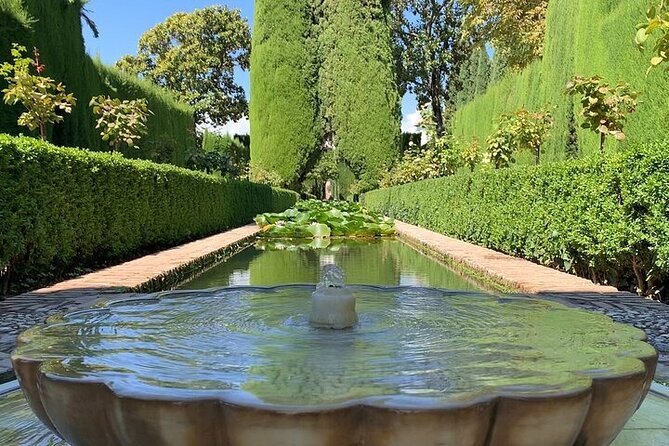
- Patio de la Sultana, with cypress and tall gardens
These names matter because they give you mental anchors while you walk. Without them, Generalife can blur into “pretty gardens.” With them, you can recall exactly where you were and what you saw.
You’ll exit through the Paseo de las Adelfas.
Time on this stop: about 45 minutes, with admission ticket included.
Price and Value: What $66.42 Gets You
The price is listed at $66.42 per person for about 3 hours. For the Alhambra, that’s not just paying for a guide. You’re paying for a structured route that covers multiple ticketed areas: the Nasrid Palaces, Alcazaba, Carlos V, and Generalife. Calle Real is free in the tour plan.
So the value comes from two things:
- Coverage: you hit several major parts of the Alhambra complex in one session.
- Interpretation: you don’t just see details like the stucco/wood ceiling techniques or the linked layout between palace and garden. You understand why they’re there.
One practical note: the experience has a maximum group size of 30 people. Smaller crowds usually mean better listening and fewer missed explanations.
Also, confirm timing is usually immediate unless you book within 2 days of travel, when confirmation comes within 48 hours subject to availability. If you’re planning a tight itinerary, book early. The tour is on average booked about 60 days in advance, which tells you this is a popular way to do the Alhambra.
Logistics That Help You Have a Smoother Day
You’ll meet at Alhambra Meeting Point | Tienda de Souvenirs y Alhambra tours, P.º de la Sabica, 1, Local, Centro, 18009 Granada, Spain. Your tour ends in a different location (so don’t plan a “right after” appointment at the meeting point).
The tour is near public transportation, and service animals are allowed. Language is English. It’s also listed as suitable for most people, but again, it’s not recommended for reduced mobility.
A small planning tip: wear shoes you trust. Even when the time blocks are short (like 15 minutes at Carlos V), your legs still do the work.
What I’d Recommend This Tour For
This guided visit is ideal if you want:
- A clear route through the Alhambra’s big sections in about half a day
- Explanations that connect design details to how the place functioned
- A finishing stop at Generalife that feels like a release after palace rooms and defensive walls
- An English-speaking guide who can translate complex spaces into something you can actually follow
It may not be the best fit if you’re expecting a slow, lingering pace. The stops are timed, and the value is in movement plus guidance—not in taking long breaks inside every room.
Should You Book This Guided Alhambra and Generalife Visit?
If you want the Alhambra without getting lost in it, I’d book this. The rating is extremely strong (4.9) and nearly everyone who leaves a rating recommends it, which usually means the tour hits its promise: understandable explanations, the major sites covered, and Generalife as a satisfying finale.
Skip it only if your mobility is limited or if you strongly prefer to wander without structure. Otherwise, this is a solid use of time in Granada—especially if it’s your first visit and you want to leave with a clear sense of what you saw and why it mattered.
FAQ
How long is the guided visit?
The tour lasts about 3 hours (approx.).
What does the itinerary include?
It includes Nasrid Palaces (Comares Palace and Lions Palace), the Alcazaba (including Torre de la Vela), the Palace of Carlos V, Calle Real de la Alhambra, and the Generalife.
Are admission tickets included?
Admission ticket is included for Nasrid Palaces, Alcazaba, Palace of Carlos V, and Generalife. The Calle Real de la Alhambra portion is listed as admission free in this tour plan.
Is the tour offered in English?
Yes, it’s offered in English.
What is the group size limit?
The tour has a maximum of 30 people.
Is it suitable for people with reduced mobility?
It is not recommended for people with reduced mobility.
Where is the meeting point?
The meeting point is Alhambra Meeting Point | Tienda de Souvenirs y Alhambra tours, P.º de la Sabica, 1, Local, Centro, 18009 Granada, Spain.
Are service animals allowed?
Yes, service animals are allowed.
What is the cancellation policy?
The experience is non-refundable and cannot be changed for any reason. If you cancel or request an amendment, the amount paid is not refunded.