REVIEW · GRANADA
Jewish Tour in Granada
Book on Viator →Operated by TourSefarad Jewish Tour Granada · Bookable on Viator
Granada has a way of hiding its Jewish past in plain sight. This private Jewish tour in Granada uses five focused stops to connect names, power, and the streets you can still see. I especially liked the guide’s serious command of Sephardic Jewish history (Marilyn’s explanations feel deeply studied, even though she is not Jewish), and I liked how the pacing fits a normal sightseeing day with clear, short stops. One thing to keep in mind: there are no major surviving ruins to wander through, so you’ll get the story more than leftover stone.
You start and end at Plaza Nueva, and pickup is available if you want help getting started without burning energy. Expect a moderate walk on uneven Granada streets, with time built in for viewpoints like Mirador de San Nicolas. The upside is that you’ll leave with a mental map of the old community and how Granada’s turning points shaped life around it.
This is offered in English, and it’s designed for small groups only—your group stays together. If you want a lesson with a walk attached (not a long museum session), this format usually clicks.
In This Review
- Key highlights you’ll feel right away
- A Jewish Walking Tour That Explains Granada’s Big Turning Points
- Meet at Plaza Nueva, Then Let Storytelling Drive the Stops
- Plaza de Isabel La Catolica: Power Shifts After the Reconquista
- Estatua de Yehuda ibn Tibon: A Jewish Scholar With a Translator’s Mission
- Torres Bermejas and the Jewish Quarter’s Defensive Logic
- Mirador de San Nicolás: Alhambra Views With a Story Attached
- Plaza Larga: One of Granada’s Oldest Plazas in the Middle of It All
- Price and Logistics: What $383.44 Buys You for Up to 5
- Who This Tour Suits Best (and Who Might Want Something Else)
- Should You Book the Jewish Tour in Granada?
- FAQ
- How long is the Jewish tour in Granada?
- How much does the tour cost and how many people can join?
- Is this tour private?
- Where do we meet and where does it end?
- Is pickup available?
- What language is the tour offered in?
- Can I cancel for a full refund?
Key highlights you’ll feel right away
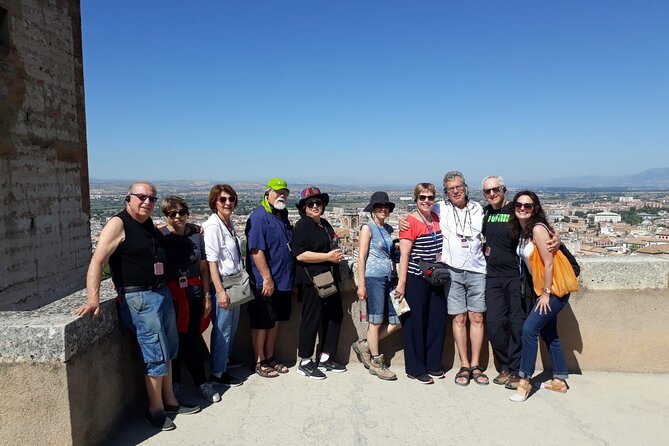
- A small-group private tour (up to 5) with your attention on the story, not a large crowd
- Bite-size stops that make it easy to fit into a packed day in Granada
- Marilyn’s storytelling brings specific Jewish figures and places into focus
- Torres Bermejas and the defensive context of the Jewish quarter
- Mirador de San Nicolas for real payoff: Alhambra views while the guide ties it to the larger narrative
- Plaza Isabel La Catolica using the Queen Isabel and Columbus statue to frame big historical shifts
A Jewish Walking Tour That Explains Granada’s Big Turning Points
Granada can look effortless from a distance. Up close, it’s layers—streets, symbols, and old power struggles hiding under modern stone.
This tour gives you a simple spine to hold onto. You’ll move through central plazas and a fortress viewpoint, and each stop answers a different piece of the puzzle of Jewish presence and influence in the city. It’s not a one-note “look at a plaque” experience.
The biggest win is that the guide makes the connections feel practical. You’re not just learning names—you’re learning why those names show up in that exact setting. You’ll also appreciate the short stop lengths, which keep the tour from turning into a marathon.
You can also read our reviews of more tours and experiences in Granada.


Meet at Plaza Nueva, Then Let Storytelling Drive the Stops
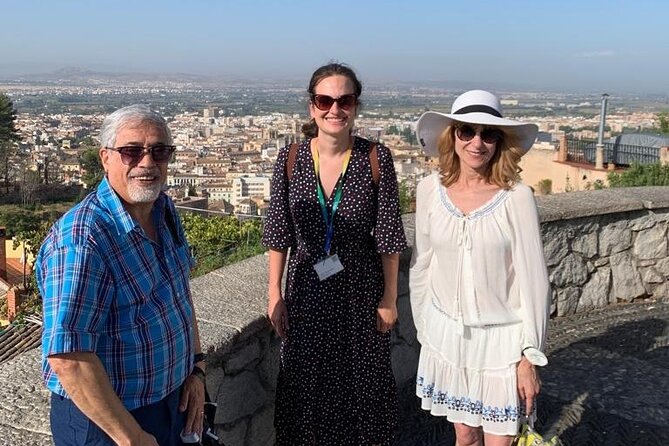
Your tour meets at Plaza Nueva and ends there too, which is handy if you’re continuing on to dinner afterward. You can also arrange personalized pickup and transfers, so you’re not forced to start with a hill you don’t need on day one.
The total time is about 2 hours 30 minutes, so it’s long enough for real context but short enough to keep your feet and attention intact. The pace works well if you like walking plus explanation, but you don’t want to spend half the day traveling between major sites.
You’ll stay with your group only, so questions don’t get lost in the crowd. And since the tour is offered in English, you can focus on the details without guessing.
One practical note: Granada streets can be uneven, and the plan includes a viewpoint stop. If you have moderate mobility concerns, plan for careful steps and comfortable shoes.
Plaza de Isabel La Catolica: Power Shifts After the Reconquista
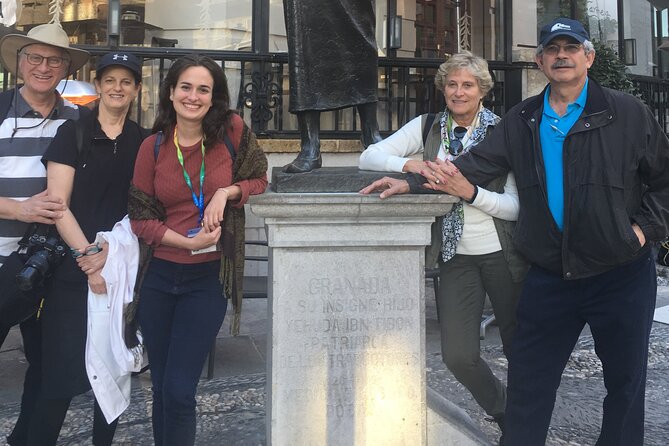
The first stop puts you at Plaza de Isabel La Catolica, anchored by the statue of Queen Isabel and Christopher Columbus. This is a smart opening because it frames the era where Spain’s political story changes dramatically and sends ripples beyond the peninsula.
The guide connects that backdrop to Granada’s transformation and how major historical shifts affect real communities. In other words, you’re not starting with a random statue—you’re starting with the era that changes the rules of life.
Here’s the catch: you’re in a modern public square, not a preserved medieval street. That’s why the explanation matters so much. One review described how the material evidence you might hope to see is limited, and the guide compensates by bringing the context to life through narrative.
If you’re the kind of traveler who likes your “history talk” tied to something you can point at, this first stop is a strong start. It gives your brain a storyline before you start seeing the smaller, more specific Jewish-linked landmarks.
Estatua de Yehuda ibn Tibon: A Jewish Scholar With a Translator’s Mission
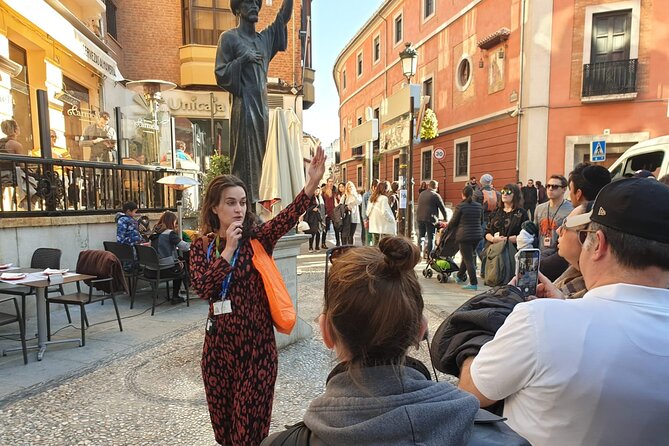
Next you’ll see the Estatua de Yehuda ibn Tibon, a tribute to a standout Jewish figure in Granada. The message here is focused and specific: Yehuda ibn Tibon was a Jewish physician and translator, converting Jewish Arabic-language works into Hebrew.
That translator detail is the kind of fact you’ll remember later, because it turns translation into a form of power. You’re looking at how knowledge moved between languages—and what that meant for Jewish learning and identity.
This stop is short, but it lands. Instead of broad “there were Jews here” statements, you get a person and a job description. It’s also a reminder that Jewish culture in medieval Spain wasn’t only about religious life. It was also scholarship, medicine, and communication across communities.
If you care about the intellectual side of Jewish history, this is one of the most satisfying stops on the walk. And if you don’t usually seek out statues, don’t skip it—this one is doing real work for the overall story.
Torres Bermejas and the Jewish Quarter’s Defensive Logic
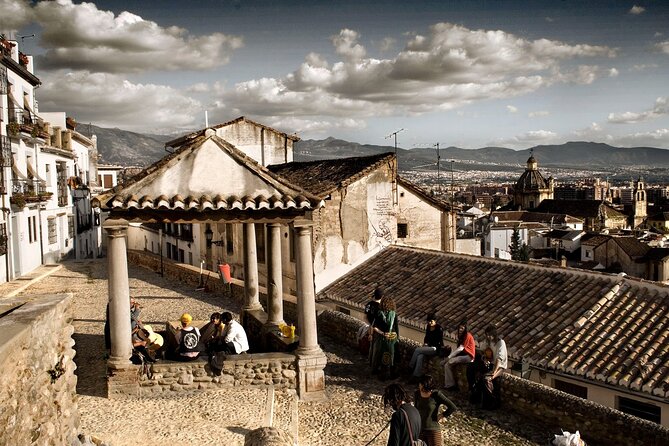
Then you’ll move to Torres Bermejas, described as a fortress that protected the Jewish quarter. Even if you’re not going inside anything, the location alone helps you understand the need for security.
Fortresses are easy to admire as architecture. The trick is using them to understand daily life. In a city like Granada, defense wasn’t theoretical—it shaped how communities felt and how neighborhoods were arranged.
This stop also helps you “place” the earlier scholarship and names in geography. You stop talking only about people and start thinking about space: where a community could gather, what was protected, and how the city’s layout reflected risk and control.
The benefit here is perspective. A fortress point-of-view can make you realize why certain streets and boundaries mattered. You end up with a mental map that doesn’t fade as quickly as dates do.
If you’re hoping for major archaeological remains, you might feel a little frustrated here. Still, the tour’s value is in the interpretation—explaining what that fortress role would have meant in the context of the Jewish quarter.

Mirador de San Nicolás: Alhambra Views With a Story Attached
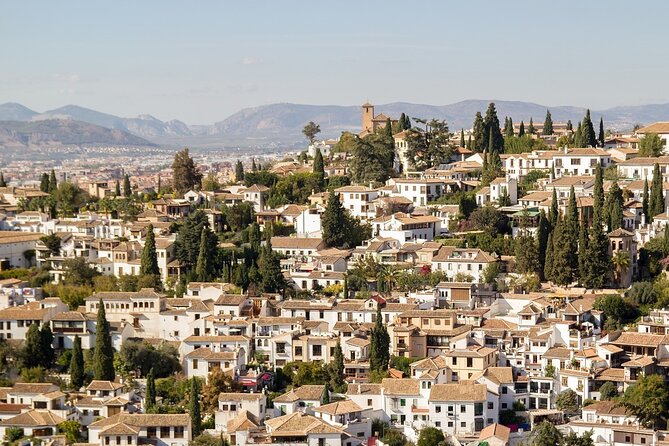
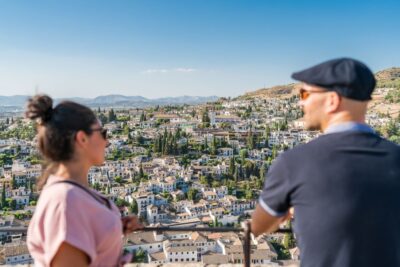
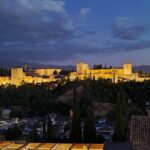
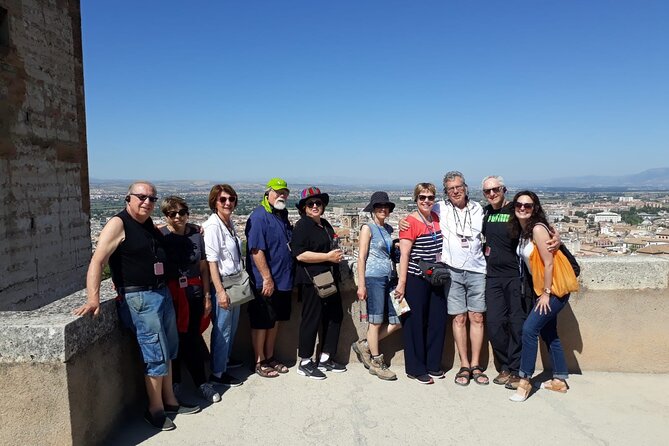
Now for the payoff: Mirador de San Nicolas, famous for incredible views of the Alhambra. This is the kind of stop that works even for people who don’t consider themselves “a view person.”
What makes it more than a photo break is the way it fits into the tour’s themes. The guide uses the viewpoint to connect the physical city to the historical narrative you’ve been building. So while you’re looking out, you’re also thinking about what was around you and what power looked like from street level.
You’ll likely spend around 15 minutes here. That’s enough time to look, reframe your mental picture, and take a breath without feeling like you’re wasting the day.
If your legs are feeling it, this is also a good moment to slow down. One review noted that Marilyn sometimes starts with a taxi to reduce hill strain, which is the sort of practical kindness that keeps the tour from becoming a punishment.
Bring water if you tend to get thirsty. Granada sun can be sneaky, even when you think you’ll be fine.
Plaza Larga: One of Granada’s Oldest Plazas in the Middle of It All
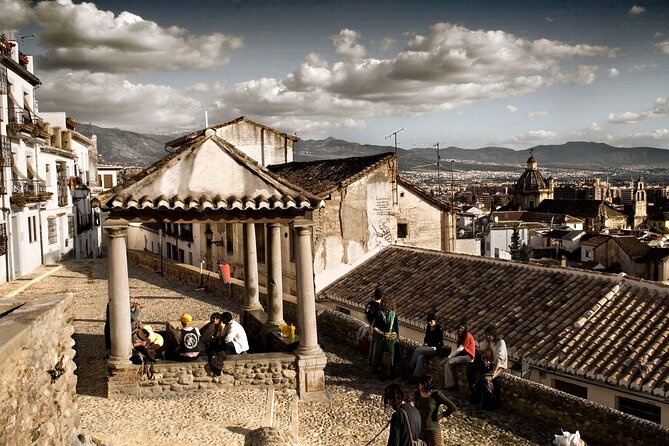
Finally, you end at Plaza Larga, noted as one of the oldest plazas in Granada. Ending on a broad, open public space is a smart move. It helps you gather everything you learned and see how it fits the modern city layout.
This is also where you’ll start noticing the “street-life” side of history. In plazas, it’s easy to imagine conversation, movement, and everyday routines—whether you’re talking about neighborhoods, markets, or community life.
The stop is short (around 10 minutes), but it gives you a finish line that feels grounded. Instead of ending at a museum door or a parking lot, you end in a place that still functions like a plaza should.
If you’re the type who likes to keep exploring afterward, Plaza Larga is a convenient launching point. You can continue wandering with your brain already switched on to the city’s layers.
Price and Logistics: What $383.44 Buys You for Up to 5
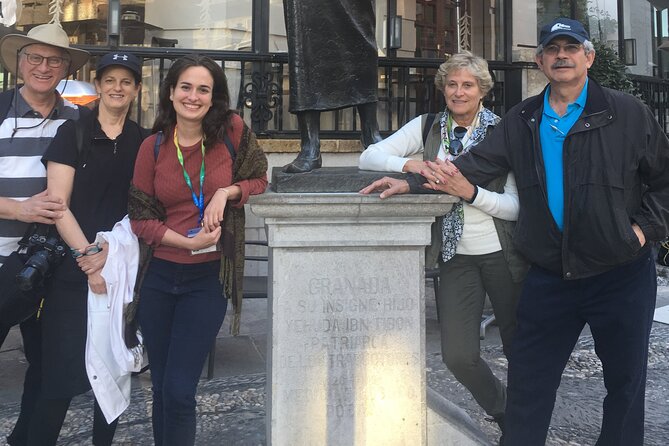
Let’s talk value in plain terms. The price is $383.44 per group, for up to five people, and the tour runs about 2.5 hours.
That can sound pricey if you picture a per-person museum ticket. But for a private tour, you’re paying for a focused guide, a small group experience, and a set route with interpretation baked in. For families or a duo of friends, it often works out as a decent way to get specialized storytelling without joining a big group.
Also, English availability and the option for pickup matters. Even if you don’t use pickup, the fact that pickup and transfers are possible can save time and energy—especially if Granada’s hills make you choose between comfort and sightseeing.
One more practical point: this tour is commonly booked about 30 days in advance. That’s usually a sign it’s a popular slot for people who want a guided narrative rather than random wandering.
Who This Tour Suits Best (and Who Might Want Something Else)
This tour fits you well if you like:
- Jewish history explained through real places you can see
- short walks with clear stops instead of endless pacing
- a guide who can connect names, language, and geography
It also works nicely if you’re traveling with people who love the Alhambra area but want more meaning than a photo line. You’ll get those views at Mirador de San Nicolas, just with context attached.
On the other hand, if you want lots of surviving artifacts and you’re hoping to physically tour old Jewish quarters with major remaining structures, you may feel underwhelmed. The storytelling does a lot of the heavy lifting here, and the experience is built around that reality.
Finally, the tour calls for moderate physical fitness. That doesn’t mean you need to be an athlete. It does mean you’ll want comfortable shoes and willingness to handle uneven streets and some elevation.
Should You Book the Jewish Tour in Granada?
Book it if you want a high-signal way to understand Granada’s Jewish story without getting lost in vague sightseeing. This tour’s structure is the secret sauce: quick stops, strong interpretation, and a guide who makes the connections feel human.
I’d also book it if you appreciate a guide’s depth, especially the way Marilyn’s background shows up in the details. The best moments are the ones where the tour links a person like Yehuda ibn Tibon to a place, then ties the larger historical shifts back to what you see around you.
Skip it only if your main goal is to physically explore lots of preserved sites with obvious remains. Here, you’re buying context, not ruins.
FAQ
How long is the Jewish tour in Granada?
The tour lasts about 2 hours 30 minutes.
How much does the tour cost and how many people can join?
It costs $383.44 per group and accommodates up to 5 people.
Is this tour private?
Yes. It’s a private tour/activity, and only your group participates.
Where do we meet and where does it end?
You meet and end at Plaza Nueva, 18010 Granada, Spain.
Is pickup available?
Yes. Pickup is offered, with personalized pickup and transfers available.
What language is the tour offered in?
The tour is offered in English.
Can I cancel for a full refund?
Yes. You can cancel up to 24 hours in advance for a full refund.