REVIEW · ALBAICIN & SACROMONTE WALKING TOURS
Albayzín y Sacromonte, Unesco Heritage Neighborhoods
Book on Viator →Operated by My Top Tour · Bookable on Viator
Granada’s hillside neighborhoods refuse to be rushed. This guided walk stitches together the UNESCO Albayzín and Sacromonte areas, where you’ll cover iconic streets, caves, and viewpoints without the usual getting-lost headache.
I love how the guide handles the navigation through winding lanes and steep stretches, so you can focus on the neighborhood details. I also love the photo payoff: you’ll hit miradors like San Nicolás and San Cristóbal, with clear sightlines toward the Alhambra and even the Sierra Nevada on the right day.
One thing to plan for: it’s a walking tour with hills, inclines, and stairs. If you want totally flat sightseeing, you’ll probably find this slower and more tiring than you hoped.
In This Review
- Key Things to Know Before You Go
- Albayzín and Sacromonte: Why This UNESCO Pair Works
- Price and Timing: Getting Value for $21.78
- Meeting Point in Plaza de Santa Ana: How to Set Yourself Up
- Stop 1: Murallas del Albayzín and the Streets That Teach You
- Cármenes, Towers, and Miradors Like San Nicolás and San Cristóbal
- Stop 2: Sacromonte Caves, Caló Culture, and Flamenco Atmosphere
- How the Route Balances Walking and Views
- What’s Included vs. What You’ll Pay Separately
- Photo Stops: Where You’ll Get the Money Shots
- Walking Comfort Tips That Actually Matter
- Who This Tour Suits Best (And Who Might Not)
- Should You Book Albayzín y Sacromonte?
- FAQ
- How long is the Albayzín y Sacromonte tour?
- What does the tour cost?
- Is the tour offered in English?
- Where does the tour start?
- What time does it start?
- Where does the tour end?
- What areas and stops are included?
- Are monument tickets included?
- What is included in the tour price?
- How big is the group?
- Can I cancel for a full refund?
Key Things to Know Before You Go
- UNESCO neighborhoods, one guided loop through Albayzín and Sacromonte with a clear route
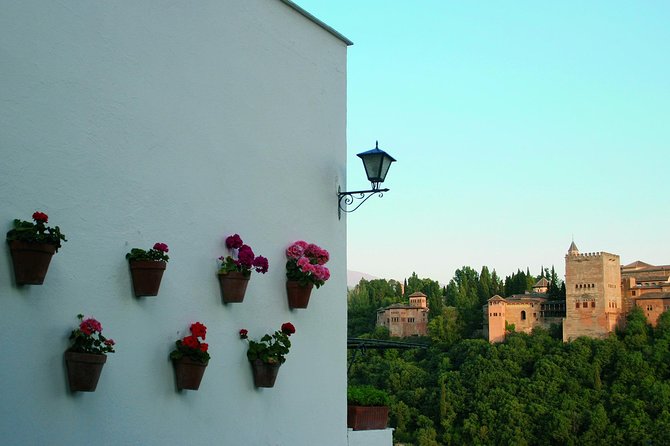
- Great Alhambra viewpoints built into the timing, starting at 5:00 pm for late-day light
- Street-level history you can feel: mosques, cisterns, cármenes, churches, and caves
- Sacromonte cave area in context with caló culture and flamenco-era atmosphere
- Small group size (max 15) keeps the experience personal and easier to manage on foot
Albayzín and Sacromonte: Why This UNESCO Pair Works
The best thing about this tour is that it treats Granada like a set of connected neighborhoods, not a list of monuments. You start with the Albayzín, the older Muslim core of the city, and then climb into Sacromonte, famous for its cave dwellings and flamenco culture.
Walking is the point. These places are built on slopes, with narrow lanes that twist like a puzzle. A guide helps you read the city as you go—so you understand what you’re seeing instead of just passing it.
The route also has a built-in rhythm: you get street views, then miradors, then a shift to Sacromonte’s cave streets and hillside panoramas. That change of scenery keeps the tour from feeling repetitive.
And yes, the photos are a real reason to come. Between the viewpoints and the open sightlines toward the Alhambra, you’ll have plenty of chances to frame the big landmarks the way you hoped you would.
You can also read our reviews of more historical tours in Granada

Price and Timing: Getting Value for $21.78
At $21.78 per person for about 2 to 3 hours (with a stated visit time of 2 hours 30 minutes), you’re paying for something most DIY walks miss: a knowledgeable guide who keeps you moving in the right direction and explains what you’re seeing.
Here’s where the value really shows. The main elements you’ll enjoy—neighborhood streets, church exteriors, miradors, cave area viewpoints—don’t require paying for monument entry as part of this tour. That means you can spend your money on the guide and your time, rather than stacking ticket lines.
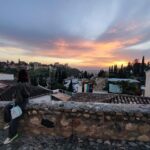
The timing also helps. The start time is 5:00 pm, which lines up nicely with late-day lighting. One of the common joys with this route is the sunset feel on Granada’s hills, especially once you’re looking back toward the Alhambra.
Group size matters too. With a maximum of 15 travelers, it’s easier for the guide to keep track of everyone on tight streets and steps.
Meeting Point in Plaza de Santa Ana: How to Set Yourself Up
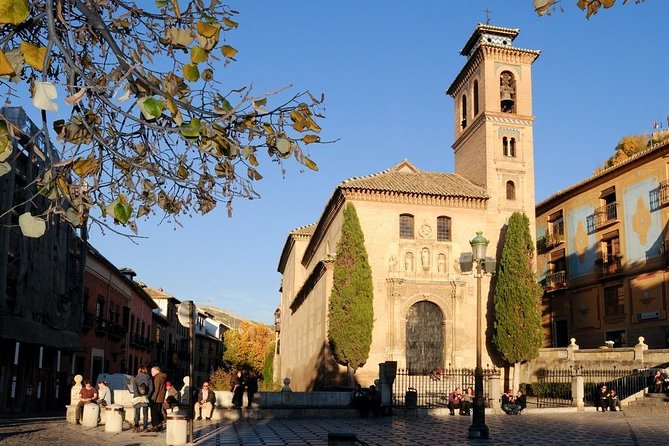
You meet at Plaza de Santa Ana in Granada, and the tour starts at 5:00 pm. It’s a simple starting point, but don’t treat “near public transportation” as permission to be late.
This tour lives on momentum. If you arrive late, you can miss the early orientation—especially in Albayzín, where the streets are narrow and easy to second-guess even with a map.
My advice: arrive a few minutes early and get oriented at the plaza. Then you can relax when the group funnels into the hills. Once the route starts winding, you’ll be glad you took that minute up front.
Stop 1: Murallas del Albayzín and the Streets That Teach You
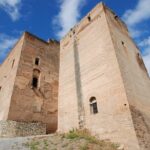
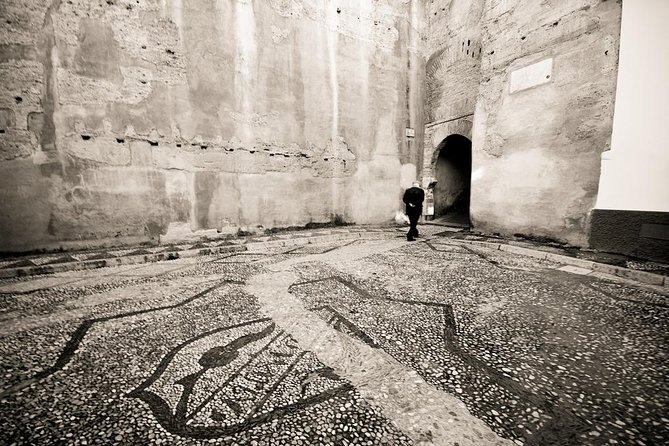
The first big phase is Murallas del Albayzín, in the part of Granada often described as one of the ancient nuclei of Muslim Granada. The neighborhood isn’t just pretty. It was once home to around 40,000 people, with roughly 30 mosques in the area.
Walking in Albayzín feels like walking through layers. You’ll pass palaces, churches, mansions, and landmarks that reflect different eras. You’ll also notice remnants of Muslim-era Granada, including mosques, minarets, and even Spanish-Muslim cisterns.
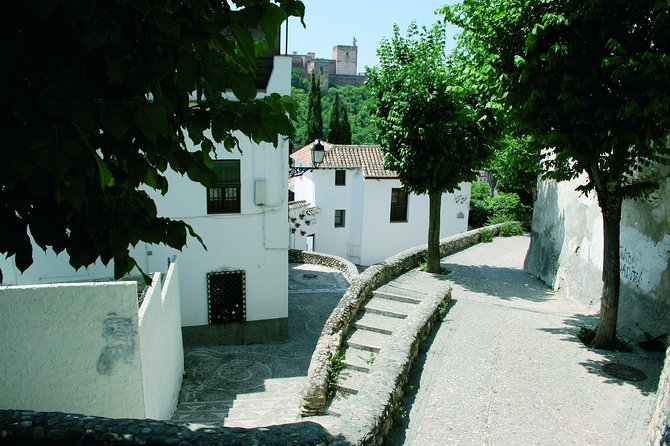
The street pattern is a huge part of the experience. The lanes are described as winding, narrow, and easy to lose your bearings in. That’s why the guide matters. I like tours where navigation is handled, because you can slow down to look at details instead of rushing to catch up with your own sense of direction.
You’ll also get a sense of daily life here—an Andalusian “everyday” vibe that’s not locked behind ticket gates. The vibe is part of the charm: squares can feel luminous and intimate, and you’re moving through real neighborhood space.
Cármenes, Towers, and Miradors Like San Nicolás and San Cristóbal
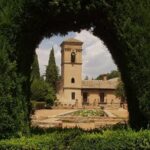
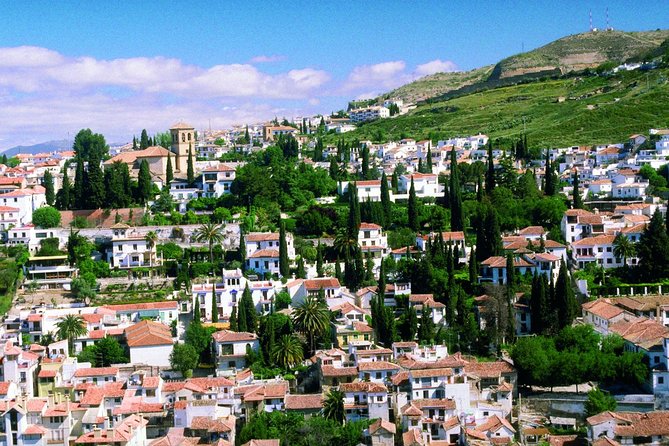
One of the reasons Albayzín is so photogenic is the way it blends homes with gardens. You’ll hear about cármenes—houses with gardens typical of Granada—often paired with Mudejar towers. It’s a local style that tells you something about how people lived here.
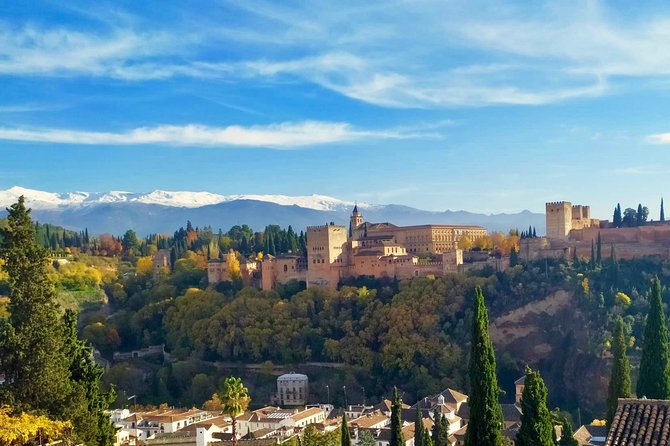
Then you’ll reach the viewpoints. San Nicolás and San Cristóbal are two of the standout miradors on this route, and they’re famous for a reason: they frame Granada’s big landmarks with real drama.
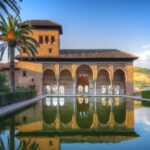
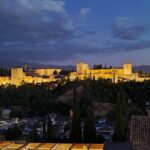
From these spots, you’ll be looking out toward the city and toward the Alhambra. If you time it right, the light can make stone textures look warmer and more detailed than you’d get at mid-day.
Also, keep an eye on what’s behind the main view. The tour notes Sierra Nevada photo opportunities too. If the weather is clear, that adds a “how big is this place?” feeling to your pictures.




Stop 2: Sacromonte Caves, Caló Culture, and Flamenco Atmosphere
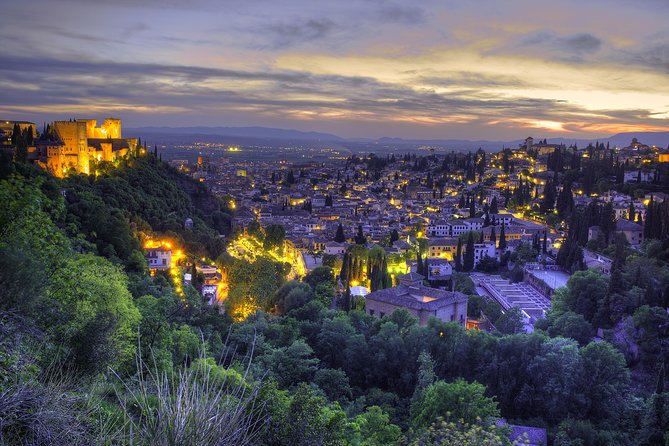
After Albayzín, the tour shifts into Sacromonte, described as a picturesque and idyllic hillside area. It’s traditionally tied to the gypsy community of Granada, where caló is part of the cultural story.
Sacromonte also has a longer timeline than many people expect. The community’s presence is often traced back to the 15th century, after migration routes that included parts of Europe and Africa. Whether you know the history already or you’re learning it on the spot, the guide’s framing helps you see Sacromonte as more than a “cave neighborhood for photos.”
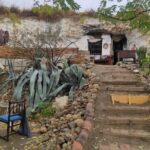
The scenery is specific and memorable. Think reddish, dry hillside tones, dotted with plants like pitas and prickly pears. Then look outward for the big panoramas: the Alhambra towers, white slopes in the area, and the greenery of the Valparaíso Valley, where the Darro runs.
The caves matter too. They’re grouped around ravines, creating a kind of cave-street layout. You’ll move through that geometry as part of the experience, and that’s when it starts to feel different from Albayzín’s church-and-palace vibe.
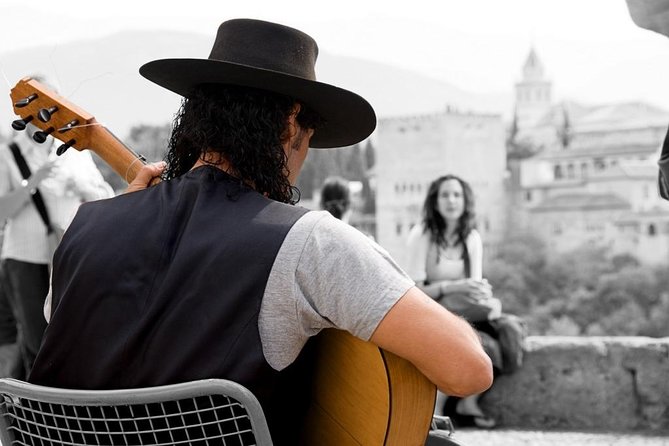
Caves here have been home for centuries, and the cultural thread often connects to bohemian life and flamenco artists. The tour describes Zambras as a key expression of those deep passions and mysteries, and even without sitting for a full performance, you get the sense of why this place became famous.
How the Route Balances Walking and Views
This isn’t a “sit and listen” tour. It’s built around walking through two neighborhoods that both reward attention, but in different ways.
Albayzín gives you narrow streets, architecture details, and miradors. Sacromonte gives you wider hillside views and the cave network atmosphere. If you come with the right expectations—comfortable shoes and patience for stairs—you’ll enjoy the flow.
A realistic consideration: there’s a lot of uphill and downhill. Some people find it manageable, but it’s still active. In practice, the pacing can feel reasonable, and the breaks for photos are part of the rhythm, not interruptions you can’t catch.
If you’re the type who loves to stop often and linger at viewpoints, you’ll probably enjoy this. If you hate slow wandering, you might feel time pressure. But the tour duration is long enough to do both: look, then keep moving.
What’s Included vs. What You’ll Pay Separately
This tour includes an official tourism guide and a visit time of 2 hours 30 minutes.
What’s not included is monument tickets and food and drinks. That matters because this tour leans toward exteriors, neighborhoods, viewpoints, and cave-area atmosphere, rather than ticketed entries to major monuments.
Good news: the stops listed here show admission ticket free, so you’re not forced into paying just to enjoy the core sights. Still, if you decide you want to go inside a church, palace, or another specific landmark, plan to pay separately.
So think of this as the “guided neighborhood experience” ticket, not a bundled pass into multiple indoor attractions.
Photo Stops: Where You’ll Get the Money Shots
This is a tour with photography built in, not tacked on at the end. The viewpoint stops in Albayzín are the clear stars, especially around San Nicolás and San Cristóbal.
From there, you can capture the Alhambra and city views in a way that feels naturally framed by the streets and hills. Because the tour starts at 5:00 pm, you also have a better shot at late-day light, when Granada’s stone and rooftops look softer.
Sacromonte also brings a different kind of photo opportunity. Instead of just looking outward, you’ll look across hillside textures and cave streets, plus the larger panorama lines toward the Alhambra towers.
Practical tip: travel with a camera strap and a plan for battery life. Walking uphill burns power fast, and you’ll want to keep shooting when you’re at the miradors.
Walking Comfort Tips That Actually Matter
If you want this to feel fun, treat it like a proper walking day. Bring shoes with grip for cobblestones and steep lanes.
You’ll likely be dealing with stairs and inclines, especially in Albayzín’s winding streets. That’s not a reason to skip the tour; it’s just a reason to pack smart.
Also bring layers. Even in summer, late afternoon can cool off once the sun drops behind the hills.
And one small social note: on group walks, there can be one person with a phone-on-a-stick or a camera setup that blocks the view for others. If that happens, the best move is simple—step aside briefly, let the shot pass, and then move back into your own line for the next viewpoint.
Who This Tour Suits Best (And Who Might Not)
This tour is ideal if you want Granada’s Albayzín and Sacromonte in a structured, guided way. You’ll like it if you enjoy streets and architecture, and if you care about context—how Muslim-era Granada connects to later Christian Spain, and how Sacromonte fits into the region’s cultural story.
You’ll also appreciate the small group size. It helps on narrow lanes where big groups can feel chaotic.
Who might reconsider? If you’re avoiding hills, stairs, and uneven walking surfaces, this may not match your comfort level. And if you’re mainly chasing indoor museum tickets, this tour won’t replace a ticketed day of major attractions.
Should You Book Albayzín y Sacromonte?
If your goal is to see Granada’s hillside neighborhoods with confidence, I think this is a strong pick. The $21.78 price buys you the most important thing here: a guide who helps you navigate and explain the places you’d otherwise just pass through.
I’d book it if you want late-day viewpoints, a small-group feel, and a walk that covers both neighborhoods instead of making you choose one. I’d also book it if you love photos but don’t want the stress of planning a route through Albayzín’s maze.
Skip it only if you strongly dislike walking on slopes or you need a heavy indoor-ticket schedule.
FAQ
How long is the Albayzín y Sacromonte tour?
The tour lasts about 2 to 3 hours, with 2 hours and 30 minutes stated for the visit.
What does the tour cost?
The price is $21.78 per person.
Is the tour offered in English?
Yes, the tour is offered in English.
Where does the tour start?
It starts at Plaza de Santa Ana, Pl. de Sta. Ana, Granada, Spain.
What time does it start?
The start time is 5:00 pm.
Where does the tour end?
The tour ends in Albaicín, Granada.
What areas and stops are included?
You’ll visit Murallas del Albayzin and Sacromonte.
Are monument tickets included?
No. Monument tickets are not included.
What is included in the tour price?
An official tourism guide is included, along with about 2 hours and 30 minutes of visiting.
How big is the group?
The tour has a maximum of 15 travelers.
Can I cancel for a full refund?
Yes. You can cancel for free up to 24 hours in advance of the experience start time for a full refund.