REVIEW · TABLAO FLAMENCO LA ALBOREA GRANADA
Granada: Flamenco Class with the Cast of Tablao La Alboreá
Book on GetYourGuide →Operated by TABLAO FLAMENCO LA ALBOREA · Bookable on GetYourGuide
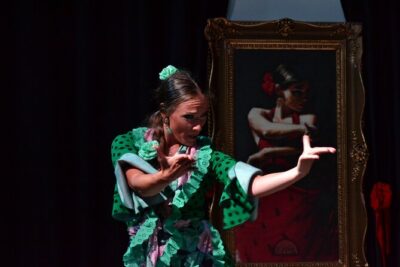
Flamenco teaches faster with real feedback. In Granada, this private lesson at Tablao Flamenco La Alboreá lets you learn fundamental moves from the cast, including zapateado basics, arm and body technique, spins and turns, and balance. It’s a practical way to understand why flamenco looks effortless on stage and takes work in real life.
I especially like that the coaching feels beginner-friendly and calm, not intimidating. In English sessions, teachers such as Marta Clemente have helped small groups keep the pace comfortable, while Agustin has explained steps clearly enough that some people leave able to put together a short choreography. The main consideration: it’s a short session, so you’ll be learning fundamentals—not becoming a full-on dancer before your next dinner reservation.
In This Review
- Key things to know before you go
- Why Granada Is Such a Smart Place for Flamenco Basics
- Entering Tablao La Alboreá and Finding Your Meeting Point
- The 1-Hour Lesson: What You’ll Actually Do
- Learning From the Cast: Marta Clemente and Agustin’s Teaching Style
- The Core Skills You’ll Practice: Zapateado, Arms, Turns, Balance
- What a Drink-Included Class Feels Like in Real Life
- How This Helps You Enjoy a Flamenco Show More
- Price and Value: Is $94 Worth It?
- Who This Class Is Best For (and Who Might Skip It)
- Practical Stuff: Clothes, Timing, and Language
- Should You Book This Flamenco Class?
- FAQ
- How long is the flamenco class?
- Do I need flamenco experience?
- What’s included in the price?
- Is food included?
- Where is the meeting point?
- What languages are offered?
- Is it held rain or shine?
- What is the cancellation policy?
Key things to know before you go
- Cast artists lead the class, not a generic instructor who just gestures from the sidelines
- Private group pacing can mean lots of direct correction, even in very small groups
- You practice specific skills like balance, zapateado footwork, arms, and turns/spins
- English and Spanish instruction are both available, including lessons led by Marta Clemente and Agustin
- Learn to watch flamenco better, so the show experience afterward makes more sense
- A drink is included, which is a nice touch when you’re adding this to a busy Granada day
Why Granada Is Such a Smart Place for Flamenco Basics
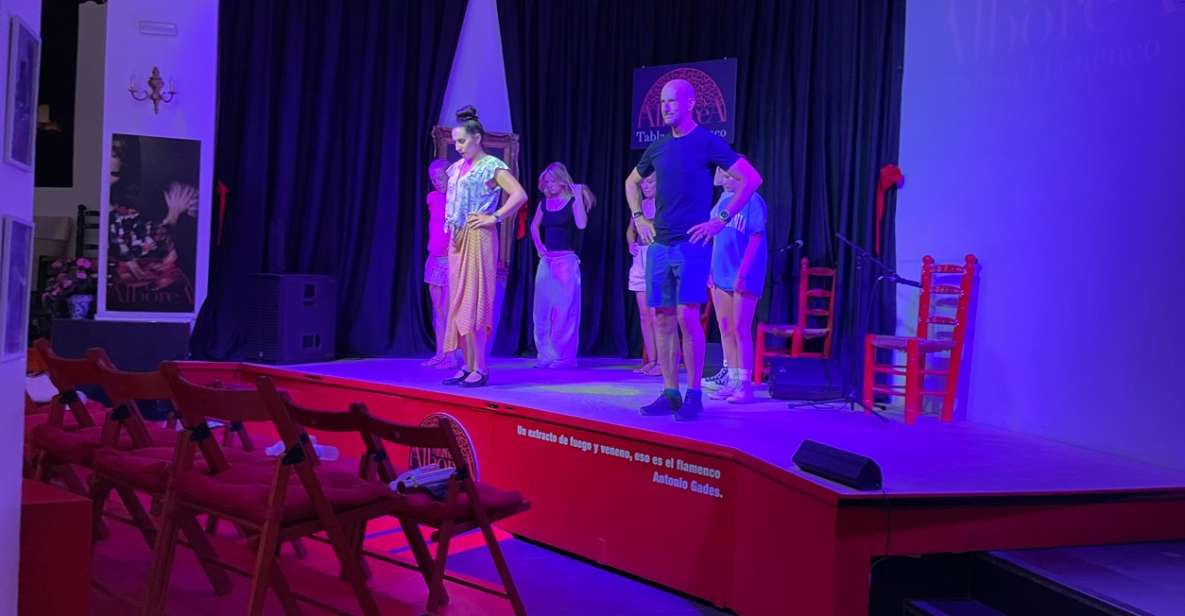
Granada is one of the easiest cities in Spain to connect flamenco to real daily life, because the dance, guitar, singing, and rhythm are part of the local stage scene. This class takes place right in that world at Tablao Flamenco La Alboreá, where the lesson is framed as a hands-on introduction to a centennial art and a major piece of humanity’s intangible heritage.
You’re not just learning movements. You’re learning how flamenco is built: body control, rhythm, and the little technical details that help you stay balanced while your feet and arms do different jobs at the same time. That matters if you’ve ever watched flamenco and thought, How is anyone that steady?
You can also read our reviews of more tours and experiences in Tablao Flamenco La Alborea Granada.
Entering Tablao La Alboreá and Finding Your Meeting Point
You’ll meet at Tablao Flamenco La Alboreá, next to Hotel Plaza Nueva, at C. Pan, 3, 18010 Granada, Spain. The good news is that this is a convenient hub area, so you can combine the lesson with a show and an afternoon of walking without complicated transfers.
Plan to arrive a few minutes early. The activity is sold with a skip-the-ticket-line benefit, which helps once you’re already at the venue. And because it runs rain or shine, you’ll want to wear something comfortable you can move in even if the weather doesn’t cooperate.
The 1-Hour Lesson: What You’ll Actually Do
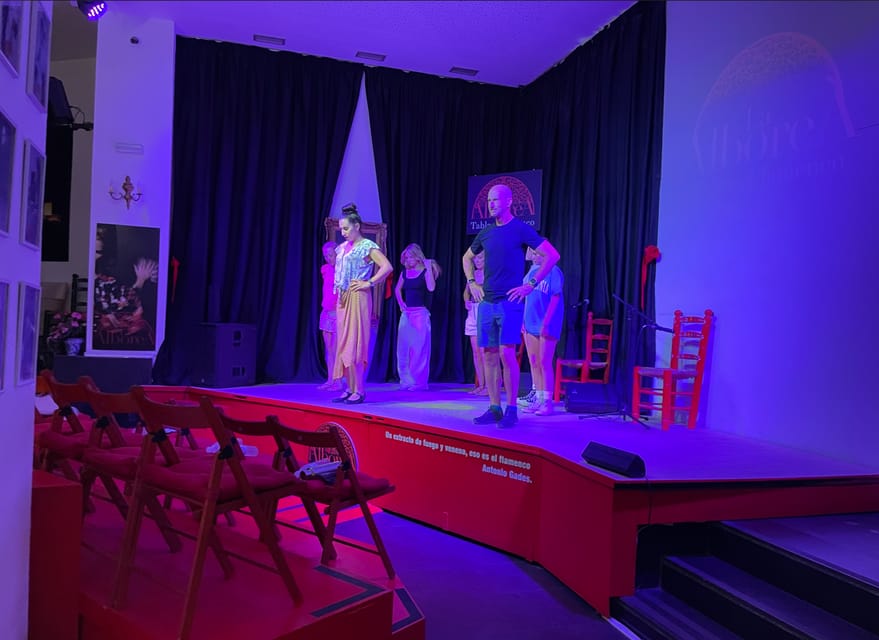
The activity is listed as 1 hour, and the venue description talks about a focused introduction to basic techniques. Either way, the format is built around skills you can feel quickly: stance, balance, arm positioning, footwork patterns, and small sequences that grow into something closer to a dance moment.
Here’s what the session is designed to cover:
- Basic flamenco techniques in a simple, pleasant way
- Zapateado basics (rhythm-focused footwork)
- Arms and body technique (how your upper body supports the movement)
- Spins and turns (learning safe ways to rotate without losing control)
- Balance and coordinated moves (so you don’t just flap arms and hope)
The biggest value of a lesson like this is that it gives you a framework. After an hour, you won’t be a performer, but you’ll understand what to pay attention to—foot rhythm, posture, and the way turns are driven by controlled movement rather than momentum alone.
Learning From the Cast: Marta Clemente and Agustin’s Teaching Style
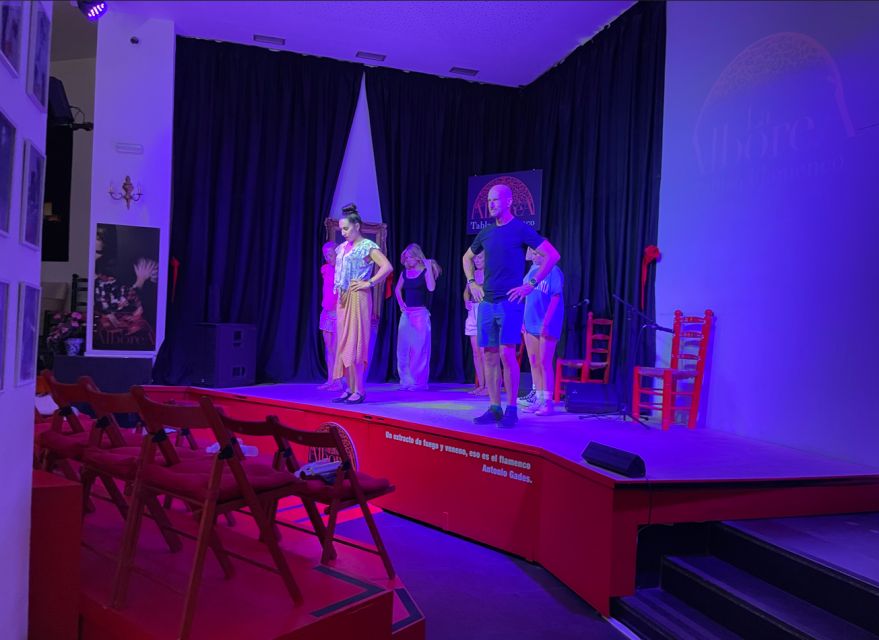
This is the kind of class where the instructor matters. Here, you get guidance from artists connected to the venue’s flamenco cast, and that shows in how the class is explained.
From the English sessions:
- Marta Clemente has been praised for clear explanations, patience, and customizing the pace when the group is very small. If you’re worried about feeling lost, that kind of patience is exactly what you want.
- Agustin has been highlighted for making flamenco steps understandable in a way that can actually lead to performing a short choreography by the end of the session.
That combination—clear teaching plus enough encouragement to try—turns flamenco from a mysterious show into something you can practice. And yes, the class is described as funny, which helps because rhythm lessons work better when you’re not frozen with nerves.
The Core Skills You’ll Practice: Zapateado, Arms, Turns, Balance
Flamenco looks like pure emotion, but mechanically it’s a set of repeatable actions. This lesson gives you a taste of those mechanics so you can start building muscle memory.
Zapateado (footwork) basics
You’ll practice rhythmic patterns that rely on control. The point isn’t speed; it’s clarity. Good zapateado is about timing, not just stomping.
Arms and body technique
You’ll work on arm positions and how your torso helps you keep control while your feet do the rhythmic work. Many beginners struggle because they move the upper body randomly. You’ll learn a more intentional set of motions.
Spins and turns
Turns and spins are where people usually lose balance. The lesson focuses on getting you to rotate with control, using technique that supports balance rather than throwing yourself around.
Balance and coordinated moves
The session repeatedly returns to balance—how to stay steady while changing direction or shifting weight. If you leave remembering one thing, make it that flamenco is control first, drama second.
And because the class is described as having special lessons for beginners, you should feel like you’re building from safe starting points rather than being thrown into advanced combinations.
What a Drink-Included Class Feels Like in Real Life
The class includes a drink, while food is not included. That matters because Granada evenings can be packed: you might want to fit this lesson in before dinner, or as a warm-up before heading into a show.
So I suggest treating the drink like part of your timing plan:
- If you’re going before a flamenco performance, you’ll likely want to eat separately first.
- If you’re doing it after lunch, the drink helps you refresh without turning the lesson into a full meal break.
Also, since this is a one-hour movement session, don’t show up hungry. You can’t count on food being included, only a drink.
How This Helps You Enjoy a Flamenco Show More
One of the best reasons to take this class is what it changes about how you watch. If you’re planning to see flamenco at Tablao La Alboreá or another nearby venue, this lesson gives you a mental checklist.
You’ll know what to look for:
- Foot rhythm patterns instead of just watching feet
- Arm and posture cues that help turns make sense
- Balance moments where dancers correct and adjust in real time
That’s why pairing a lesson with a performance is such a smart idea. You don’t just enjoy the show—you understand what you’re seeing. And understanding makes the emotion hit harder, because you know the work behind it.
Price and Value: Is $94 Worth It?
At $94 per person for a 1-hour private group flamenco fundamentals class, the value comes down to two things: personalization and practical learning.
You’re paying for:
- instruction from a cast-connected flamenco artist
- a beginner-focused coaching approach
- hands-on technique practice in a short, structured session
- a drink included
- languages offered as English or Spanish
If you’re the type of traveler who likes to do one small, high-impact activity that improves your next experience (like making a show more legible), this price can feel fair. If you’re only looking for a quick photo moment, it might feel pricey for the time. But if you want movement practice and real feedback, the setup is designed for that.
Who This Class Is Best For (and Who Might Skip It)
This is a great fit if:
- you’re a flamenco beginner and want a clear starting point
- you want to learn rhythm and posture basics you can spot in performances
- you enjoy small-group instruction where you can get corrected
- you’re planning to attend a flamenco show soon and want a stronger viewing experience
You might think twice if:
- you want a long, multi-session training path rather than a single introductory hour
- you’re not comfortable wearing comfortable clothes and moving in a small space
- you’re expecting a full performance experience instead of a skills lesson
The lesson is built to get you moving and understanding, not to replace a show.
Practical Stuff: Clothes, Timing, and Language
Bring comfortable clothes you can move in. Sneakers or flexible footwear are usually safest for footwork practice, and you’ll be happier if you’re not worried about fabric or stiffness during turns and balance work.
The session runs rain or shine, so pack with that in mind. And if you need instruction in a specific language, the class offers English and Spanish.
You’ll also be in a wheelchair-accessible venue, and the group type is listed as a private group, which generally means you’re not packed into a huge crowd while learning.
Should You Book This Flamenco Class?
I’d book it if you want a real flamenco foundation you can carry into the show season of your Granada trip. The class is short, but it’s focused on the exact building blocks that make flamenco click: zapateado basics, arm and body technique, turns/spins, and balance. And because the instruction is guided by cast artists—with teachers like Marta Clemente and Agustin noted for clarity and patience—it’s a good bet for beginners.
I’d skip it only if you’re hunting for a full dinner-and-drinks night experience. This is a movement lesson, not a meal plan or a performance replacement. If you want to leave with muscle memory and a better eye for what you’ll see on stage, this one is worth your time.
FAQ
How long is the flamenco class?
The experience is listed as 1 hour. Check available starting times when you book to match your schedule.
Do I need flamenco experience?
No. The lesson includes special lessons for beginners, and the goal is to teach basic techniques in a simple, pleasant way.
What’s included in the price?
A drink is included.
Is food included?
No, food is not included.
Where is the meeting point?
Meet at Tablao Flamenco La Alboreá, next to Hotel Plaza Nueva, C. Pan, 3, 18010 Granada, Spain.
What languages are offered?
Instruction is available in English and Spanish.
Is it held rain or shine?
Yes. The activity takes place rain or shine.
What is the cancellation policy?
You can cancel up to 24 hours in advance for a full refund.