REVIEW · CATHEDRAL & ROYAL CHAPEL TOURS
Half-Day Tour of Jaen, Cathedral, Jewish Quarter and Arab Baths
Book on Viator →Operated by Lagarto Tours · Bookable on Viator
Jaén’s three faiths walk in one afternoon. I love the way this route links Renaissance cathedral grandeur with everyday street life, then ends in a real, working-feeling bath complex like the Arab Baths of Jaén. I also love the payoff of small details—like the legend of the Jaén lizard and the Raudal—that make the city feel less like a list and more like a place with stories.
One consideration: opening times can shift. On Sunday mornings, the Cathedral is closed (it’s replaced by another monument), and on Sunday afternoons and Mondays the Arab Baths are closed (also replaced by another monument). It’s still a good tour, just plan your expectations around the day you go.
In This Review
- Key highlights you’ll notice right away
- A timed route through Jaén’s Cathedral, Judería, and Arab Baths
- Inside Jaén Cathedral: choirs, tabernacle, and the Cathedral’s crown jewels
- Fuente de los Caños and Rostro Street: the Jewish Quarter starts with a fountain
- Arab Baths of Jaén: cold, warm, and hot rooms in a living complex
- Magdalena Church outside view: mosque traces, the Raudal, and the lizard legend
- Completing the Judería: from Caños onward to squares with meaning
- Meeting at Jaén: start on C. Bernabé Soriano and finish at Iglesia de la Magdalena
- Price and included admissions: what $17 buys you in real time
- The guide factor: making Cathedral and baths feel easy to follow
- Who should book this half-day Jaén route (and who should skip it)
- Timing notes: Sunday closures can swap your monuments
- Should you book the Half-Day Tour of Jaén Cathedral, Jewish Quarter, and Arab Baths?
- FAQ
- What does this tour include?
- How long is the tour?
- Where does the tour start and end?
- Are tickets mobile?
- What happens on Sundays and Mondays?
- Can I cancel after booking?
Key highlights you’ll notice right away
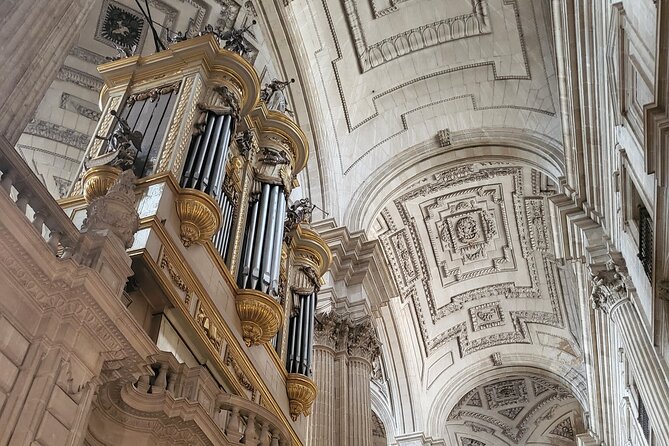
- Cathedral highlights in one focused hour, including choir areas and the chapter-room spaces you’ll want to see
- A quick start in the Jewish Quarter at Fuente de los Caños, then straight into narrow, old-street lanes
- Arab Baths that are still intact, with guided time in lobby, cold, warm, and hot rooms
- Magdalena Church clues from mosque-era Jaén, plus the lizard and Raudal legends
- A small, manageable group size with admission tickets included for major stops
A timed route through Jaén’s Cathedral, Judería, and Arab Baths
This is one of those half-day tours that’s built for people who don’t want to wander blindly with a map and hope for the best. In about 2 to 3 hours, you get guided structure through Jaén’s “three cultures” story—Christian (the Cathedral), Jewish (the Judería streets), and Muslim (the Arab Baths and mosque-era traces).
What makes it work is pacing. You’re not stuck in one building for forever. You get a real visit inside the Cathedral, you walk through the Jewish Quarter lanes, you spend a meaningful chunk in the Arab Baths, and you end with exterior views tied to legends and older layers of the city.
The group stays capped at 35 people, so you should still be able to hear your guide and keep up without feeling herded. A mobile ticket also makes this smoother on arrival.
You can also read our reviews of more tours and experiences in Granada.


Inside Jaén Cathedral: choirs, tabernacle, and the Cathedral’s crown jewels
The tour’s first big anchor is Jaén Cathedral, a Renaissance-era project tied to Andrés de Vandelvira and conceived in the 16th century. Your first stop inside is the baroque choir, and it’s not just decorative. The choir area is divided into two parts: spaces associated with the local government and the bishopric. It’s the kind of detail you’d miss if you only looked up at the ceiling.
Next, you move toward the presbytery and its neoclassical tabernacle, designed by Ventura Rodríguez. This is a neat moment because it shifts the visual mood—Renaissance and Baroque elements you’ve just seen start to feel part of a longer architectural timeline, not one static style.
Then comes the main chapel, where the tour focuses on the Holy Face of Jesus and the Virgin of Antigua, both described as dating from the end of the 14th century. That date range matters. It tells you these objects weren’t created to match the Cathedral’s later grand design. They’re older spiritual centerpieces, pulled into a newer, monumental setting.
Finally, you get to the Cathedral’s so-called crown jewels: the Chapter House and Sacristy. These are not “quick peek” spaces. They’re included as part of the visit, so you should come away with more than just a photo from the main nave.
Practical tip: wear comfortable shoes. Even with short distances between stops, you’ll be walking through indoor-outdoor transitions and then into street areas later.
Fuente de los Caños and Rostro Street: the Jewish Quarter starts with a fountain
The Jewish Quarter walk begins at Fuente de los Caños, described as a watering fountain by Francisco del Castillo. That’s a great way to start. Fountains were practical infrastructure, and in older cities, they also become social landmarks. Starting here helps you read the rest of the neighborhood with a mindset of everyday life, not only religion and monuments.
From there, you move onto Rostro Street and into the labyrinthine, narrow streets that feel like the Judería’s defining feature. This is the kind of urban form that makes you slow down. Tight turns force you to follow the guide’s direction and notice small street-level details that usually disappear in a fast self-guided stroll.
You’ll also learn that the neighborhood has hidden layers of meaning—what the tour calls “hidden symbology” and recent heritage recovery efforts. The point isn’t to memorize symbols like a quiz. It’s to understand that the city still carries design choices from its past, and people have worked to restore and explain them.
Arab Baths of Jaén: cold, warm, and hot rooms in a living complex
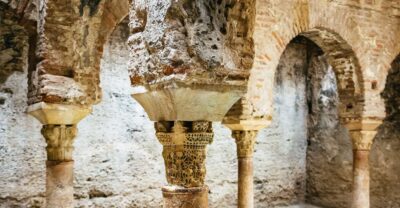
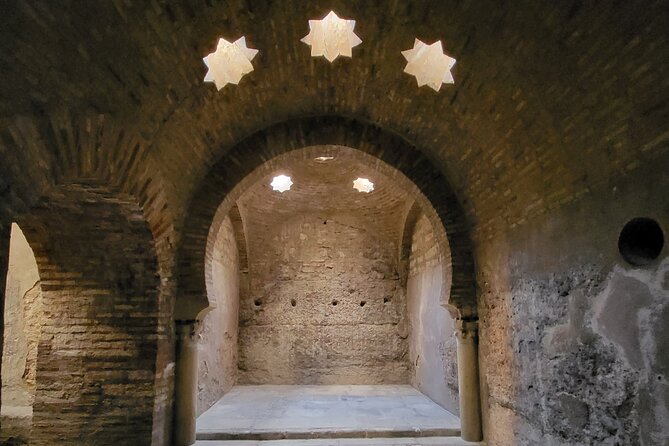
Then you step into the Arab Baths of Jaén, and the tour frames them as the standout surviving Muslim bathing site in the region. You’re told they’re the only Muslim baths still surviving out of up to five that once existed in the city. You’ll also hear a big claim: they’re described as the best preserved in Europe and the largest in Spain.
Before you even get to the bathing rooms, you access the baths via the Villardompardo Palace. That matters, because it shows how bath culture wasn’t an isolated “bathroom building.” It’s part of a broader elite architectural setting.
Once you’re inside, you move through the main rooms in sequence:
- Lobby
- Cold Room
- Warm Room
- Hot Room
This layout is useful because it gives you a mini lesson in how the space worked. You’re not just looking at walls; you’re experiencing the building’s logic: temperature progression, movement through rooms, and the atmosphere shift as you go from cold to hot.
Admission is included here, so you avoid the extra step of buying a separate ticket. Still, the visit is timed—about 30 minutes—so you’ll want to stay focused during the explanation and save personal wandering for the streets afterward.
Magdalena Church outside view: mosque traces, the Raudal, and the lizard legend
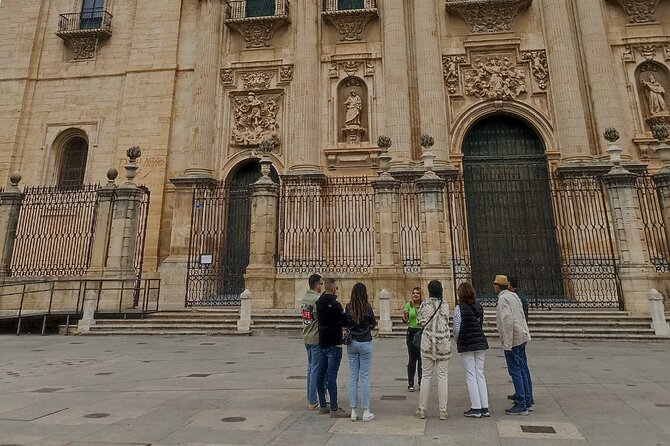
After the baths, you get a break from indoor rooms and shift to outside viewing—starting with the Magdalena Church. The tour notes that this is the oldest church in the city and that it’s the parish of Magdalena. Even from outside, you’re shown what’s especially interesting: vestiges of one of the largest mosques in Jaén, even though the building is Christian.
That’s a powerful idea for a walk like this. Jaén doesn’t just swap cultures and start over. It reuses, remakes, and leaves traces behind. You’re seeing how later identities sit on top of earlier ones, sometimes literally.
Then you add two story stops tied to local legend: the Jaén lizard and the Raudal. The tour gives you the legend and a bit of context around it. This is where a short guided visit can beat self-guided time. Legends are hard to piece together from plaques alone, and the guide’s job here is to connect the story to what you can actually see in the area.
If you like when architecture and folklore meet, this section is one of the more memorable parts of the half day.

Completing the Judería: from Caños onward to squares with meaning
The itinerary rounds out the Jewish Quarter portion with a longer walk segment—about 40 minutes—toward the neighborhood’s most beautiful squares. This is where the route stops being only “monument hunting” and becomes a real neighborhood stroll.
You’ll move through the lanes where it’s easy to lose direction on your own. With the guide, the point is that you learn what to look for: the tour mentions hidden symbology and heritage recovery, both of which usually show up in small architectural changes, markings, and careful restoration choices.
Even if you’re not a “turn-every-corner” walker by nature, this part helps you register how the Judería functions as a system: narrow passages that lead you to open spaces, then open squares that make the next story feel like it belongs.
And because your tour ends nearby the Magdalena area, you’re finishing in a part of town that still connects back to the mosque-trace and legend moments you just heard.
Meeting at Jaén: start on C. Bernabé Soriano and finish at Iglesia de la Magdalena
This is a point-to-point tour: you start at C. Bernabé Soriano, 8, 23001 Jaén, Spain, and you end at Iglesia de la Magdalena, Pl. la Magdalena, S/N, 23004 Jaén, Spain.
That matters for planning. You’re not returning to the exact same corner after the last stop, so make sure your next activity (lunch, a café break, or a later museum visit) is flexible enough for an end point in the Magdalena square area.
The meeting area is described as near public transportation, which helps if you’re hopping between Granada and Jaén or just moving around the city.
Also: this tour allows service animals, and it’s described as suitable for most people. If you’re sensitive to steady walking, keep in mind you’ll be moving across multiple areas and through street segments.
Price and included admissions: what $17 buys you in real time
At $17, this tour is priced like a practical local-guided circuit, not a premium all-day experience. The real value comes from the fact that entry is handled for major stops:
- Jaén Cathedral entrance is included
- Arab Baths entrance is included
- The rest is a walk-and-story format with free viewpoints where listed
So you’re paying for expert guidance and access to the spaces that cost time and money to manage on your own.
The duration is also a big part of the value equation. 2 to 3 hours is enough time to get your bearings in Jaén’s old core without committing the whole day. If your schedule is tight, that alone can make the cost feel tiny.
One last value note: group size max 35 means you’re not stuck waiting for an entire bus load to catch up at each door.
The guide factor: making Cathedral and baths feel easy to follow
The tour feedback highlights guides who keep the pace friendly and the explanations clear. One specific name that comes up is Patricia, praised for making the walk feel fun and for sharing enough background so the history feels usable, not just recited.
That’s exactly what you want on a tour that covers multiple cultures and timelines. Cathedral art and bath-room layouts can get confusing without a person putting them in order. A good guide makes you see the connections: how a Renaissance Cathedral can house older devotional objects, how mosque traces persist in Christian churches, and how the baths connect palace architecture to daily ritual space.
If you’re lucky enough to have Patricia, you should expect the tour to feel especially smooth and lively.
Who should book this half-day Jaén route (and who should skip it)
This tour is ideal if you:
- Want a time-efficient introduction to Jaén’s three-culture story
- Like architecture with clear, guided meaning (Cathedral choir and tabernacle, bath-room sequence)
- Enjoy a mix of monuments and local legend (lizard and Raudal)
- Prefer a guided walk through older streets rather than a solo navigation exercise
You might want a different plan if you:
- Want long, unhurried time inside every single space. Here, visits are paced to fit the half-day format.
- Are hoping for a deep museum-style experience where you spend a long time reading and wandering without direction.
Think of it as a smart orientation + highlights tour. It’s not trying to replace longer stays in Jaén. It’s trying to give you a strong foundation fast.
Timing notes: Sunday closures can swap your monuments
Two schedule details can change what you actually see:
- On Sunday mornings, the Cathedral is closed, and it’s replaced by another monument.
- On Sunday afternoons and Mondays, the Arab Baths are closed, and they’re replaced by another monument.
If your travel dates include those windows, don’t assume every listed site will be available in the exact same form. Still, the tour is designed to keep the experience going by swapping in alternatives.
Should you book the Half-Day Tour of Jaén Cathedral, Jewish Quarter, and Arab Baths?
Yes—if you want a compact, well-paced tour that ties together three layers of Jaén in a way you can actually remember. For $17, you get included access to the Cathedral and Arab Baths, plus guided street time in the Judería and story connections at the Magdalena church area.
Book it especially if you like when places come with explanations that help you “read” what you’re seeing—Cathedral spaces beyond the main nave, bath rooms as a temperature journey, and mosque traces inside a Christian parish. It’s the kind of half-day that leaves you feeling oriented, not rushed, even though you cover a lot of ground.
If you tell me your day of week and what else you plan to do in Jaén, I can help you pick the best time slot around those Sunday and Monday closures.
FAQ
What does this tour include?
The tour includes entrance to Jaén Cathedral and the Arab Baths. Other parts of the experience are walk-and-view stops along the route.
How long is the tour?
It runs about 2 to 3 hours.
Where does the tour start and end?
It starts at C. Bernabé Soriano, 8, 23001 Jaén and ends at Iglesia de la Magdalena, Pl. la Magdalena, S/N, 23004 Jaén.
Are tickets mobile?
Yes, you’ll receive a mobile ticket.
What happens on Sundays and Mondays?
On Sunday mornings, the Cathedral is closed and is replaced by another monument. On Sunday afternoons and Mondays, the Arab Baths are closed and are replaced by another monument.
Can I cancel after booking?
This experience is non-refundable and cannot be changed for any reason. If the experience is canceled because the minimum number of travelers isn’t met, you’ll be offered a different date or a full refund.