REVIEW · EVENING EXPERIENCES
The Granada Evening Tapas Crawl by Food Lover Tour
Book on Viator →Operated by Food Lover Tour Granada · Bookable on Viator
Granada at night tastes like a plan. This 3-hour tapas crawl takes you through four different venues for a set menu of local dishes and drinks, not just random plates you grab off a street sign. I like that it’s built around the places locals actually use, with a guide who explains the why behind what you’re eating, not just the what.
I also love the smooth pacing. You get a short bit of historic street time, then you settle into cozy, pub-style stops where the drinks and tapas flow in a steady rhythm. One concern to think about: the menu is ordered in advance, so it is not adapted for strict vegetarians/vegans or for severe gluten allergy due to cross-contamination.
In This Review
- Key points worth knowing before you go
- A 7:30 pm tapas plan in Granada: what the 3 hours really feel like
- Four stops, ten dishes, four drinks: how the tasting menu works
- Starting at Plaza Romanilla and the first vermut or vino tinto stop
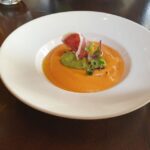
- Mid-crawl flavors: cold tomato soup, fried aubergines, and cured favorites
- Seafood, stews, and local cheese: where the variety shows up
- The final pour and Basque cheesecake finish with cava
- Guides Emma and Juan Miquel: stories that make the plates make sense
- Value check: is $88.10 worth it for 10 dishes and drinks
- Who should book (and who should think twice about menu limits)
- Should you book the Granada Evening Tapas Crawl?
- FAQ
- Where does the Granada Evening Tapas Crawl start?
- What time does the tour begin?
- How long is the experience?
- How many stops and tastings are included?
- Is the tour suitable for strict vegetarians or vegans?
- Is it safe for people with a severe gluten allergy?
- What language is the tour offered in?
- What is the maximum group size?
Key points worth knowing before you go
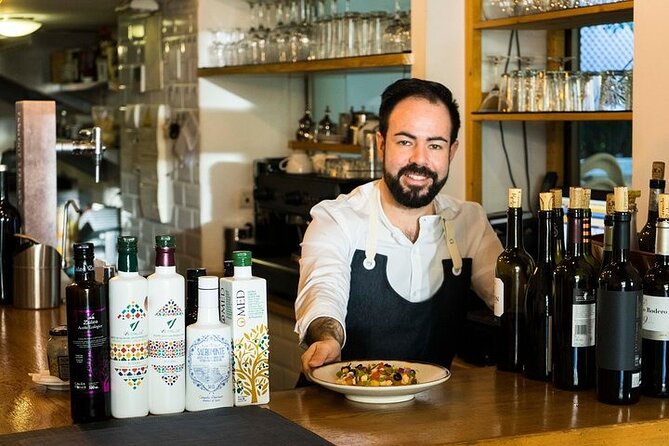
- 4 stops, 10 dishes, 4 drinks keeps you tasting without over-ordering
- Plaza Romanilla is your easy starting point for a 7:30 pm departure
- Small group size (max 10 travelers) makes it feel more personal
- Expect a wine-leaning evening with options like vermut, vino tinto, and cava
- You’ll finish with dessert (including Basque cheesecake in the lineup)
A 7:30 pm tapas plan in Granada: what the 3 hours really feel like
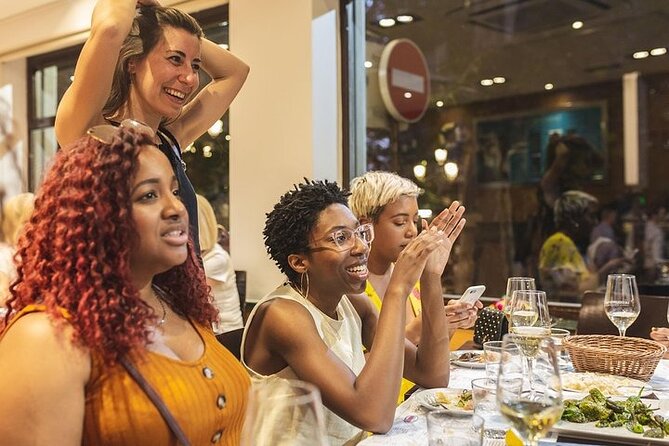
This tour is designed for an evening start, kicking off at 7:30 pm right from Plaza Romanilla. That timing matters in Granada. It gives you enough daylight for a relaxed day, then drops you right into the city’s night rhythm when tapas bars start to feel properly alive.
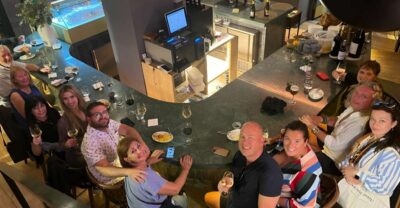
The experience is about 3 hours, and you’ll walk between four venues. The pace is social, not rushed. You’ll spend more time eating and talking than doing heavy “tour bus” marching. The group stays small—up to 10 people—so it doesn’t turn into a stampede around tiny tables.
Another practical point: because you’re moving at night, wearing comfortable shoes is smart. Tapas crawls work best when you’re ready for a bit of cobblestone. You’ll likely cover enough ground that you won’t want to stop for snacks on your own mid-way. The tour is meant to handle the food so you can focus on the conversation and the flavors.
You can also read our reviews of more food & drink experiences in Granada

Four stops, ten dishes, four drinks: how the tasting menu works
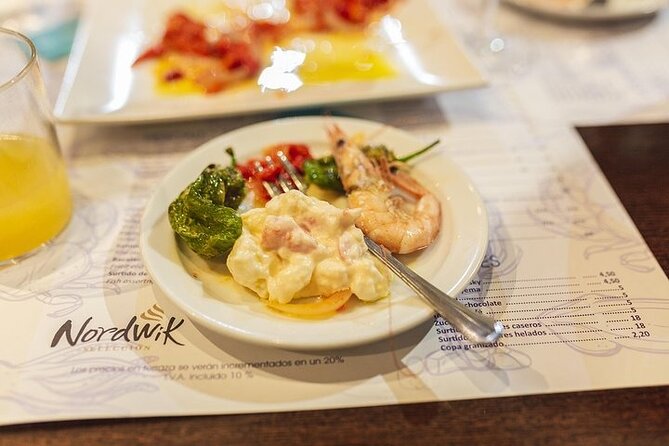
This is a set crawl, not a pick-and-choose meal. In total, you’ll get around 10 dishes paired with 4 drinks across four different places. That structure is what makes the tour feel like value. You’re paying for a guided sequence of tasting, so you don’t have to think about what to order next or whether you’re overspending one bar and starving at the next.
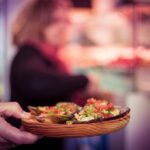
The menu includes classic Granada/Andalusia-style comfort food and snacky bar bites. From the lineup you can expect things like local cured ham, local cheese, cold tomato soup, fried aubergines, fresh seafood, and a mix of stews and cured meats. The exact order changes by stop, but the big idea stays the same: salt meets acidity, hot meets cold, and you get variety without having to read a menu in Spanish while hungry.
The drinks are also part of the lesson. The evening isn’t only beer or only wine. In the flow you’ll see picks like vermut, vino tinto, and cava. That variety helps you understand why Spaniards treat drinks as part of the food match, not just something to sip while you decide.
Starting at Plaza Romanilla and the first vermut or vino tinto stop
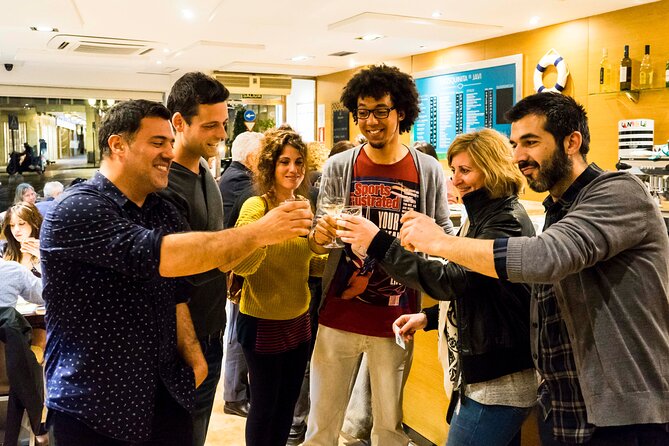
The tour begins back at Plaza Romanilla, and you’ll start with a bit of walking through the city before landing in your first tasting spot. In practice, that first stop sets the tone. You’re typically eased in with an easy, pub-style vibe where the group can settle, get comfortable, and start tasting right away.
One thing I really like about the opening: you often start with a drink that people actually drink in Spain, like vermut or a glass of vino tinto. If you’re not a vermut person, don’t panic—your guide can steer the pairing to something that fits better. The tour design gives you enough structure that you shouldn’t be stuck waiting for the “right drink.”
Food-wise, the early bites tend to be the foundation flavors: cured meats, cheese, and simple tapas that show up in local bars every day. These are the plates that make the rest of the crawl make sense. Once your palate is warmed up, the later stops—seafood, stews, and dessert—feel more rounded, not random.
Mid-crawl flavors: cold tomato soup, fried aubergines, and cured favorites
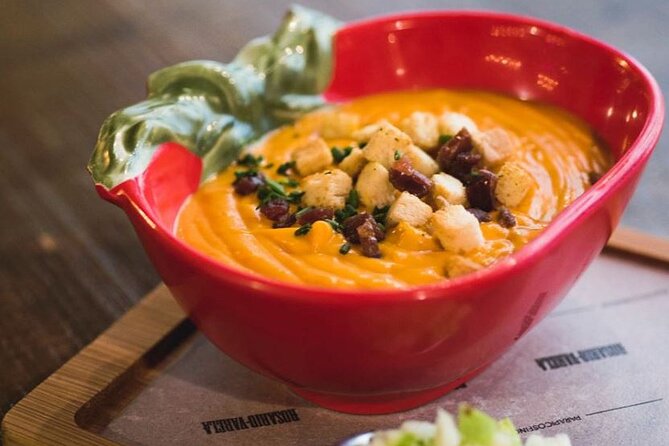
By the middle of the evening, the tour usually shifts from the starter-style plates into more specific Granada/Andalusia flavors. This is where you start tasting things that feel more tied to local tradition than generic tourist tapas.
From the menu lineup, a few standouts are cold tomato soup and fried aubergines. Both are great examples of how Spanish tapas work. Cold soup shows up as a palate reset—cool, bright, and cooling the richer flavors later. Fried aubergines add texture and that salty, crispy crunch you miss when you only eat “sit-down” food.
You’ll also keep sampling cured items—local cured ham and local cured meat show up in the rotation. That matters because cured products are a key thread in Spanish bar culture. They’re simple, but they teach you something: in a tapas bar, the best bites are often the ones that don’t need sauces to taste good.
A practical tip for this part: don’t think of it like a tasting menu where you need to remember every flavor. Instead, think of it as a palate map. Take a quick moment to notice what you like—salt and pork, tomato brightness, crispy fried bites—then later in the evening you can connect that with how the wine or cava changes the experience.
Seafood, stews, and local cheese: where the variety shows up
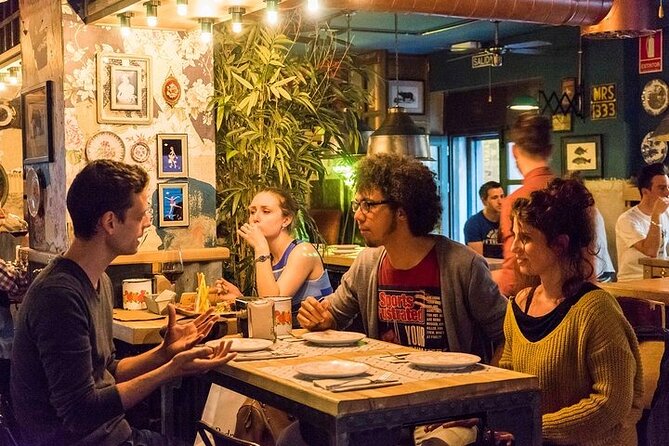
One stop may lean more into seafood and lighter preparations, while another can bring in heartier comfort—steeds and heavier dishes are part of the menu plan. The tour is built around variety, so you’re not stuck eating the same style of tapas four times.
In the tasting sequence, seafood is included, and it’s a highlight for many people. That said, it can also be the most “hit or miss” item depending on how the kitchen is feeling that night. If you love seafood, this is your chance to taste it as part of a guided local set, not as a last-minute restaurant gamble.
Stews and deeper flavors help balance the evening. Once you’ve had your crispy and bright bites, a warm, slower-cooked dish makes the tour feel complete. This is also where pairing starts to feel more meaningful. Wine and beer don’t just accompany food—they shape how you perceive salt, fat, and spice.
Cheese also keeps showing up as a core bar ingredient. It’s a smart inclusion because cheese tends to be approachable. You don’t have to be a food scholar to enjoy it, but you still learn something about local styles and the way tapas bars build variety from a small set of ingredients.
You can also read our reviews of more tours and experiences in Granada

The final pour and Basque cheesecake finish with cava

The ending is where this crawl earns its keep. You don’t just stop for a last drink and call it a night. The tour is designed to land with something sweet and celebratory, including Basque cheesecake in the finish.
You’ll also have cava in the lineup. Cava is a classic choice for endings because it feels light and clean after salty tapas. It cuts through richness and helps your last bites taste crisp, not heavy.
This is the moment to slow down and actually enjoy the last stop. You’ve already done the tasting work. Now you get the payoff: dessert + a final paired drink, with the guide wrapping up the evening with quick context about what you’ve eaten and how it fits Granada’s food culture.
If you have room for one more bite, don’t force it—just taste slowly. Even cheesecake can feel like a lot after 10 savory dishes. Think of it as a final stamp, not a contest.
Guides Emma and Juan Miquel: stories that make the plates make sense
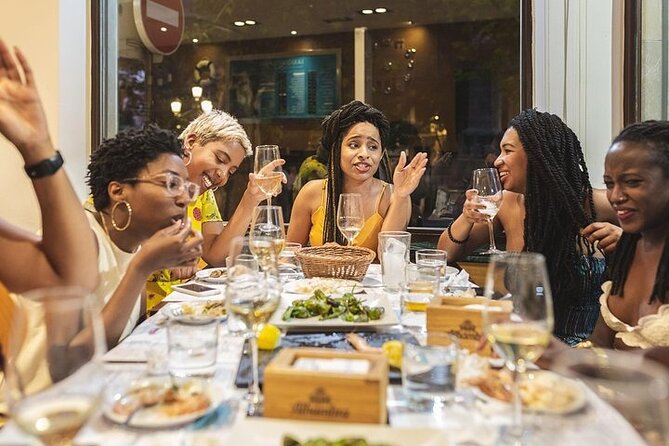
The big reason this tour feels memorable is the guide. Two names come up again and again: Emma and Juan Miquel. Both are praised for mixing food with real Granada context—history, but not in a textbook way. More like: why this bar exists, what locals order, and what makes that dish fit the region.
I like that the tour doesn’t treat food like trivia. When a guide explains the logic—why cured meats pair with a specific drink, or why the cold tomato dish hits right in an evening crawl—it makes your tasting feel intentional.
You’ll also get helpful pointers beyond the food. Guides in this style often share practical advice about what else to do in Granada after the tour ends. That’s not fluff. It can help you turn an ordinary evening into a better plan: which neighborhoods are worth roaming, where to keep your walking easy, and how to spot the kinds of bars that feel local rather than staged for tourists.
Small-group format helps here. In a group of around 10, you’re more likely to ask questions and get answers that apply to your interests.
Value check: is $88.10 worth it for 10 dishes and drinks
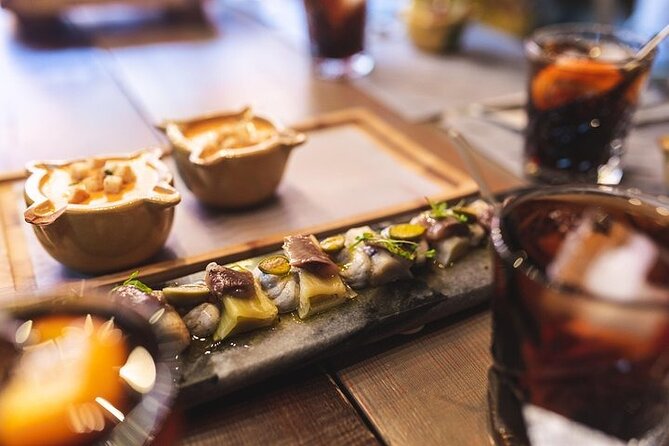
At $88.10 per person for about 3 hours, the value depends on one question: do you want a guided tasting with drinks included, or do you prefer to DIY the night?
If you’re DIY-ing, you’ll likely spend time deciding what to order, splitting your attention between reading menus and hunting for decent bars. With this crawl, the tasting items are handled. You show up, meet the group, and eat what the guide has planned. For a fixed price, that reduces decision fatigue.
You’re also getting structure that’s hard to replicate on your own: 4 different venues and a set rotation of about 10 dishes with 4 drinks. That’s not just convenience. It’s also risk reduction. Trying unknown tapas bars one by one can lead to uneven results. A guided crawl aims to keep the quality consistent across stops.
One more way to think about it: the tour is priced for an evening experience, not a “snack-only” tour. When you’re full after 10 dishes, you’ve basically paid for a meal plus drinks, with the added bonus of the walking route and pairing guidance.
Just remember the menu limitation. If you have strong dietary requirements, the value math can change quickly, because the menu may not be adjustable.
Who should book (and who should think twice about menu limits)
This crawl is a great fit if you:
- Want to try a lot of Granada flavors in one night without planning each bar yourself
- Enjoy wine and drink pairings like vermut, vino tinto, and cava
- Prefer a small group experience (max 10 travelers) where the guide can talk and still keep the schedule moving
It’s not a great fit if you need strict dietary accommodations. The tour notes that the menu is not adapted for strict vegetarians/vegans and that it isn’t suited to people with severe gluten allergy because of cross-contamination. Also, the menu is ordered in advance. That means last-minute swaps might not be possible.
If you have a medical allergy, the best move is to declare it during reservation so the provider can address it. If you don’t declare it ahead of time, adaptation isn’t guaranteed.
Also keep the walking in mind. It’s not a marathon, but you’ll move between venues. If your evening mobility is limited, you’ll want to consider whether a 3-hour walking-focused plan works for you.
Should you book the Granada Evening Tapas Crawl?
I’d book it if you’re looking for an easy, structured way to taste Granada like a local rather than like a checklist. The combination of four venues, 10 dishes, 4 drinks, and guided pairing is exactly how a tapas night should feel: social, tasty, and not overly complicated.
The one reason to hesitate is the menu limits. If you’re strict vegetarian, vegan, or dealing with severe gluten allergy, this is the kind of tour that can create frustration if your food needs don’t match the set menu.
If your diet is flexible and you want a fun evening with a guide like Emma or Juan Miquel, this crawl is a strong choice. It’s also a smart bet if you’re only in Granada for a short time and want maximum flavor coverage with minimal planning.
FAQ
Where does the Granada Evening Tapas Crawl start?
It starts at Plaza Romanilla, Pl. Romanilla, Centro, 18001 Granada, Spain.
What time does the tour begin?
The tour starts at 7:30 pm.
How long is the experience?
The duration is about 3 hours.
How many stops and tastings are included?
You visit 4 stops in 4 different venues and you’ll enjoy about 10 dishes paired with 4 drinks.
Is the tour suitable for strict vegetarians or vegans?
No. The tour is not adapted for strict vegetarians/vegans.
Is it safe for people with a severe gluten allergy?
No. The tour is not adapted for severe gluten allergy due to cross-contamination.
What language is the tour offered in?
The tour is offered in English.
What is the maximum group size?
The tour has a maximum of 10 travelers.
If you want, tell me your travel dates and any diet needs (even mild). I’ll help you decide if this is a good match and suggest a simple plan for before and after the crawl.