REVIEW · ALHAMBRA & NASRID PALACES TOURS
Granada: “Alhambra´s Craft Workshop”
Book on GetYourGuide →Operated by Via Experiencias · Bookable on GetYourGuide
Handmade art from the Alhambra, in two hours. This workshop in central Granada lets you try Alhambran-style crafts with an artisan at a cozy studio near the cathedral. You pick from a dozen projects, then learn the methods behind the decorations you see in the Alhambra.
I especially like two things: first, the wide choice of crafts (mosaics, tile painting, plasterwork with gold leaf, stucco carving, and marquetry). Second, you get real hands-on help using proper tools and materials, so your souvenir looks like it belongs in your home, not a rushed craft fair.
One drawback to plan around: the workshop is not suitable for wheelchair users, and children under 6 can’t participate.
In This Review
- Key things to know before you go
- Entering the artisan studio near Granada Cathedral
- Choosing your Alhambra craft: mosaic, tile, plaster, stucco, or marquetry
- What I think these choices really mean for you
- The two-hour flow: from tools to a finished souvenir
- What makes the instruction feel authentic
- The take-home factor: why this souvenir is better than a postcard
- Practical tip: match the craft to what you’ll actually display
- Price and value: is $69 worth two hours?
- Who this workshop is best for (and who it might not fit)
- Small logistics you should plan for
- Should you book this Granada Alhambra craft workshop?
- FAQ
- Where is the meeting point for the workshop?
- How long is the workshop?
- What does the workshop cost?
- What’s included in the price?
- Is hotel pickup or drop-off included?
- Do you provide food or drinks?
- What can I make during the workshop?
- What languages are available for instruction?
- Can children participate?
- Is the workshop wheelchair accessible?
Key things to know before you go
- A dozen Alhambra-inspired projects to choose from, not just one preset activity
- Hands-on instruction from an artisan specializing in Hispanic-Muslim craftsmanship
- High-quality tools and materials provided so you can focus on technique, not improvising
- Take-home artwork is part of the experience, not an optional extra
- Chessboard option ties into granadian marquetry, with glazing available for an extra charge
Entering the artisan studio near Granada Cathedral
This is the kind of activity that’s easy to fit into a day in Granada. The class meets at C. Horno de Haza, 29, in central Granada, and the studio is about 500 meters from the cathedral. That location matters because you’re not commuting across town or burning time on transport. You can walk over, get started fast, and then continue exploring right after.
Inside, you’re not treated like a passive spectator. It feels more like you’re stepping into a working art school where the goal is to help you make something real. The workshop is described as cozy, family-friendly in spirit, and built for kids, adults, and families who want a calm, creative break from sightseeing.
The instructor teaches in English, French, and Spanish, which is a huge plus if your group doesn’t speak Spanish fluently. And since the artisan specializes in Hispanic-Muslim craftsmanship, the instruction centers on the design logic and technique behind the look, not just the final decoration.
You can also read our reviews of more tours and experiences in Granada
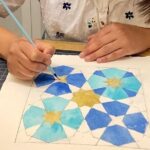

Choosing your Alhambra craft: mosaic, tile, plaster, stucco, or marquetry
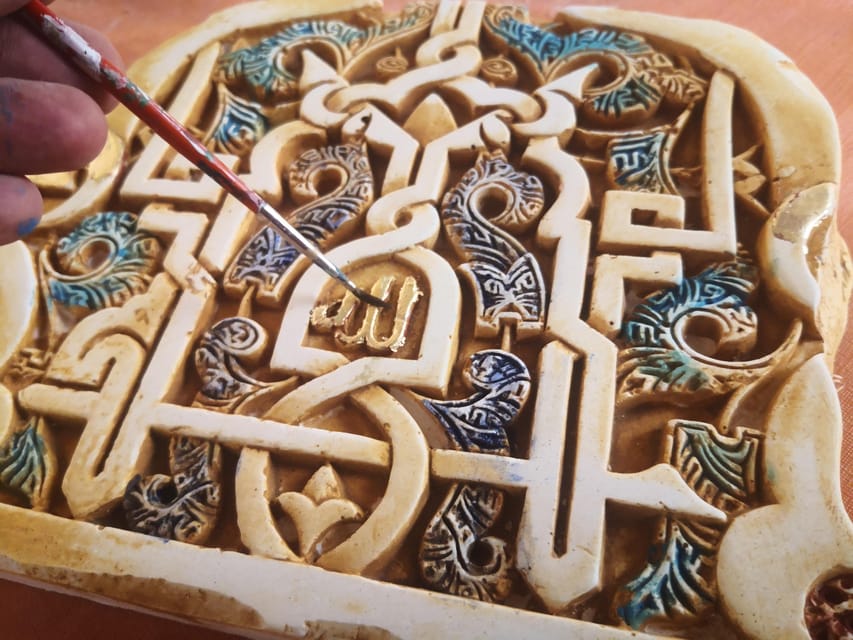
The best part of this workshop is the menu of options. You’re told you can choose from a dozen pieces on the day, so you’re not locked into one craft style before you arrive. In practical terms, this means you can pick what matches your interests and the time you have.
Here are the specific options mentioned:
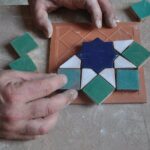
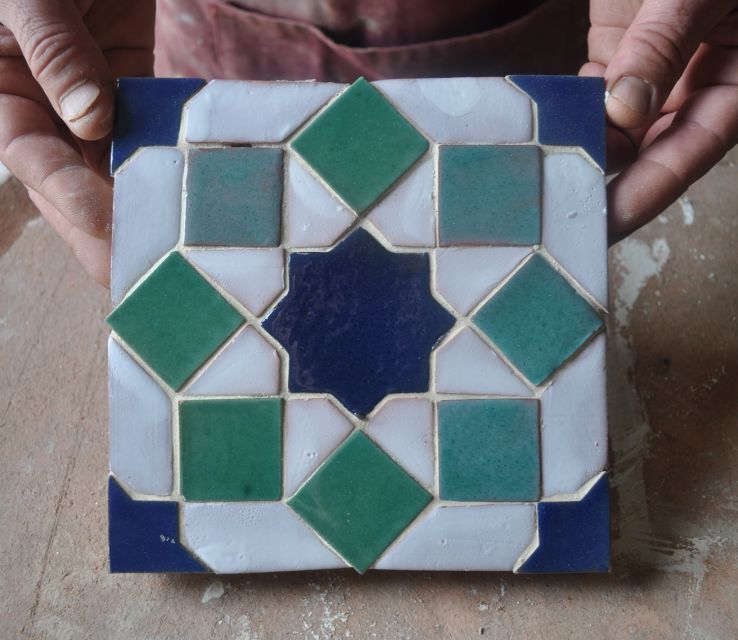
- Mosaic tiled panel
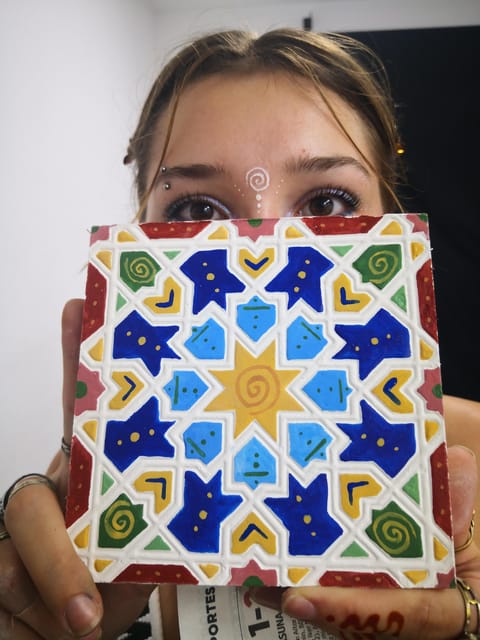
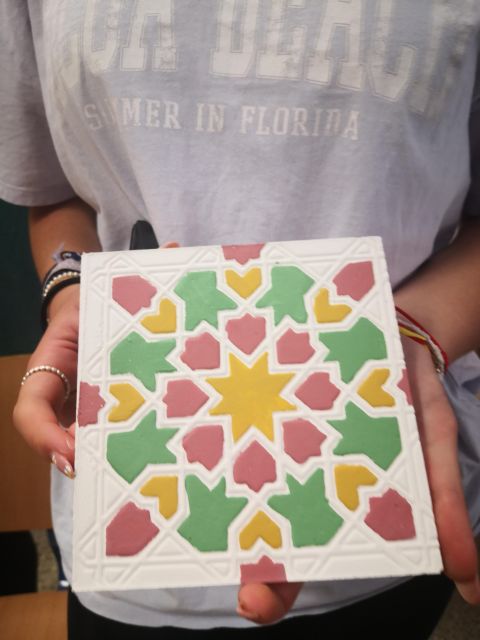
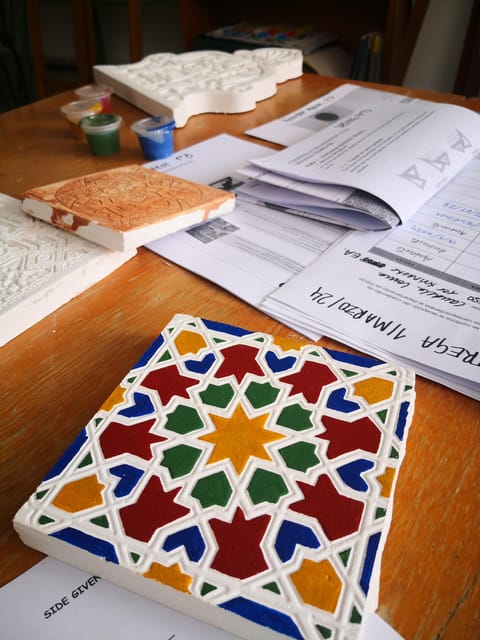
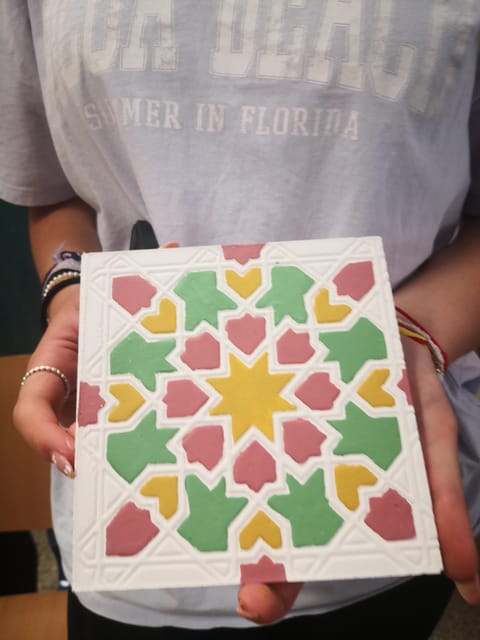
- Painting a Nasrid tile
- Polychromatic plasterwork with gold leaf (on a reproduction of the Alhambra)
- Stucco piece using direct carving technique from al-Andalus
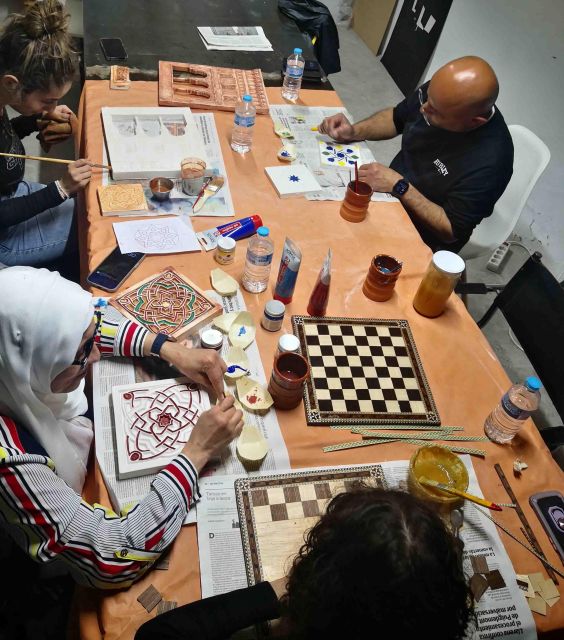
- Build a chessboard and learn basics of granadian marquetry
And there are more options beyond those listed. That matters because it’s easy to assume every Alhambra workshop is the same: paint a tile and go. Here, you can choose a craft path that fits your personality. Want something geometric and methodical? Mosaic or marquetry. Want color and pattern? Nasrid tile painting. Prefer sculptural detail? Stucco carving or the plasterwork approach.
What I think these choices really mean for you
If you’re the kind of person who likes to finish strong, the mosaic panel and chessboard options feel structured and satisfying. If you want immediate visual payoff with color, a Nasrid tile can be a great pick. If you like drama and glow, plasterwork with gold leaf gives that Alhambra “wow” factor in a form you can take home.
Just keep one consideration in mind: the chessboard has a glazing option that can be added for an extra charge. So if you’re planning to buy it as a showpiece, ask early how the glazing changes the final look and budget.
The two-hour flow: from tools to a finished souvenir
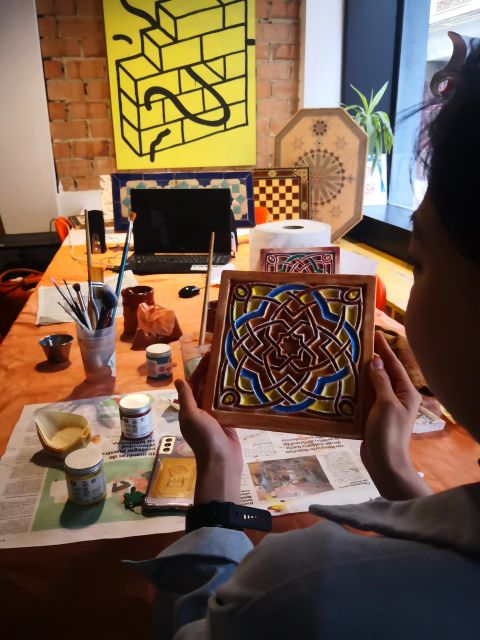
This experience runs for 2 hours, so it’s paced like a focused class, not a long studio project. The rhythm is built around a simple reality: you’re learning a technique, making decisions in a short time, and still leaving with something complete.
You start by meeting at the studio and getting set up. Then you choose your piece from the available options. After that, you get guided instruction from the artisan on how to work the materials properly. The workshop specifically includes access to all the tools and materials required to make your first masterpiece of Andalusian craftsmanship.
From there, it becomes hands-on. You’ll work step by step with the artisan’s help, learning the basic techniques of Arab decoration and Hispanic-Muslim craft traditions. The activity is designed for different ages and skill levels, so you’re not expected to already know the craft language.
At the end, you take your work home. That sounds obvious, but it’s worth calling out because many classes teach skills without producing a finished keepsake. Here, the structure is clearly built around a tangible result.
What makes the instruction feel authentic
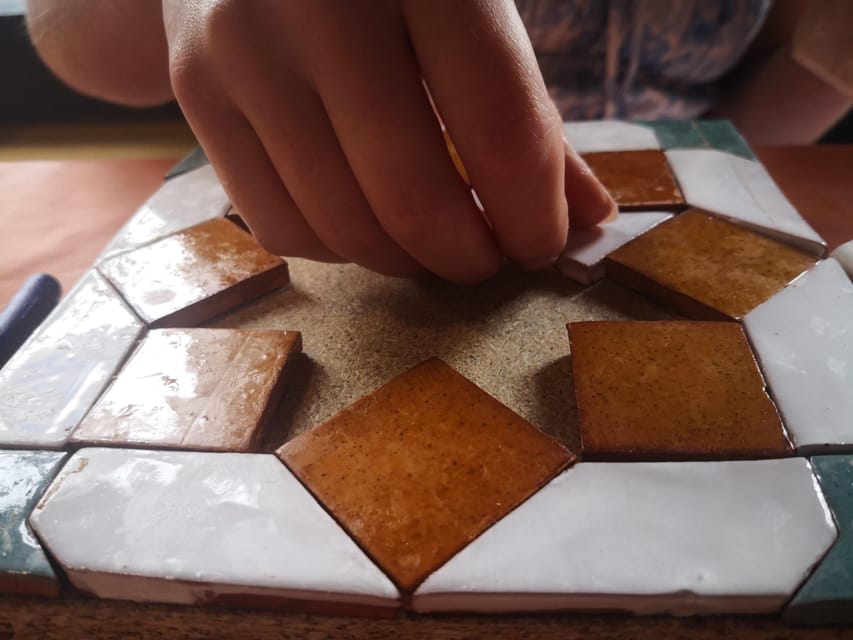
This workshop doesn’t try to sell you an art history lecture as the main event. The center of gravity is technique. You’re taught the kinds of “secrets and tricks of the pros,” which is a friendly way of saying you’ll learn the little moves that help the work look clean and intentional.
That’s where the artisan’s background matters. The instructor is described as specializing in Hispanic-Muslim craftsmanship, and that shows in the way the class is framed: you’re not copying a random pattern. You’re learning how the style is constructed—how decoration is planned, repeated, and shaped by the craft process.
In the classroom vibe, you also get real coaching. People mention being treated with patience and clear instructions, which is exactly what you want when you’re handling materials like plaster, stucco carving tools, tile paints, or mosaic elements. In practice, it means you can slow down, ask questions, and not feel rushed into mistakes.
And yes, there’s also a human side. The atmosphere is described as relaxed and enjoyable, even when you’re working carefully. That balance is important: crafts like these require attention, but you don’t want the room to feel tense.



The take-home factor: why this souvenir is better than a postcard
The best souvenirs come with a story you can tell in one sentence. This one comes with a story you can tell in several.
You’re taking home a piece you made during the workshop: a mosaic tiled panel, a Nasrid tile you painted, a polychromatic plaster work with gold leaf, a stucco carving reproduction, or a marquetry chessboard. Because you handled the materials yourself, it’s not just decorative. It’s a record of what you learned and did.
That’s also why the workshop is a smart choice even if you’ve already visited the Alhambra. Seeing the details in person is one thing. Making something inspired by the techniques is another. It turns those patterns from background into something you understand at hand level—what’s hard, what’s precise, and what makes the result look right.
Practical tip: match the craft to what you’ll actually display
Before you choose, think about how you’ll use the piece at home.
- If you want something easy to display on a wall, a mosaic panel or painted Nasrid tile usually fits well.
- If you want a desk conversation starter, the chessboard is both decorative and functional.
- If you want something that feels ceremonial or special, gold leaf plasterwork can land best.
Price and value: is $69 worth two hours?
At $69 per person for 2 hours, you’re paying for more than a craft kit. You’re paying for:
- an artisan specializing in the technique,
- tools and materials supplied,
- a wide menu of final-piece options,
- and the fact that you leave with a finished work of art.
In other words, it’s not just the supplies. It’s the instruction and the “how to make it look like the real style” part.
You also don’t need to budget for food in the workshop price, because food and drinks aren’t included. That’s normal for this kind of activity, but plan to eat before or after so you don’t feel distracted while working.
If you compare it to buying decor in shops, the math looks different. You’re not just buying a pattern; you’re buying a skill attempt plus a keepsake. For many people, that’s the value: the memory of doing it right, not just the object.
Who this workshop is best for (and who it might not fit)
This is ideal if you want a break from museum walking. It’s also great for couples who want one shared activity that isn’t just dining and wandering. If you like crafts, even casually, you’ll probably enjoy the chance to work with your hands and learn techniques connected to the Alhambra’s visual language.
It’s also a solid family option if kids are old enough. The information says it’s not suitable for children under 6, but it’s described as enjoyable for children, adults, and families. So if you’re traveling with school-age kids and want something more hands-on than sightseeing, this can work well.
Not a fit if anyone in your group uses a wheelchair, since the workshop is not suitable for wheelchair users.
Small logistics you should plan for
This workshop doesn’t include hotel pickup or drop-off, and food and drinks aren’t included. That’s actually fine because the meeting point is central and easy to reach on foot.
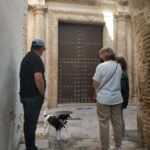
The meeting point is clear: C. Horno de Haza, 29. You’ll look for the workshop there and go inside—your craftsman is expected to be waiting for you inside.
Also plan around the workshop being 2 hours long. That’s usually perfect as a mid-day creative reset: you get your craft time, then you can head back out for Granada sights without feeling stuck.
Should you book this Granada Alhambra craft workshop?
Book it if you want an Alhambra souvenir you made, not just bought, and you enjoy structured hands-on instruction. The variety of choices is a major reason to say yes. Mosaic, Nasrid tile painting, plasterwork with gold leaf, stucco carving, and marquetry all give you different ways to connect with the style.
Skip it (or consider another option) if you need wheelchair accessibility, or if you’re looking for a passive cultural experience with minimal making. This is about doing the craft, step by step, with proper tools and materials.
If you’re on the fence, here’s my practical rule: if you’d enjoy leaving a class with a finished object you can proudly hang, frame, or use, this workshop is a strong match.
FAQ
Where is the meeting point for the workshop?
You meet at C. Horno de Haza, 29. Your craftsman will be waiting for you inside the workshop.
How long is the workshop?
The experience lasts 2 hours.
What does the workshop cost?
The price is $69 per person.
What’s included in the price?
The workshop includes an artisan specializing in Hispanic-Muslim craftsmanship, craft art materials and tools, access to a dozen pieces to choose from, a craft display, and you take home your own work of art.
Is hotel pickup or drop-off included?
No. Hotel pickup and drop-off are not included.
Do you provide food or drinks?
No. Food and drinks are not included.
What can I make during the workshop?
You can choose from options such as a mosaic tiled panel, a painted Nasrid tile, polychromatic plasterwork with gold leaf, a stucco piece using direct carving technique, and a chessboard with basic concepts of granadian marquetry, among other choices.
What languages are available for instruction?
Instruction is offered in English, French, and Spanish.
Can children participate?
The workshop is not suitable for children under 6.
Is the workshop wheelchair accessible?
No. The workshop is not suitable for wheelchair users.