REVIEW · 2-DAY EXPERIENCES
Granada City Train 1 or 2-Day Hop-On Hop-Off Ticket
Book on GetYourGuide →Operated by Julia Travel Gray Line Spain · Bookable on GetYourGuide
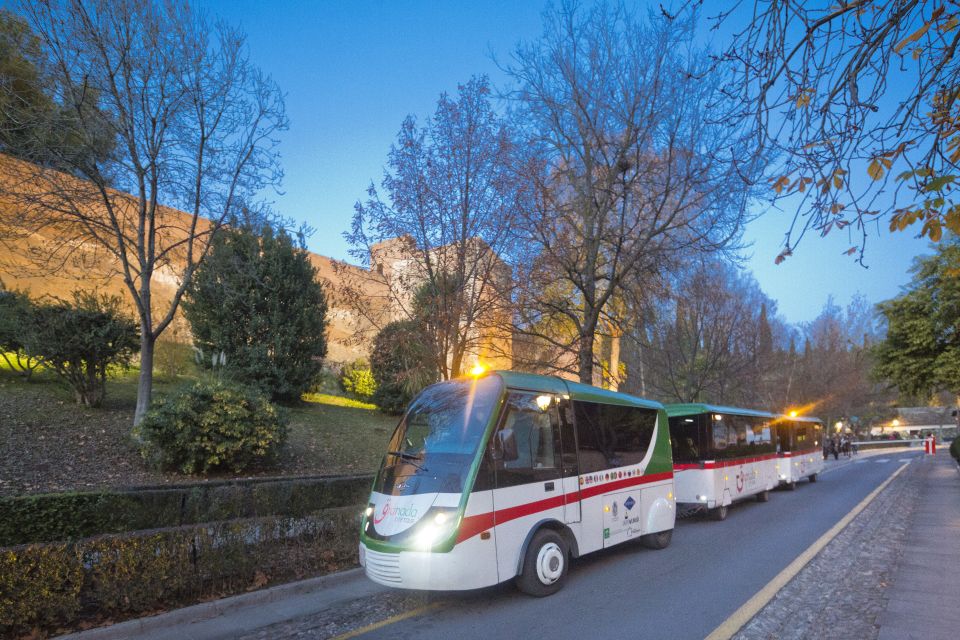
A mini train solves a big Granada problem: hills. This hop-on hop-off ride lets you move between top sights with minimal effort, plus a built-in audio guide in 12 languages.
What I like most is the flexibility. You can ride up, hop off, take your time, then climb back on when you’re ready. I also really appreciate how it centers the Alhambra route, so you get close to the monument area without turning your day into a stair workout.
One thing to plan around: it can get crowded, and the ride can feel bumpy on Granada’s old cobblestones, especially during peak times.
In This Review
- Key highlights at a glance
- Granada City Train: the smart way to cover the historic center fast
- Tickets and value: picking 1-trip vs 1-day vs 2-day
- The Green Line Alhambra Route: your hop-on map in plain English
- Stop 1: Alhambra Generalife (ticket office) — start here and set your direction
- Stop 2: Alhambra / Puerta de la Justicia — get close to the Alhambra area
- Stop 3: Plaza Nueva — the old square + an easy coffee break
- Stop 4: Alhóndiga — a mid-route stop for breaking up your day
- Stop 5: Catedral / Capilla Real — for the big religious landmarks
- Stop 6: Mirador de San Cristóbal / Jardines de Zoraya — viewpoint stop for late-day photos
- Stop 7: Arco de Elvira / Hospital Real — another landmark-aligned stop
- Stop 8: Calle Reyes Católicos / Plaza Isabel la Católica — walkable central streets
- Stop 9: Calle Molinos / Campo del Príncipe — another break point for wandering
- Stop 10: Carmen de Los Mártires — end-cap energy for a slower finish
- What it feels like onboard: audio in 12 languages, but bring your own headphones
- Timing tips: how often it runs, when Alhambra access changes, and why crowds matter
- Building your day plan: simple loops that work with real energy levels
- Issues to consider before you buy
- Should you book the Granada City Train hop-on hop-off ticket?
- FAQ
- Where is the meeting point for the Granada City Train?
- What ticket options are available?
- How often do the Alhambra Route trains run?
- Is an audio guide included, and what languages are available?
- Do I need to bring headphones?
- Can I hop on and off as many times as I want?
- Are there times when the train does not run to the Alhambra?
- Are strollers allowed?
- Is there free cancellation?
Key highlights at a glance
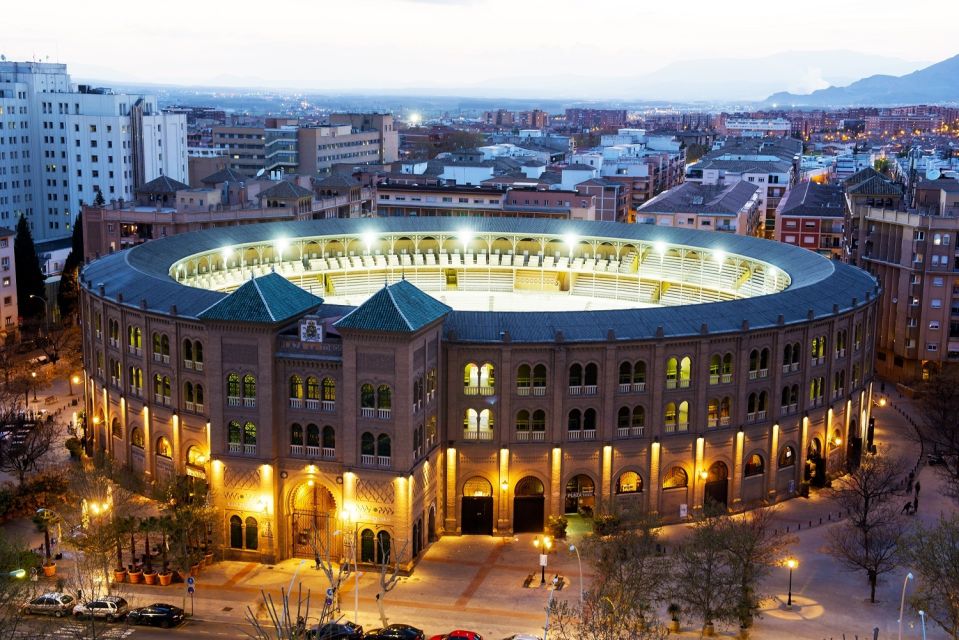
- Green Line (Alhambra Route) connects the Alhambra area with major sights across the historic center
- 12-language audio guide keeps you oriented as you roll through narrow streets
- Stop 1 Alhambra Generalife (ticket office) is the route start, with clear hop-on hop-off structure
- Plaza Nueva stop includes a convenient break at Granada’s oldest square
- Trains every 30–45 minutes help you build a flexible itinerary
- Mirador de San Cristóbal (stop #6) is a standout viewpoint stop for late-day photos
Granada City Train: the smart way to cover the historic center fast
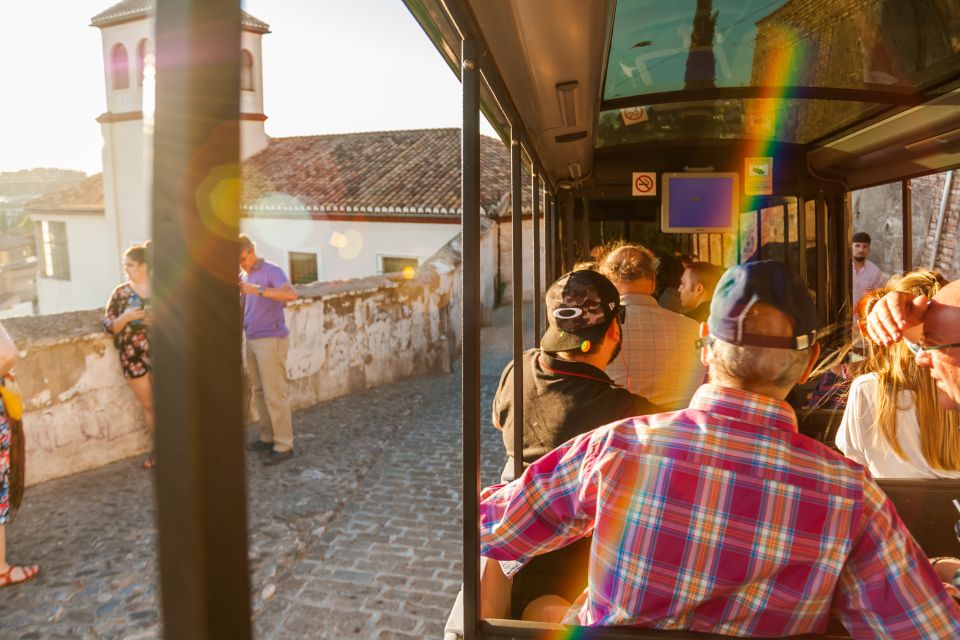
Granada is beautiful, but it can be physically demanding. The streets slope, the sidewalks narrow, and between sights you often feel like you’re climbing just to get to the next postcard. This City Train hop-on hop-off route is built for that reality.
You start at the ticket office at Stop No. 1, Alhambra (Alhambra Generalife). From there, the route runs along a line of stops where you can get off to explore, then hop back on later. It’s a great match for a short visit because it helps you learn the geography of Granada quickly, then decide what to linger on.
And the ride itself is part of the experience: the train moves through tight streets in the historic center, where you get views from the train as you travel between stops. When you’re tired, you don’t have to commit to a long walk. When you’re in the mood, you can get off near a landmark and wander at your own pace.
You can also read our reviews of more tours and experiences in Granada



Tickets and value: picking 1-trip vs 1-day vs 2-day
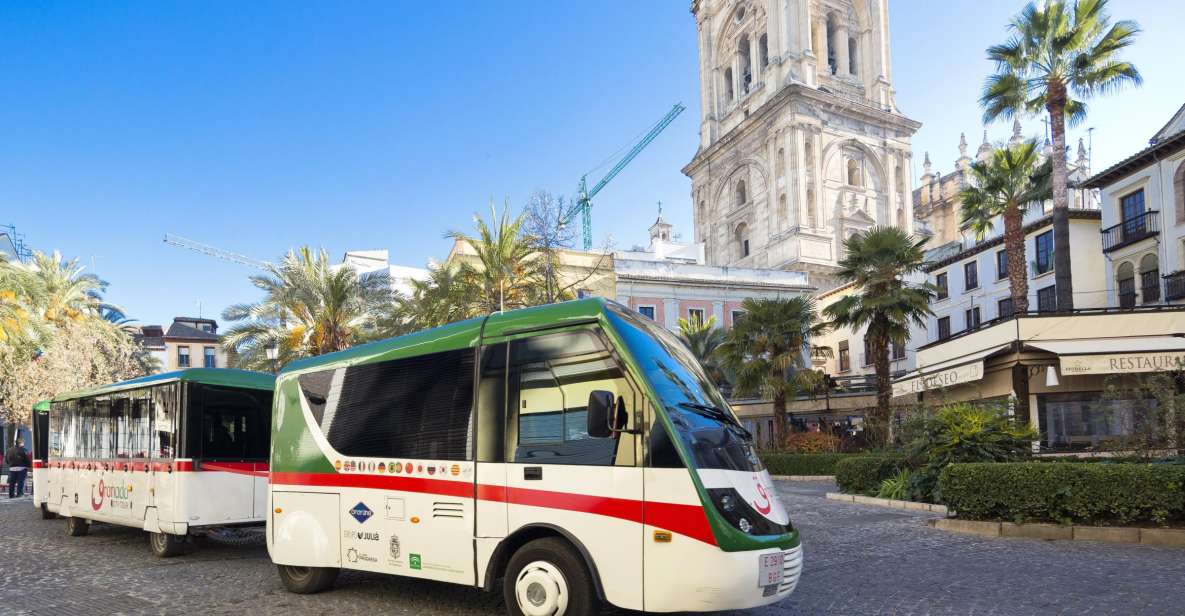
The price is impressively low for what you get: it’s listed around $8 per person (with 1-day, 2-day, or 1-trip options). At that price, the train functions like affordable, prepaid transport between multiple sights, not just a single ride.
Here’s how I’d choose:
- 1-trip ticket (single ride option): Best if you’re doing Granada in one day and want a fast way up toward the Alhambra area. You can use the stops as a preview and then pick a couple places to revisit on foot later.
- 1-day ticket: Best if you want a full circuit mindset. Ride once to orient yourself, then hop off to explore one or two zones more deeply.
- 2-day ticket: Best if you like a slower rhythm or you want to bounce between different parts of town without constantly checking bus/taxi schedules.
You’ll get the included audioguide in 12 languages, which matters more than it sounds. Even if you’re a light listener, it helps you connect what you’re seeing with context while you’re sitting comfortably, not just staring at buildings and guessing.
The Green Line Alhambra Route: your hop-on map in plain English
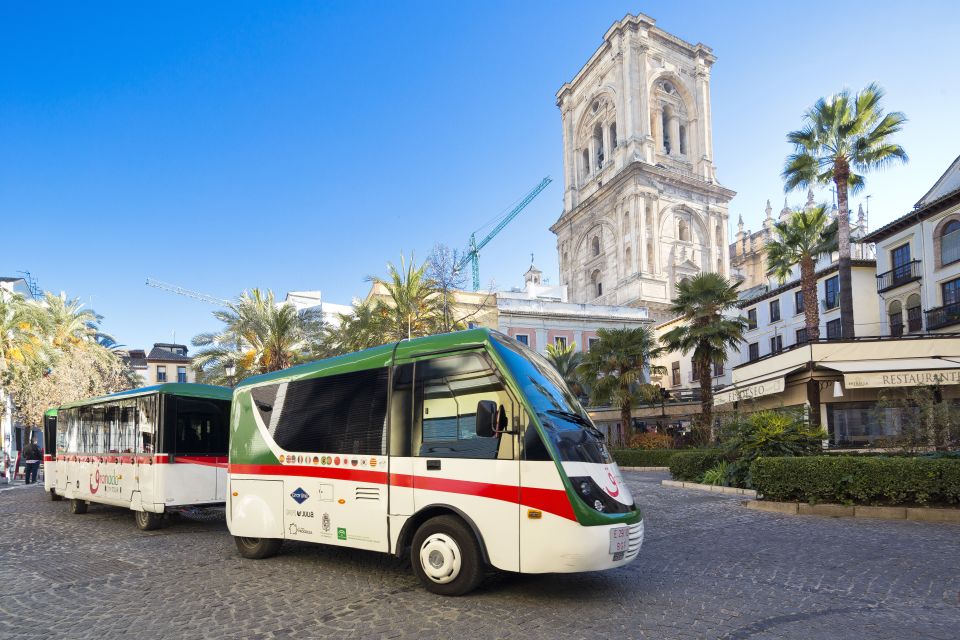
The core of the experience is the Alhambra Route (green line). Trains run every 30–45 minutes, which is frequent enough that you’re not waiting all day. The route includes a set list of stops, starting at Alhambra Generalife and reaching down toward central Granada.
Below is what each stop is good for, plus a few practical notes on how I’d use it.
Stop 1: Alhambra Generalife (ticket office) — start here and set your direction
This is the route’s starting point and the ticket office location. If you’re trying to plan efficiently, I like starting here early, because it gives you the option to work down through town on foot after.
Stop 2: Alhambra / Puerta de la Justicia — get close to the Alhambra area
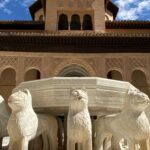
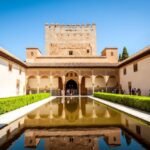
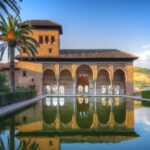
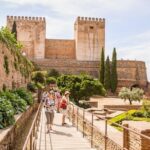
This stop is your direct connection into the Alhambra area via Puerta de la Justicia. If Alhambra is the big reason you came, treat this as your anchor point. You can ride up, hop off, and spend time in this zone without hiking between far-apart areas.
You can also read our reviews of more city tours in Granada





Stop 3: Plaza Nueva — the old square + an easy coffee break
Plaza Nueva is called out as Granada’s oldest square, and it’s also where you can build in a coffee stop. If you want a simple tactic: hop off here, refuel, then decide whether you want to continue exploring on the train or do a longer walk.
Stop 4: Alhóndiga — a mid-route stop for breaking up your day
The train lists Alhóndiga as a stop. It works well as a halfway point when you’re not sure whether you want to keep rolling or linger nearby.
Stop 5: Catedral / Capilla Real — for the big religious landmarks
If you’re into classic Granada architecture and landmark-scale buildings, this is one of your main targets. The stop is named Catedral / Capilla Real, so you can hop off and spend time in that area, then continue your route afterward.
Stop 6: Mirador de San Cristóbal / Jardines de Zoraya — viewpoint stop for late-day photos
This is a big one. The highlights specifically mention views from the Mirador de San Cristóbal, and the stop includes the Jardines de Zoraya name as well. In practical terms, this is where you’ll want your camera, and where planning around time of day can pay off for photos.
Stop 7: Arco de Elvira / Hospital Real — another landmark-aligned stop
This pairing is built right into the route. When you see a stop like this on a hop-on hop-off line, it’s usually a sign that you’re near a notable structure and you can use the ride as your shortcut to it.
Stop 8: Calle Reyes Católicos / Plaza Isabel la Católica — walkable central streets
This stop is a good choice if you want to shift into more strolling and less hopping. With stops like this, you can hop off, explore streets nearby, and then hop back on once you feel like you’ve covered what you want.
Stop 9: Calle Molinos / Campo del Príncipe — another break point for wandering
This is another listed central stop. Use it like a “wandering checkpoint”: hop off, wander around the immediate area, then get back on when you want to relocate without effort.
Stop 10: Carmen de Los Mártires — end-cap energy for a slower finish
This is the last named stop on the Alhambra Route list. If you want to end with a calmer pace, it’s a good zone to finish your loop and decide what you want to do after you exit the train.
What it feels like onboard: audio in 12 languages, but bring your own headphones
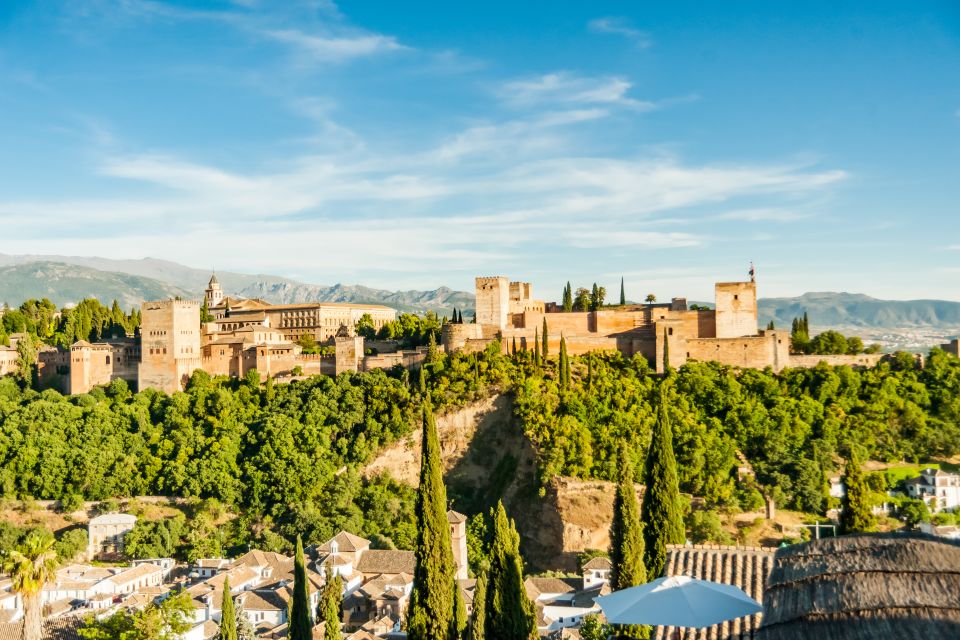
The included audioguide is available in Spanish, Catalan, Chinese, English, French, German, Italian, Japanese, Arabic, Portuguese, Russian, Korean. That’s not just for convenience—it helps you get orientation fast, especially if you’re jumping between stops and building your own schedule.
Two practical notes that will save you time:
- Headphones are not included. Bring headphones. The tour info explicitly tells you to bring them, and the experience details headphones as a “what to bring.”
- The train ride can feel bumpy on cobblestone streets. If you have a back issue, go in knowing the ride isn’t designed to be plush. I’d treat it like transport that also gives you views, not like a smooth city cruiser.
Also, the train is a good “moving classroom.” Even if you only catch parts of the narration, it helps you understand why certain stops matter and what direction you’re traveling.
Timing tips: how often it runs, when Alhambra access changes, and why crowds matter
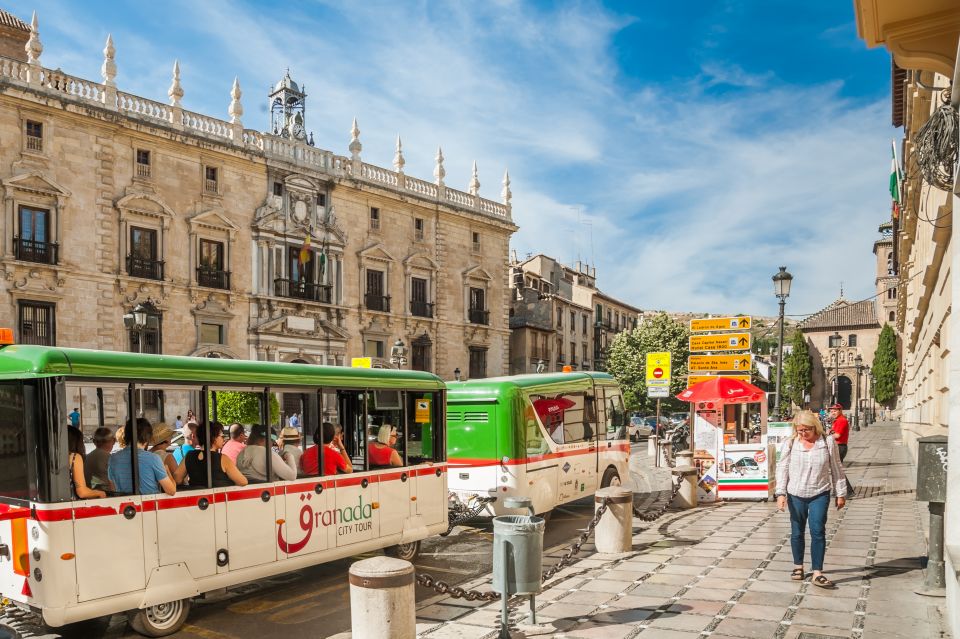
The trains on the Alhambra Route run every 30–45 minutes. That frequency gives you flexibility, but it doesn’t mean you’ll always get an immediate seat on busy days.
Here’s the important detail to plan around: Monday to Friday, 2:00 p.m. to 2:30 p.m., there are no regular train rides to the Alhambra. This is due to municipal regulation, with the access through Cuesta del Caidero closed. Outside those hours, the train does make its regular route to the Alhambra.
Then there’s the real-world stuff: the info notes that regular service may be affected by city events, adverse traffic conditions, or force majeure reasons outside the operator’s control. Translation: on special days, don’t assume a perfect schedule.
If you want to avoid long boarding waits, I’d do two things:
- Start earlier if you can, especially if you’re aiming for Alhambra first.
- Expect busier moments at key stops like Alhambra, Plaza Nueva, and the cathedral area, and treat the first ride of the day as the easiest chance to get your bearings.
Building your day plan: simple loops that work with real energy levels
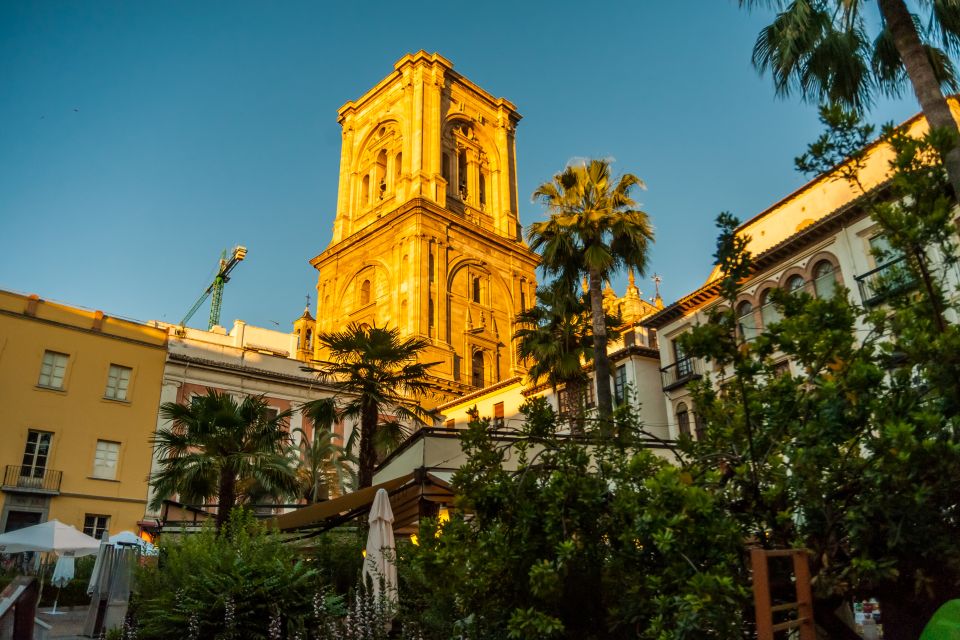
One of the smartest ways to use this ticket is to do it like a scout mission.
Step 1: Ride once without stressing. Let the audio guide help you connect the city to the stop names. During this first pass, you’re not trying to see everything. You’re learning where everything is.
Step 2: Hop off where your interests light up. The route naturally channels you through big anchors: Alhambra area, Plaza Nueva, cathedral/capilla real, and the mirador viewpoint stop.
Step 3: Add one or two longer stops. If you only do quick hops, you’ll miss the relaxed Granada feel. Instead, pick a couple stops and actually walk the nearby streets.
If you’re visiting with mixed stamina (some people want long walks, some don’t), this works because the train becomes the off-switch. You can do a longer stroll from Plaza Nueva, then regroup at a later stop like the Mirador de San Cristóbal area and finish with photos.
And if you’re traveling with kids or mobility needs, a stroller policy is also spelled out: strollers are allowed as long as they are folded and don’t exceed 35 cm height and 55 cm width.
Issues to consider before you buy
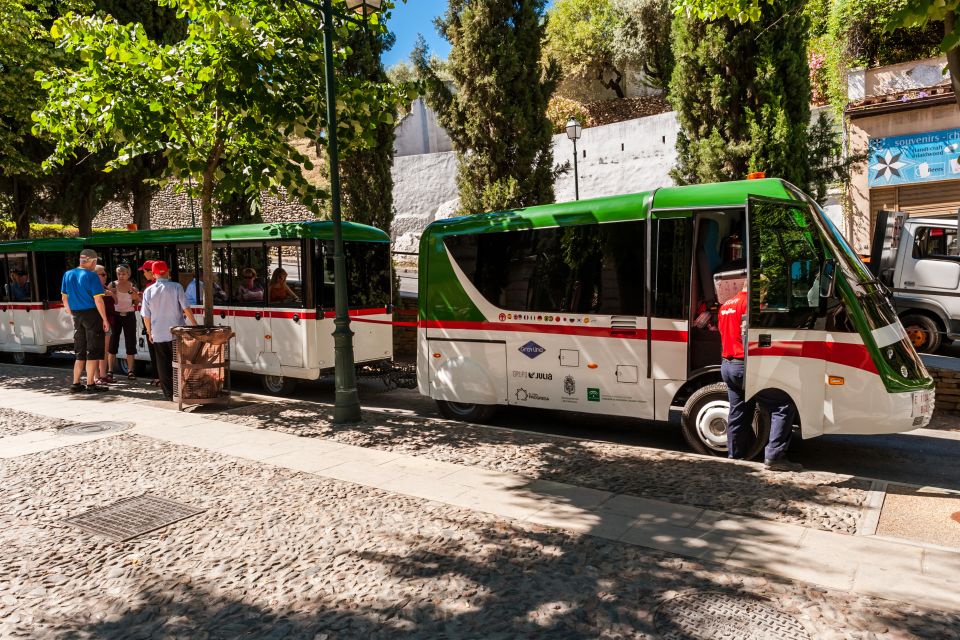
This experience is great value, but it’s not a “luxury sightseeing bubble.” Keep these in mind:
- Crowds and boarding time: On hot days and peak periods, the train can be very popular. If a stop is packed, you may wait for the next arrival.
- Ride comfort: It can be bumpy and noisy due to the street surface. If you’re sensitive to vibration or sudden braking, plan on it not feeling like smooth transit.
- Headphones needed: You’ll want to have them ready. Without headphones, you lose the audio benefit you’re paying for indirectly through the included guide.
Should you book the Granada City Train hop-on hop-off ticket?
If your goal is to see Granada efficiently without turning your day into uphill suffering, I’d say yes. This is one of those practical picks that gives you real value because it combines low cost, multiple major stops, and an audio guide in 12 languages.
Book it if:
- You’re short on time and want an easy way to reach the Alhambra area.
- You like planning your own itinerary using stop-by-stop flexibility.
- You want to reduce walking between top sights.
Skip it or plan differently if:
- You strongly prefer a quiet, smooth ride and perfect comfort.
- You’re visiting during peak hours and know you hate waiting for boarding.
If you want Granada to feel manageable, this train is a smart way to do it—then you can use the rest of your day to explore the parts that truly catch your eye.
FAQ
Where is the meeting point for the Granada City Train?
The ticket office is at Stop No. 1 Alhambra, and the route starts at Alhambra Generalife (ticket office).
What ticket options are available?
You can choose a 1-day, 2-day, or 1-trip hop-on hop-off ticket.
How often do the Alhambra Route trains run?
The Alhambra Route (green line) trains run every 30–45 minutes.
Is an audio guide included, and what languages are available?
Yes. An audioguide is included in 12 languages: Spanish, Catalan, Chinese, English, French, German, Italian, Japanese, Arabic, Portuguese, Russian, and Korean.
Do I need to bring headphones?
Yes. The tour information says to bring headphones.
Can I hop on and off as many times as I want?
The hop-on hop-off concept is part of the experience, and the info explains you can build your own itinerary using the listed stops.
Are there times when the train does not run to the Alhambra?
Yes. From Monday to Friday, there are no regular train rides to the Alhambra from 2:00 p.m. to 2:30 p.m. due to municipal regulation and the access closure through Cuesta del Caidero.
Are strollers allowed?
Yes, strollers are allowed as long as, when folded, they do not exceed 35 cm in height and 55 cm in width.
Is there free cancellation?
Yes. You can cancel up to 24 hours in advance for a full refund.