REVIEW · PLAZA NUEVA GRANADA
Granada: City Center, Cathedral, Capilla Tour
Book on GetYourGuide →Operated by ADIPATOURS VIAJES S.L. · Bookable on GetYourGuide
Granada has a way of stacking history fast. This tour hits two heavyweight sights—the Cathedral and the Royal Chapel—while you also thread through the old streets that shaped the city. I especially like how you get inside the Cathedral of Granada and how the Capilla Real ties religion to real political power. One thing to keep in mind: it is a short, walk-heavy route in central areas, so comfy shoes matter.
I also like the street-to-street flow. You start around Plaza Nueva, pass landmark buildings like the Real Chancillería, and then slide down toward the Darro river area where you’ll see surviving Moorish-era commercial architecture. The vibe is practical and guide-led, not just photo stops.
The main drawback is timing. At just 2.5 hours, you’ll see a lot of stops, but you won’t have long to linger in each place, so plan to take photos quickly and save your deeper questions for the guide.
In This Review
- Key highlights you should know before you go
- Walking route: Plaza Nueva to the Royal Chapel in 2.5 hours
- Cathedral of Granada: what you’ll actually see inside
- Capilla Real (Royal Chapel): burial choices with political weight
- Real Granada streets: Santa Ana, Pilar del Toro, and Plaza Nueva’s framing
- Darro Riverbed and Corral del Carbón: Muslim commercial Granada still standing
- Madraza of Yusuf I (1349): a short stop with a long timeline
- Who this tour suits best (and who might want a different one)
- Price and value: what your $51 is really buying
- Small practical tips that make the tour smoother
- Should you book this Granada Cathedral and Capilla Real tour?
Key highlights you should know before you go
- Tickets included for Catedral and Capilla Real: you’re not wasting time lining up for entries you already paid for.
- Capilla Real connects the dots between the Reyes Católicos and why they chose to be buried here.
- Cathedral of Granada interior time: you’re walking in, not just peeking from the outside.
- Darro riverbed walk to Corral del Carbón: a rare surviving example of Muslim commercial use.
- Madraza of Yusuf I (founded 1349): a quick history hit in a meaningful spot.
- A silk-market-style street stop: colors and smells come through when the route hits the old commercial lanes.
Walking route: Plaza Nueva to the Royal Chapel in 2.5 hours
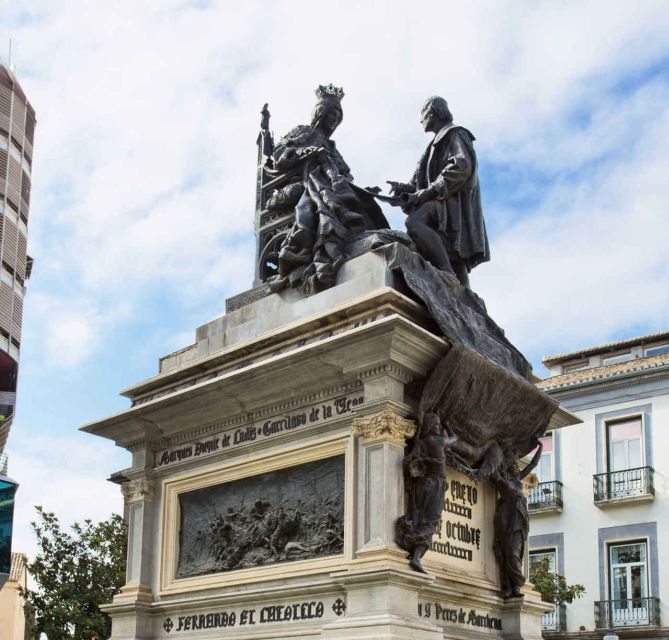
Your tour starts next to the taxi stop, then rolls into the most “Granada center” kind of sightseeing—dense, walkable, and layered. You begin at Plaza Nueva, which stands out because it helped change the city’s look and feel as Granada modernized around it. Even if you’re only in town for a short stay, this first stop helps you understand where you are and why the old streets matter.
From there, you’ll pass and admire buildings tied to royal administration, including the Real Chancillería, described as the highest court of appeal of the Crown of Castile. That’s one of those details that makes the architecture click—you start seeing buildings as part of how power worked, not just how they look in photos.
Then the route keeps moving through the core landmarks around Plaza Nueva and nearby points like the church of Santa Ana and the Pilar del Toro. It’s a steady pace, and it matters because the next section is the “wow, this is old Granada” walk toward the river area.
After that, you’ll head down the Darro riverbed to the Corral del Carbón, also known as the old Al-Funduq. This is one of the rare survivors that shows Muslim-era commercial architecture still standing and recognizable. It’s a great moment to shift your mind from “cathedrals and chapels” to “how people lived and traded.”
You can also read our reviews of more tours and experiences in Plaza Nueva Granada.

Cathedral of Granada: what you’ll actually see inside
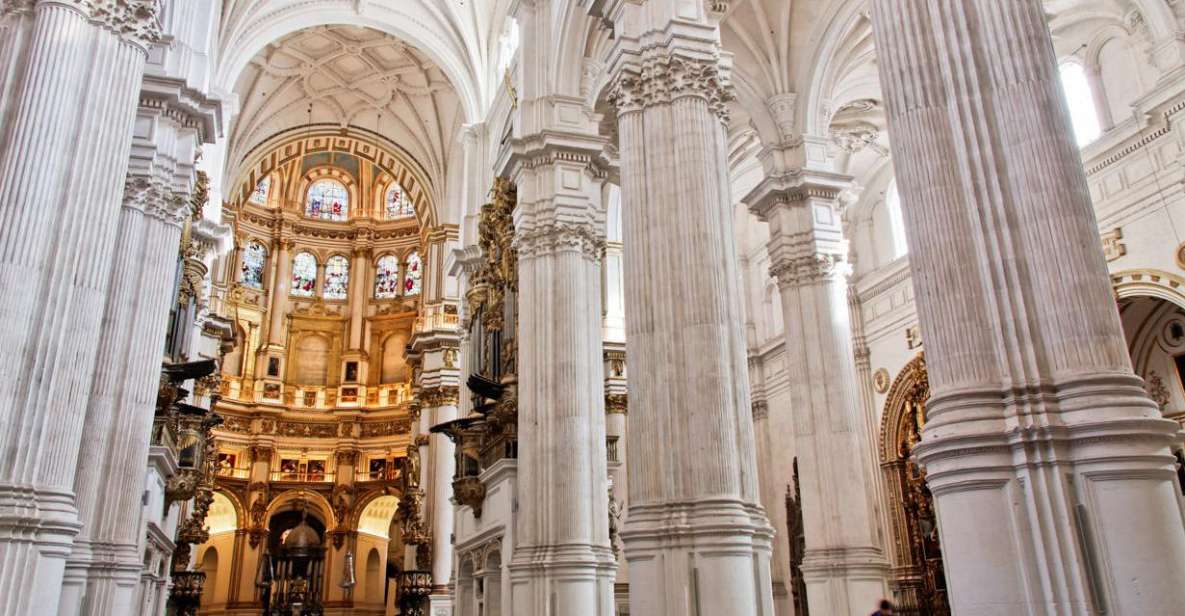
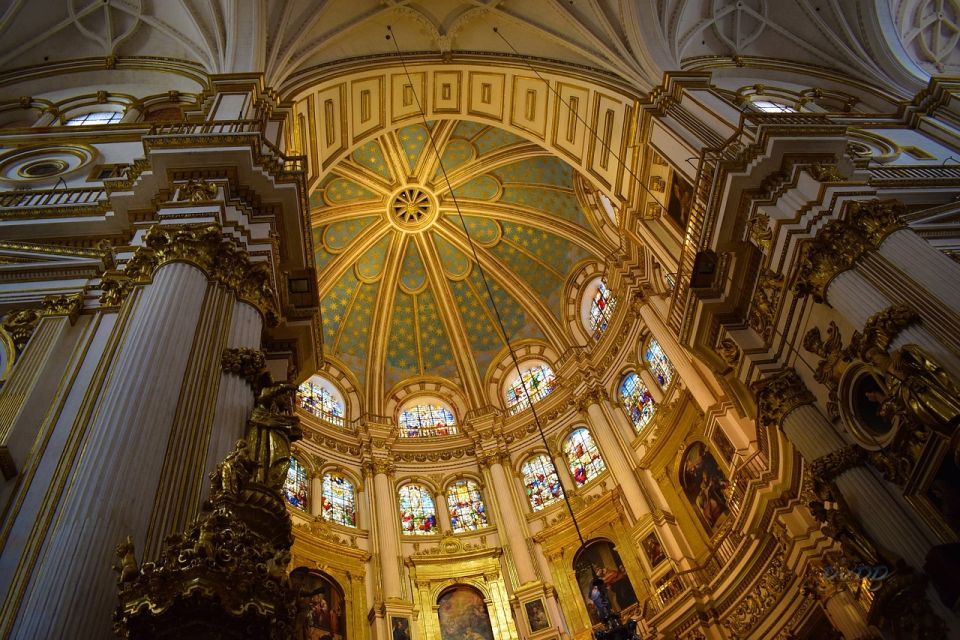
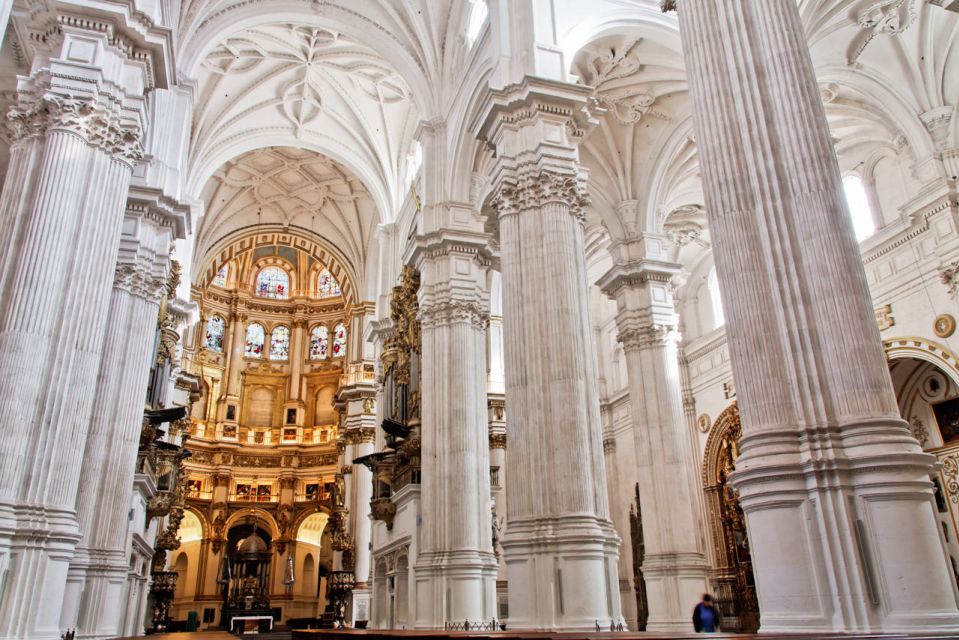
One of the best parts of this tour is that you don’t just orbit the Cathedral—you go in. The Cathedral of Granada is where the city’s religious ambition shows up in stone, scale, and craftsmanship. Your guide’s job here is to turn what could be a silent, confusing building into something you can read.
A key detail you’ll get: the Cathedral began being built by Emperor Charles V. That matters because it places the church inside a bigger political timeline, not just a local devotional one. You’ll start noticing how different eras can coexist in one building story, even when the structure feels like one unified monument.
Because the tour includes Cathedral tickets, you can focus on the visit instead of worrying about entry timing. It also means your guide can manage the flow—what to look at first, which sections deserve a couple extra seconds, and how the interior connects back to what you saw outside on the way in.
If you prefer structured sightseeing, you’ll likely enjoy this stop. If you prefer total freedom and long, quiet museum-style wandering, you might find the pace a touch brisk. The upside is that you’ll cover the “must-see interior” without sacrificing the rest of Granada’s old-street atmosphere.
Capilla Real (Royal Chapel): burial choices with political weight
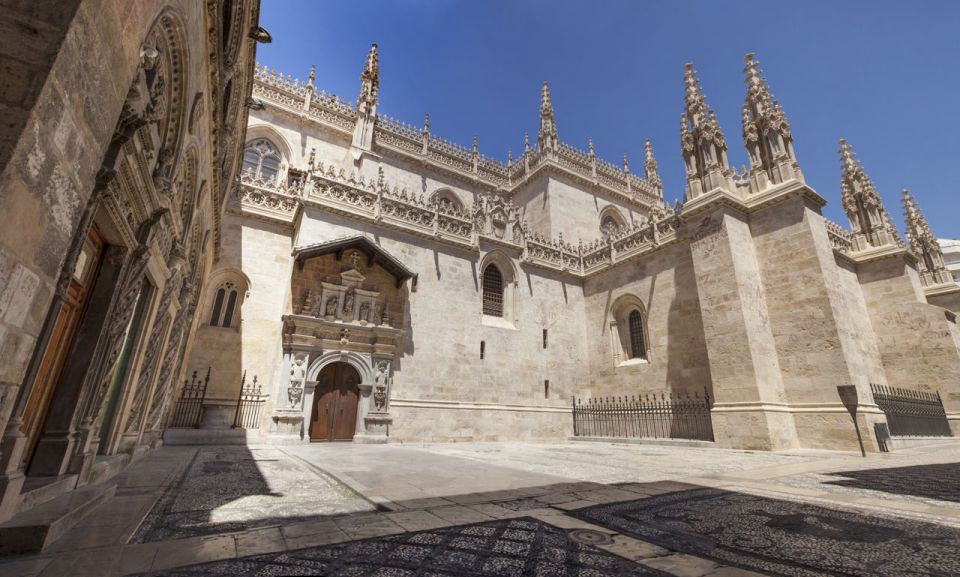
The Capilla Real is the emotional center of the tour. This is where the Reyes Católicos (the Catholic Monarchs) chose to be buried, leaving a permanent reminder of the work required to win and control the city. In other words, this isn’t a random tomb stop—it’s a statement in architecture and ritual.
When you enter, you’ll learn how the chapel’s design and purpose reflect both faith and authority. Guides tend to explain this in a way that makes the space feel like a message meant to outlast the people who built it. That’s what you’re paying for here: understanding why the burial site matters, not just staring at decoration.
The name “Capilla Real” can sound straightforward, but the concept behind it is bigger. This is a place where death is used as a kind of public record—who the rulers were, what they accomplished, and how they wanted Granada to remember them.
You’ll likely find that this stop also changes how you interpret the Cathedral. After Capilla Real, the Cathedral doesn’t feel like a separate attraction. It feels like another chapter in the same story of Granada’s identity shifting over time.
Real Granada streets: Santa Ana, Pilar del Toro, and Plaza Nueva’s framing
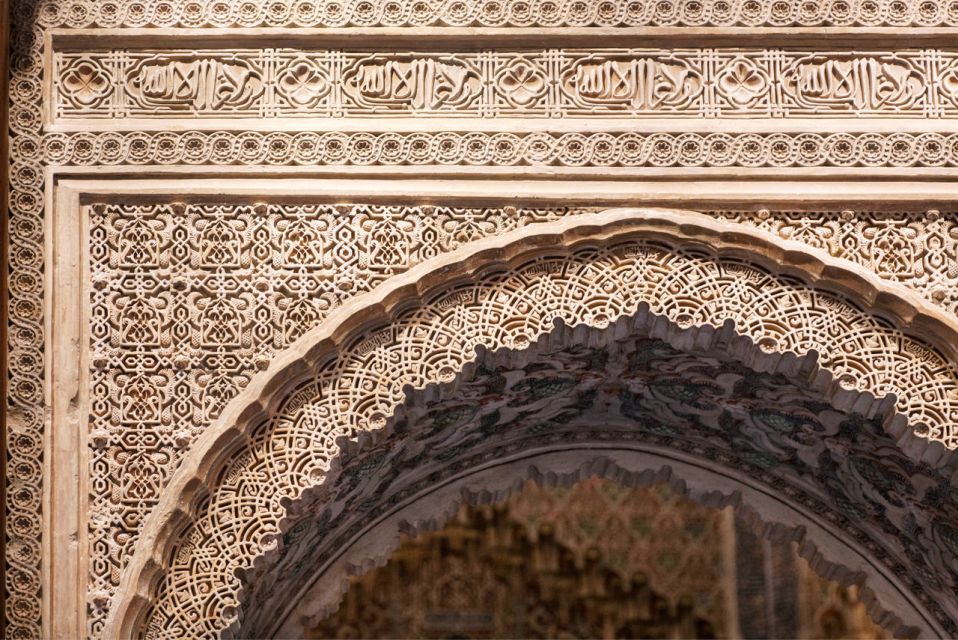
Before you reach the river and the older commercial lanes, the tour uses the area around Plaza Nueva to set the scene. I like this strategy because it gives you orientation without making the tour feel like a bus lecture. Plaza Nueva acts like a hub, and the guide uses it to connect nearby landmarks into one coherent walk.
You’ll admire constructions that changed Granada’s physiognomy, plus key local markers like Santa Ana and the Pilar del Toro. These stops might feel smaller than the Cathedral and Royal Chapel, but they help you read the city fabric. When your route includes these in-between points, the major sites land harder because you understand their neighborhood context.
The Real Chancillería is another crucial anchoring stop. A court building is not “just another building,” and the tour doesn’t treat it like that. You’ll learn what it represented in the Crown of Castile—another reminder that Granada’s story is political as well as religious.
If you’re the kind of traveler who likes to know what you’re looking at, these street stops are your payoff. If you only want big-ticket interiors, you may skim them mentally—but they still help you avoid that common problem where the city looks pretty but feels disconnected.
Darro Riverbed and Corral del Carbón: Muslim commercial Granada still standing
This is the tour’s quiet surprise. After the major Christian landmarks, you walk down the Darro riverbed to the old Al-Funduq, known as the Corral del Carbón. The standout point is that it’s one of the few preserved Muslim buildings with a commercial function.
That fact changes the way you interpret the whole area. Instead of thinking of Granada only as palaces and religious monuments, you start seeing the city as a place where trade, storage, and travel mattered—where businesses operated and linked different communities.
The guide’s explanation helps you notice details that you might otherwise overlook. Even if you’re not an architecture specialist, the conversation tends to put the building into plain language: what it was used for, why it stood in this form, and what it tells you about Granada’s historical mix.
Then you continue into the streets tied to the old silk market, where the route is described as thousands of stalls, with colors and smells that hit your senses. You don’t need to be a shopper to enjoy this part. It’s about atmosphere and the way old commercial streets still feel alive.
Madraza of Yusuf I (1349): a short stop with a long timeline
Next comes the Madraza, founded by Yusuf I in 1349. A madraza is a learning center, and the fact that it’s tied to Yusuf I helps you place this structure within a dated historical thread rather than vague “old times.”
This stop works well because it bridges the commercial and the religious/political. You’ve seen governance buildings earlier, you’ve seen royal burial here and major church architecture—now you’re seeing education as a pillar of society. It’s one of the reasons this route feels more complete than a simple Cathedral-only visit.
The pace stays manageable for a 2.5-hour format. You won’t get a full textbook lesson, but you will leave with a couple of dates and names you can actually remember. That’s the goal of a good city tour: give you enough structure to keep your bearings and enough meaning to make the sights stick.
Who this tour suits best (and who might want a different one)
This experience is ideal if you want a high-value highlights tour without doing separate ticket runs. For $51 per person, you’re paying for an official guide plus entry to both the Cathedral and the Capilla Real. In practice, that usually means fewer logistics headaches and more time spent learning and looking.
It also suits you if you enjoy guided storytelling. The tour is led in Spanish, and the format is built around explanation—inside the Cathedral and inside the Royal Chapel, then back into the street context.
In terms of guides, there have been standout examples like Javier, praised for explaining with passion, and Rocío Salas, noted as professional and cheerful, with occasional help translating a few passages into English. That’s a good signal if you want a lively guide voice, not a monotone script.
If you strongly prefer slow travel, quiet time, or you need long pauses inside large sites, consider that the total duration is limited. You’ll cover the big moments, but you’ll still be moving.
Finally, the minimum requirement matters. The tour needs at least 10 guests to run, so if your travel dates are tight, check availability early.
Price and value: what your $51 is really buying
Let’s talk value without hand-waving. You’re paying $51 for a 2.5-hour guided loop that includes:
- an official guide
- tickets for the Cathedral and Capilla Real
- a route that ties in major central streets and notable historic structures
In other words, you’re not just buying access to two monuments. You’re buying someone to connect the dots between governance (Real Chancillería), city layout (Plaza Nueva), Muslim-era commercial architecture (Corral del Carbón), and royal Catholic power (Capilla Real).
Also, the walking route makes the included sights feel “earned.” You can’t always count on that in short tours. Here, the sequencing helps you understand why each stop leads to the next.
The only cost you need to plan for is transportation to the meeting point, since it’s not included.
Small practical tips that make the tour smoother
Wear comfortable shoes. You’ll be walking through the city center and down along the Darro riverbed area, and the tour is short enough that you’ll feel any foot fatigue.
Bring your passport or ID card. The tour data explicitly calls for it, and these kinds of sites often require ID for entry.
No smoking. It’s stated as a restriction, so just plan as if you won’t need a break for it.
And do yourself a favor: keep your questions ready. If you want deeper context—how the Cathedral story connects to earlier Granada eras, or how the burial choices were meant to send messages—this is when a passionate guide can turn your curiosity into clear answers.
Should you book this Granada Cathedral and Capilla Real tour?
I’d book it if you want a single, efficient Granada experience that covers the Cathedral of Granada, the Royal Chapel, and the old streets that make those places feel like part of a living city. The structure makes sense for short stays, and the included tickets mean you’re not paying extra or juggling entry times.
I would think twice if you dislike structured tours or if you need long, quiet time inside major churches. This is built for momentum and guided explanation, not unhurried wandering.
If you’re visiting Granada for the first time and you want the “core story” without wasting hours piecing together separate visits, this is a solid choice.