REVIEW · ALBAICIN & SACROMONTE WALKING TOURS
Albayzin and Sacromonte Guided Walking Tour in Granada
Book on Viator →Operated by Granada a Pie · Bookable on Viator
Granada hits differently from the hills. This guided evening walk strings together Albayzín’s whitewashed lanes and Sacromonte’s cave culture so you see the city’s layers instead of just photos. The one real catch: it’s hilly and you’ll be on cobbles and stairs, so comfy shoes matter.
You start near the Cathedral area and drift toward viewpoints over the Alhambra, then keep going into Sacromonte’s hillside streets and underground homes. It’s an affordable way to spend a couple of hours with a pro explaining what you’re looking at—stuff you’d totally miss if you just wandered. If your biggest goal is minimal walking, this may not be your best match.
In This Review
- Key things I’d mark on your mental map
- Why this Albayzín + Sacromonte evening tour makes sense
- Price and value: what $16.93 buys you (and what it doesn’t)
- Starting at Plaza Isabel la Católica: the city center gives context fast
- Paseo de los Tristes: the Alhambra shows up early
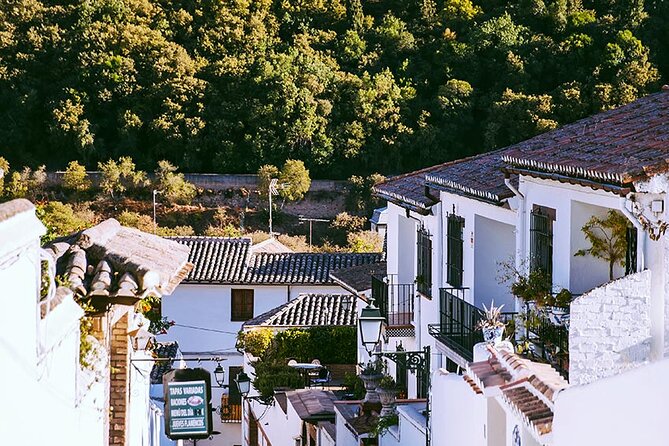
- Climbing into Albayzín: whitewashed lanes and the balcony-to-balcony vibe
- Plaza de San Nicolás: the famous balcony moment
- Sacromonte’s caves: cobbles, underground homes, and flamenco culture
- How strenuous is it, and how to survive the cobbles
- Group size and hearing the guide: what to do if sound is an issue
- Guides you may encounter: what their style can change
- Where the walk ends, and how to keep the evening going
- Should you book this tour?
- FAQ
- How long is the Albayzín and Sacromonte guided walking tour?
- Where does the tour start and where does it end?
- What language is the tour offered in?
- Is the tour strenuous?
- What is included in the price?
- Is it okay to cancel if my plans change?
Key things I’d mark on your mental map
- Albayzín, a UNESCO old Moorish quarter, with 11th-century roots and photo-ready balconies
- Plaza de San Nicolás, one of Granada’s most famous Alhambra viewpoints for that skyline moment
- Sacromonte’s cave district, where traditional cave living now shows up as flamenco bars and tiny museums
- A small-group feel (up to 30), but big groups can mean harder listening on windy hill corners
- Guides who manage the pace, with real check-ins and rest moments during steep sections
Why this Albayzín + Sacromonte evening tour makes sense
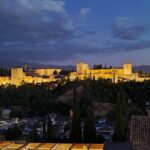
This is the kind of Granada tour that works because the city is built for views. You’re walking on hills that face the Alhambra, so the scenery isn’t a side bonus—it’s the point. Starting at 5:00 pm helps too. You get softer light for photos and usually a more comfortable temperature for walking than midday.
The Albayzín portion is where Granada’s old identity shows up in everyday life: narrow lanes, churches tucked into historic quarters, fountains, and those famous flower-filled balconies. Then Sacromonte shifts the tone. You trade above-ground streets for the hillside cave homes and the Roma culture connected to music, crafts, and flamenco venues.
This is also a smart format if you want variety without over-committing. The tour clocks in at about 2 to 2.5 hours, so you can still plan dinner afterward, and you’re not trapped in a full day of logistics.
You can also read our reviews of more walking tours in Granada

Price and value: what $16.93 buys you (and what it doesn’t)
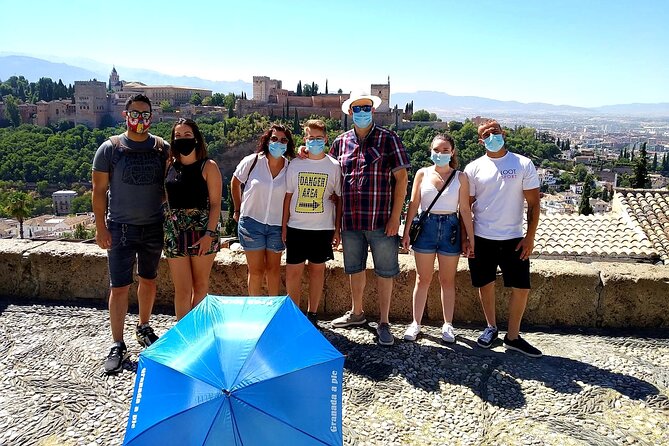
At $16.93 per person, you’re paying mostly for the guide and the route. You also get a mobile ticket and an English-language experience, which matters when you’re dealing with small streets and lots of architectural details.
You’re not buying food, drinks, or hotel pickup. That’s fine—this works best if you show up ready to walk, then grab dinner after. I’d treat this as a paid shortcut to understanding Granada’s geography and history faster than you could on your own.
Another value point: the tour is capped at 30 travelers. That usually keeps it from feeling like a giant bus tour, and it makes it more realistic to ask a question when you reach a viewpoint or a landmark.
Starting at Plaza Isabel la Católica: the city center gives context fast
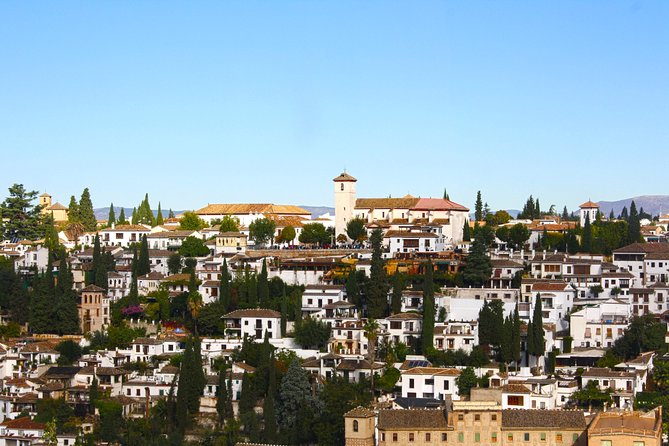
You meet at Plaza Isabel la Católica, right by the Cathedral area. This start point is practical because it’s easy to find and it anchors the walk in central Granada, not some remote neighborhood.
From here, your guide ties what you’re seeing to what came before. One stop you’ll pass through is Plaza Isabel la Católica, where you can spot the Chancillería (High Court of Justice) tied to the Catholic Monarchs. Even if you only catch it briefly, it helps set up the theme of this tour: Granada isn’t one era—it’s stacked time.
Then the route moves you toward the river side. There’s a classic Granada stretch along the water where you get early Alhambra glimpses. This is a good warm-up section because it gets your bearings before the hillside climbing begins.
Paseo de los Tristes: the Alhambra shows up early
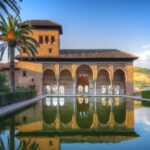
As you walk near the river, expect great Alhambra views to start popping up. This is also where you learn how the city is arranged: the river corridor, the slope rising into the old quarter, and the Alhambra sitting above everything like a quiet heavyweight.
Even if you’re not obsessed with architecture, this section helps you understand direction. After a few bends, you’ll know why Albayzín’s viewpoints feel so dramatic.
Climbing into Albayzín: whitewashed lanes and the balcony-to-balcony vibe
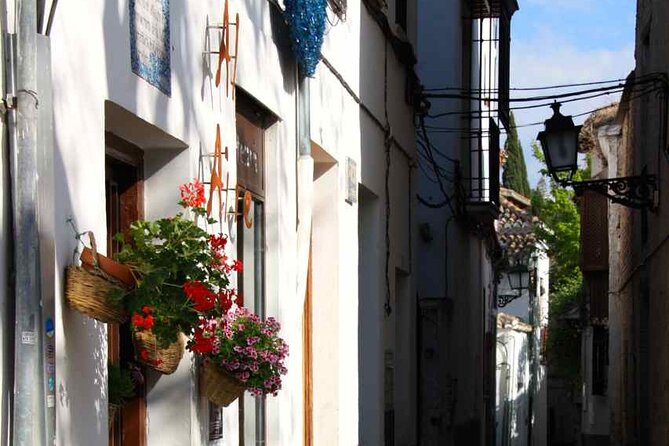
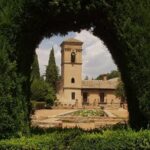
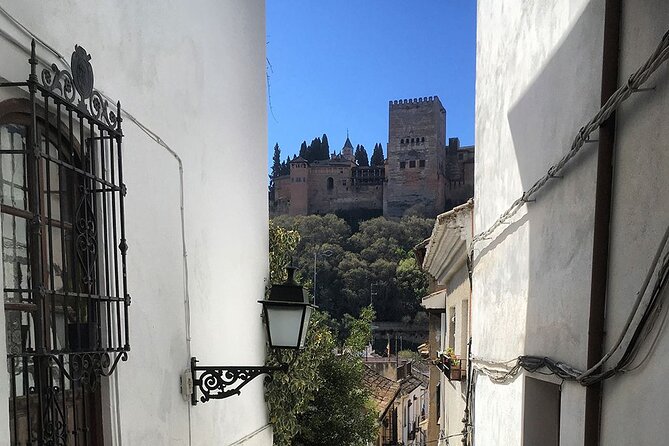
Once you start heading up, the tour turns into classic Granada hillside wandering. Albayzín is the old Moorish quarter with UNESCO protection, and you’ll spend most of the walking time here.
What you’re looking for:
- Whitewashed houses with balconies full of flowers
- Churches, squares, and fountains tucked into the maze of streets
- Moorish remnants like old city-gate clues that help the quarter feel coherent instead of random
Your guide’s job is to connect the dots—so you don’t just see pretty walls. The best moments in Albayzín tend to be the ones where you catch a landmark, then realize it lines up with a larger story of how the neighborhood was built and why it still holds its character.
You can also read our reviews of more guided tours in Granada


Plaza de San Nicolás: the famous balcony moment
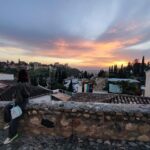
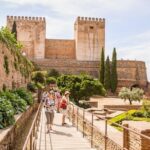
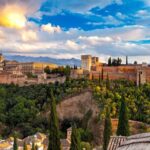
At Plaza de San Nicolás, you’ll get the photo opportunity people talk about for a reason. This is one of Granada’s most important viewpoints for the Alhambra, and the energy shifts here from street-level curiosity to skyline appreciation.
You’ll also see the value of timing. This is the kind of stop where lingering helps. If you’re the type who likes photos and taking in the view without rushing, this is your moment.
One practical note: depending on the pace of your specific group and guide, you may get only a short window here. Bring your patience, and if you want your best shot, pick your angle quickly and then enjoy the view after.
Sacromonte’s caves: cobbles, underground homes, and flamenco culture
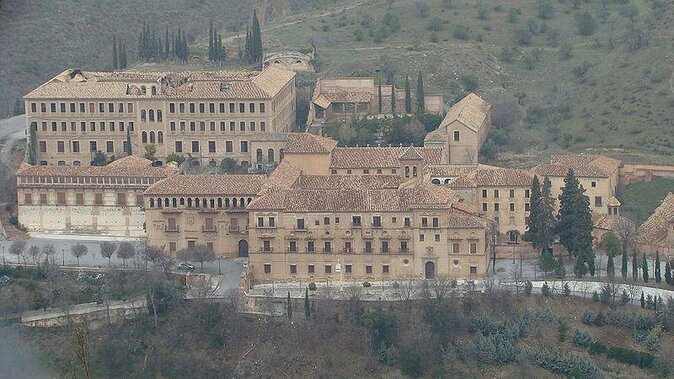
After Albayzín, you continue to Sacromonte, east of Albayzín and right in front of the Alhambra monument area from many vantage points. This shift matters. Sacromonte feels more steep and raw, with a hillside path that leads you deeper into the cave story.
Sacromonte is associated with Granada’s Roma community, who arrived in the 15th century. The district is famous for underground, rock-cut homes. Many of those caves still exist as living spaces, while others are now set up as flamenco bars and tiny museums that show the traditional lifestyle, arts, and crafts linked to cave living.
What to expect on the ground:
- Cobbled paths that can be uneven underfoot
- Cave entrances and small cultural spaces that give you context beyond the word flamenco
- City views from the hillside that make the walk feel worth it even when your legs start complaining
This is the part where you get why Granada tours are so different from museum-only days. You’re not just learning about art—you’re walking through the spaces where music and craft traditions still show up in daily life.
How strenuous is it, and how to survive the cobbles
Let’s be real: this is a walking tour with lots of uphill and plenty of stairs. Even with a good guide and breaks, it can feel demanding—especially if you’re not used to uneven old-town surfaces.
Based on what people experienced, the big considerations are:
- You need comfortable shoes for cobblestones
- Expect steep sections
- You may feel sore the next day, even if you pace yourself well
The good news: guides often slow down and check in with the group. Some guides are also known for making the experience more manageable—like Irene and Maria, who are described as friendly and attentive to energy, and Francisco or Elena, who kept the group engaged while handling the physical pace.
If you want the simplest strategy: plan to walk at a steady rhythm, take offered pauses seriously, and don’t try to outpace the group just because you feel good for the first 10 minutes.
Group size and hearing the guide: what to do if sound is an issue
This tour runs with a maximum group size of 30 travelers, which is usually fine. But hill corners can be noisy and sound can carry poorly on uneven streets.
If you’re in a larger group, you might struggle to hear every word—especially without personal listening aids. Your best move: position yourself closer to the guide whenever possible, and if you have questions, ask them near viewpoints when the group naturally slows.
Also, because guides vary, pay attention to how your guide explains the route. Some guides are noted for using humor, linking past and present, and keeping the group involved—traits that make a tour feel smooth even when you’re climbing.
Guides you may encounter: what their style can change
Granada a Pie’s guides seem to bring different flavors, but the consistent theme is storytelling that makes the streets make sense. Some names that have shown up in people’s accounts include Irene, Maria, Marco, Francisco, Juana, Elaine, Arina, Pedro, Carmen, and Elena.
Here’s how that can matter for you:
- If your guide is the type who gives personal context (people mention this with Irene), you’ll likely remember details longer.
- If your guide is extra proactive about pacing and rest (common with Maria and Elena), the walk can feel more doable.
- If your guide adds extra stops or special moments, that can make the day feel more than the standard route. For example, one guide called out as Marco arranged a cave-house visit and a special entry to a flamenco cave venue—though you shouldn’t count on extra add-ons, since it depends on the guide and conditions.
Pick this tour if you want more than a self-guided stroll. The guide is the difference between seeing old walls and understanding what they meant.
Where the walk ends, and how to keep the evening going
The tour ends at Calle Mirador de San Nicolás near the Albayzín side of the famous viewpoint area. Be flexible here: you might finish at another point depending on the day and logistics, so it’s smart to confirm with your guide before you set off.
From that area, you’re well placed for a classic Granada evening: wander a little, grab a seat with a view, and let the night settle in. If you want to plan ahead, think about where you’ll eat before the tour starts, because the hills around here can make wandering for dinner feel like another workout.
Should you book this tour?
Yes—if you want an easy-to-buy way to experience two of Granada’s most distinctive neighborhoods in one evening. It’s great value for the guide, and the viewpoints (especially Plaza de San Nicolás) make the climbing feel like it earns its keep.
Book it if:
- You’re happy with cobbles and stairs
- You want Alhambra views without spending hours piecing together routes
- You’d rather understand the neighborhoods than just photograph them
Skip it (or choose another option) if:
- You strongly dislike steep hills
- You need a mostly flat, low-stress walk
- You’re likely to get frustrated if you can’t hear every sentence in a bigger group
If you do book, do one thing that makes a huge difference: wear solid shoes and assume you’ll walk harder than the distance sounds. Then enjoy the payoff—two neighborhoods, one coherent story, and that Alhambra view that never stops feeling impressive.
FAQ
How long is the Albayzín and Sacromonte guided walking tour?
It runs for about 2 hours (approximately), with the walking taking you through both neighborhoods.
Where does the tour start and where does it end?
It starts at Plaza Isabel la Católica in central Granada. It ends at Calle Mirador de San Nicolás in the Albaicín area, though the ending point may vary—ask the guide before the tour starts.
What language is the tour offered in?
The tour is offered in English.
Is the tour strenuous?
Most travelers can participate, but it does involve uphill walking, stairs, and cobbled streets. Comfortable shoes are important, and the guide may include pauses during the walk.
What is included in the price?
The price includes a professional guide. Food and drinks are not included, and there is no hotel pickup.
Is it okay to cancel if my plans change?
Yes, you can cancel for a full refund if you cancel at least 24 hours before the experience’s start time. If you cancel less than 24 hours before, the amount paid is not refunded.